
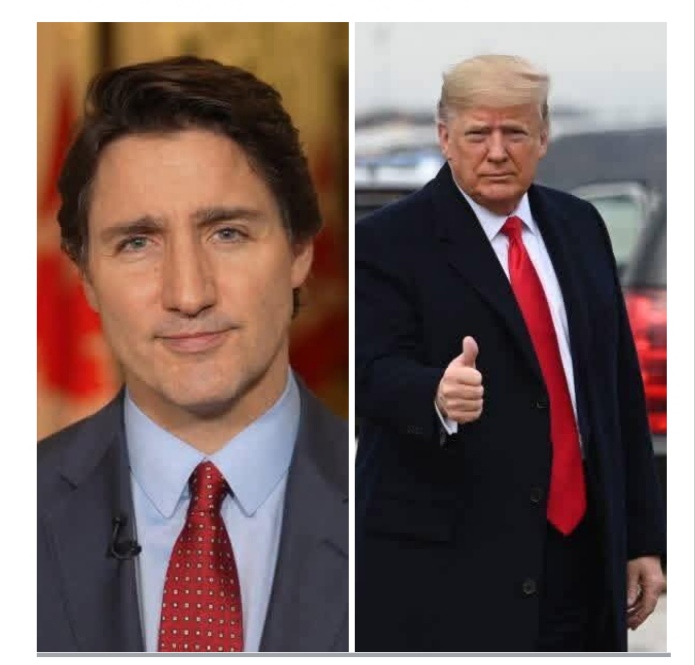
Escalating Rhetoric Over Cross-Border Project
U.S. President Donald Trump has intensified tensions with Canada after declaring he may block the opening of the Gordie Howe International Bridge unless Ottawa agrees to what he described as fairer economic terms for the United States. In a post on Truth Social, Trump argued that Canada must “pay up” and demonstrate greater “fairness and respect” in bilateral dealings before the long-anticipated bridge can officially begin operations.
The remarks immediately drew reactions from political leaders, trade analysts, and industry stakeholders on both sides of the border, given the bridge’s importance to North American commerce.
A Critical Link Between Detroit and Windsor
The bridge, connecting Detroit and Windsor, is designed to strengthen trade flows between the United States and Canada, which share one of the world’s largest trading relationships. Once operational, the span is expected to ease congestion at existing crossings and support billions of dollars in annual goods movement.
Construction of the multi-billion-dollar project has been years in the making, with Canadian authorities playing a leading financial role in its development. Supporters argue the bridge will modernize border infrastructure, create jobs, and enhance supply chain reliability across automotive, manufacturing, and agricultural sectors.
Trade Tensions Resurface
Trump’s comments come amid renewed debate over trade balances and tariff policies between Washington and Ottawa. The president has frequently criticized what he sees as uneven trade arrangements, asserting that the United States has shouldered disproportionate costs in maintaining economic partnerships.
In his latest remarks, Trump suggested that approving the bridge’s opening without additional concessions would amount to accepting an unfair deal. He framed the issue as part of a broader push to prioritize American workers and taxpayers, signaling that infrastructure cooperation could become leverage in ongoing trade negotiations.
Canadian officials have not formally responded to the latest statement, though previous disputes have underscored the sensitivity of cross-border economic ties. Diplomats on both sides have historically sought to keep infrastructure projects insulated from political disagreements.
Economic and Political Implications
Industry groups warn that delaying the bridge’s launch could have ripple effects throughout North America’s integrated supply chains. The Detroit-Windsor corridor handles a significant portion of bilateral trade, particularly in the automotive sector, where components often cross the border multiple times before final assembly.
Analysts note that using infrastructure approvals as a negotiating tool is unusual and could introduce uncertainty into long-term investment planning. Business leaders argue that predictable cross-border cooperation is essential to maintaining competitiveness against global rivals.
Politically, the dispute may resonate with Trump’s domestic base, which has consistently supported his “America First” economic message. However, critics contend that escalating rhetoric toward a close ally risks undermining diplomatic goodwill and economic stability.
Uncertain Path Forward
Whether the bridge’s opening will ultimately be affected remains unclear. Legal experts point out that cross-border infrastructure agreements involve multiple levels of government and contractual obligations that may limit unilateral action. Still, the president’s comments have injected fresh uncertainty into a project widely viewed as a symbol of U.S.-Canada partnership.
As trade discussions continue, the fate of the Gordie Howe International Bridge may become intertwined with broader negotiations over tariffs, market access, and bilateral cooperation. For now, a structure intended to symbolize connectivity has become the latest flashpoint in a high-profile political standoff.