
A Baptism in Heavy Metal Lightning
There are moments in rock history where the atmospheric pressure of an arena changes the exact second a musician steps into the spotlight. For a generation of heavy metal fans, that precise shift occurred during the turbulent, transitional era of Ozzy Osbourne’s solo career in the early 1980s. Following the tragic passing of the legendary Randy Rhoads, the metal world wondered if anyone could ever fill those monumental shoes. Enter Jake E. Lee.
Witnessing Lee live for the very first time alongside the Prince of Darkness was not merely attending a concert; it was a sensory hijacking. The house lights dropped, the crowd roared, and before your brain could even process the visual spectacle of the stage, an auditory assault tore through the arena speakers. It was a baptism in pure heavy metal lightning, delivered by a man who refused to be overshadowed by the ghosts of the past.
The Hypnotic Shock of the Savage Attack
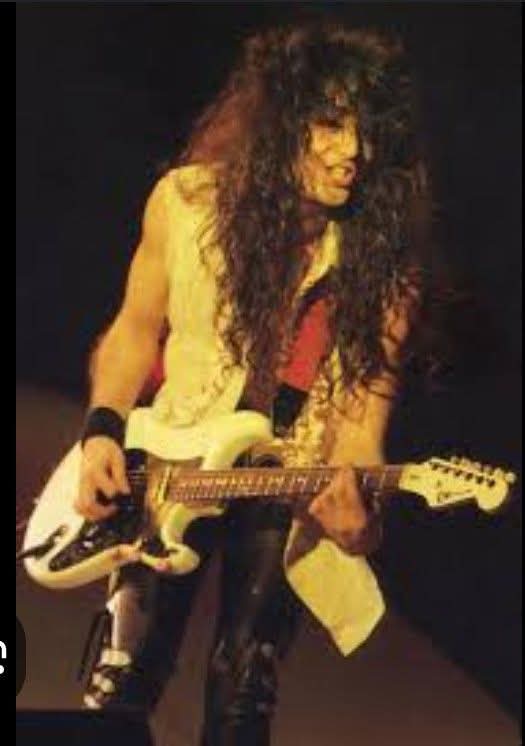
When Jake E. Lee hit the stage, the rest of the stadium simply faded into a blurred background. The massive drum kits, the flashing pyrotechnics, and even the larger-than-life presence of Ozzy himself became secondary elements. Your eyes and ears were instantly locked onto a singular, mesmerizing focal point: Lee’s utterly savage attack on his modified white Fender Stratocaster.
His playing style was a masterclass in aggressive elegance. He did not merely pluck the strings; he wrestled them, bent them to his absolute will, and stroked them with a ferocious intensity that felt almost primal. Every single riff carried a physical weight that vibrated right through the concrete floor. The sheer speed of his sweeping arpeggios, combined with his unique choice to avoid using a tremolo bar, forced him to create screaming vibratos purely through the brute strength of his fingers. It was an astonishing display of technical wizardry and raw, unadulterated passion that left the audience paralyzed in awe.
Decoding the Technique of a Precision Monster
What set Lee apart from the sea of textbook shredders of the decade was the sheer intentionality behind his violence. His rhythm work on iconic tracks like “Bark at the Moon” and “Shot in the Dark” possessed a razor-sharp precision that provided a flawless, bulletproof foundation for Ozzy’s vocals. Yet, when it came time to step forward for a solo, he unleashed an untamed animal.
His stage presence was remarkably fluid—a whirlwind of spinning hair, low-slung guitar heroics, and effortless cool. He commanded the stage with the confidence of a gladiator. For anyone sitting in the audience, the experience was completely overwhelming. You didn’t hear the music with just your ears; you felt the aggressive bite of his pick attack landing like a punch to the chest. He successfully bridged the gap between classical composition and street-level hard rock ferocity.
The Undeniable Coronation of a Guitar God
Decades later, the definitive verdict remains entirely unchanged. Jake E. Lee is, without a shadow of a doubt, a certified Guitar God. He took one of the most difficult, high-pressure jobs in rock history and used it to carve out his own permanent kingdom.
He didn’t just survive the legacy of those who came before him—he conquered it, leaving an indelible mark on the landscape of heavy metal. That first unforgettable look at his frantic, explosive stage performance serves as a permanent reminder of what happens when absolute genius meets a completely reckless, uncompromising spirit. The arena lights may have eventually come back up, but the sonic resonance of his savage guitar attack still echoes loudly in the minds of everyone lucky enough to bear witness.