
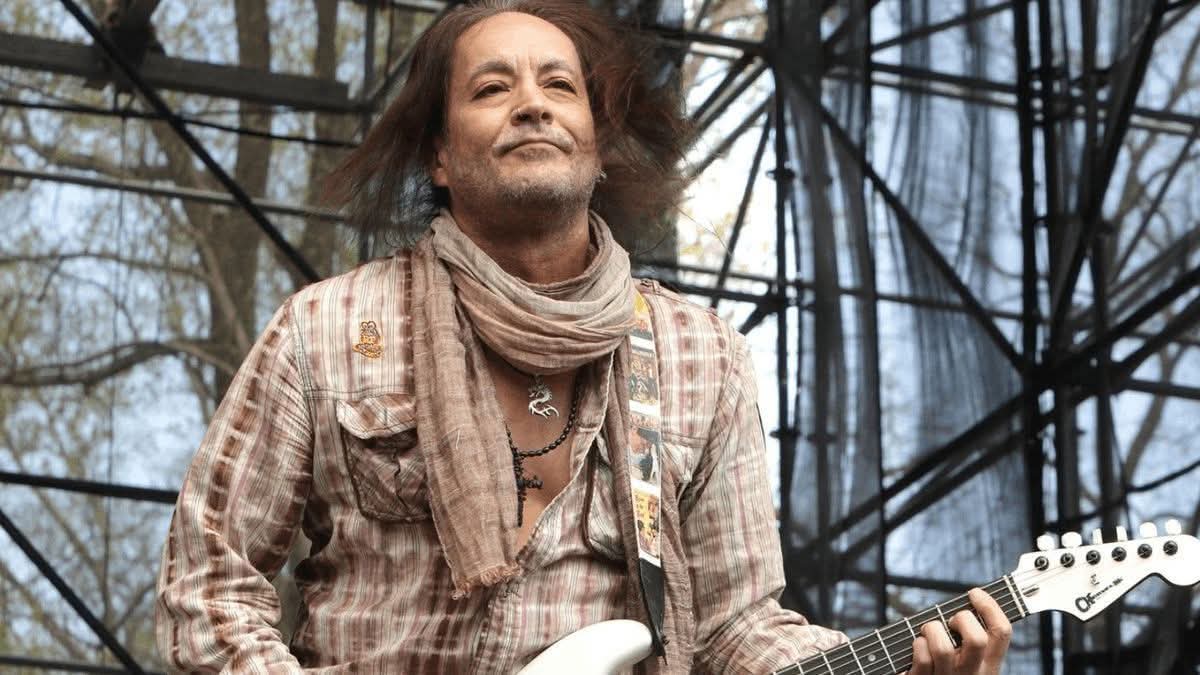
The debate over Ozzy Osbourne’s lead guitarists is often framed as a battle of technical skill, but for many purists, it is a question of creative identity and historical justice. While Zakk Wylde has enjoyed the longest tenure and the most commercial visibility, a growing faction of the rock community argues that Jake E. Lee remains the “forgotten architect” of Ozzy’s success—a musician whose contributions were sidelined by a corporate narrative that favored loyalty over innovation.
The Architect vs. The Successor
To understand the friction between the legacies of Jake E. Lee and Zakk Wylde, one must look at the transition from the mid-80s to the late-90s. Jake E. Lee stepped into the impossible void left by the tragic death of Randy Rhoads. He didn’t just mimic the past; he modernized Ozzy’s sound with the sophisticated riffing and avant-garde techniques found on *Bark at the Moon* and *The Ultimate Sin*. In contrast, Wylde’s entry marked a shift toward a more standardized, Southern-tinged heavy metal. While Wylde is undeniably a powerhouse musician, critics argue that his career was built upon the foundations laid by the “Three Kings”: Tony Iommi, Randy Rhoads, and Jake E. Lee.
Creative Innovation vs. Corporate Loyalty
The core of the “Yes Man” critique lies in the relationship between the guitarist and the Osbourne camp. Zakk Wylde is often viewed as a loyalist and an “Osbourne apologist,” someone who fit seamlessly into the branding machine. This stands in stark contrast to Jake E. Lee, who famously fought for songwriting credits and maintained a level of artistic independence that eventually led to his departure. For many fans, Lee’s riffs possess a compositional depth—a “magic”—that Wylde’s pinch-harmonic-heavy style struggles to match. While Zakk is the superior multi-instrumentalist and vocalist, many argue he lacks the singular, transformative songwriting ability that Randy and Jake brought to the table.
Reclaiming the Stolen Legacy
There is a lingering sense that Jake E. Lee was intentionally “written out” of the history books. His absence from various retrospectives and his complex legal history with the Osbournes have made him a ghost in the machine. However, as modern listeners revisit the complexity of Lee’s work, the consensus is shifting. Respect is being reclaimed for the man who saved Ozzy’s career during its most turbulent era. True guitar greatness isn’t just about how long you stay on the stage; it’s about the unique DNA you leave in the music. In that regard, Jake E. Lee doesn’t just deserve more respect—he deserves a seat at the head of the table.