
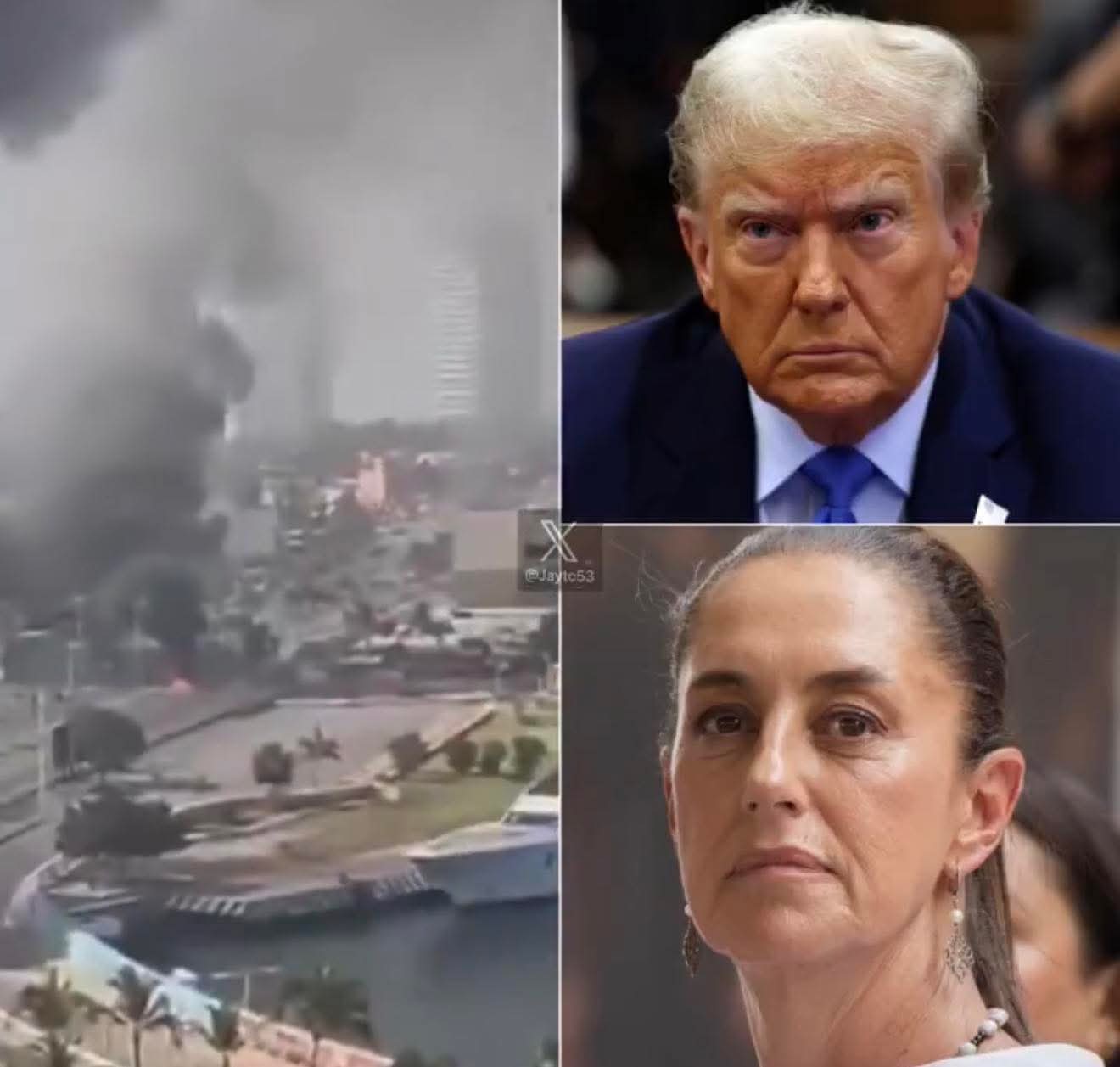
Mexico City — Mexican President Claudia Sheinbaum is facing significant criticism after turning down repeated offers from U.S. President Donald Trump to deploy American military forces to combat drug cartels within Mexico. The decision has stirred debate both domestically and internationally about the best approach to tackling organized crime.
Trump Pushes for Immediate Military Action
According to sources, President Trump has proposed sending U.S. troops into Mexico to rapidly dismantle powerful cartels responsible for widespread violence and drug trafficking. The plan was framed as a swift, decisive solution to a problem that has plagued Mexico for decades.
Despite the urgency highlighted by Trump and some U.S. officials, Sheinbaum has consistently refused the proposal, citing concerns over national sovereignty and the risks associated with foreign troops operating on Mexican soil.
Domestic Backlash Intensifies
Sheinbaum’s rejection has sparked backlash among certain sectors of the Mexican public, law enforcement officials, and political commentators who argue that her refusal may delay efforts to curb cartel violence. Critics have accused the president of underestimating the severity of the cartel threat and of turning down an opportunity for immediate action that could save lives.
Supporters of the president, however, argue that accepting foreign military forces could inflame tensions and undermine Mexico’s independence. They emphasize the importance of Mexico-led solutions and long-term reforms rather than relying on external intervention.
Security Challenges Remain
Mexico continues to face escalating violence linked to drug cartels, including homicides, kidnappings, and clashes with law enforcement. Analysts note that the country’s security apparatus has struggled to respond effectively to these criminal networks, highlighting the complex challenges Sheinbaum must navigate without compromising sovereignty.
While Trump’s plan offered a high-profile, immediate response, many experts warn that military intervention alone may not resolve the structural issues that enable cartel power, including corruption, poverty, and weak local governance.
International Implications
The disagreement underscores the delicate nature of U.S.-Mexico relations regarding security cooperation. While both countries share a vested interest in controlling drug trafficking, the methods proposed by Trump clash with Mexico’s emphasis on self-determined law enforcement strategies.
Observers caution that the debate over foreign military intervention could shape future diplomatic and security discussions between the two nations, especially as cartel violence continues to impact communities along the border and across Mexico.
Looking Ahead
As the controversy grows, Sheinbaum faces mounting pressure to present alternative strategies to tackle the cartels effectively. Meanwhile, Trump’s repeated offers highlight the United States’ frustration with Mexico’s handling of organized crime and the ongoing cross-border security concerns that affect both nations.
The outcome of this standoff could have lasting effects on Mexico’s approach to national security and on U.S.-Mexico cooperation in the fight against drug cartels.