
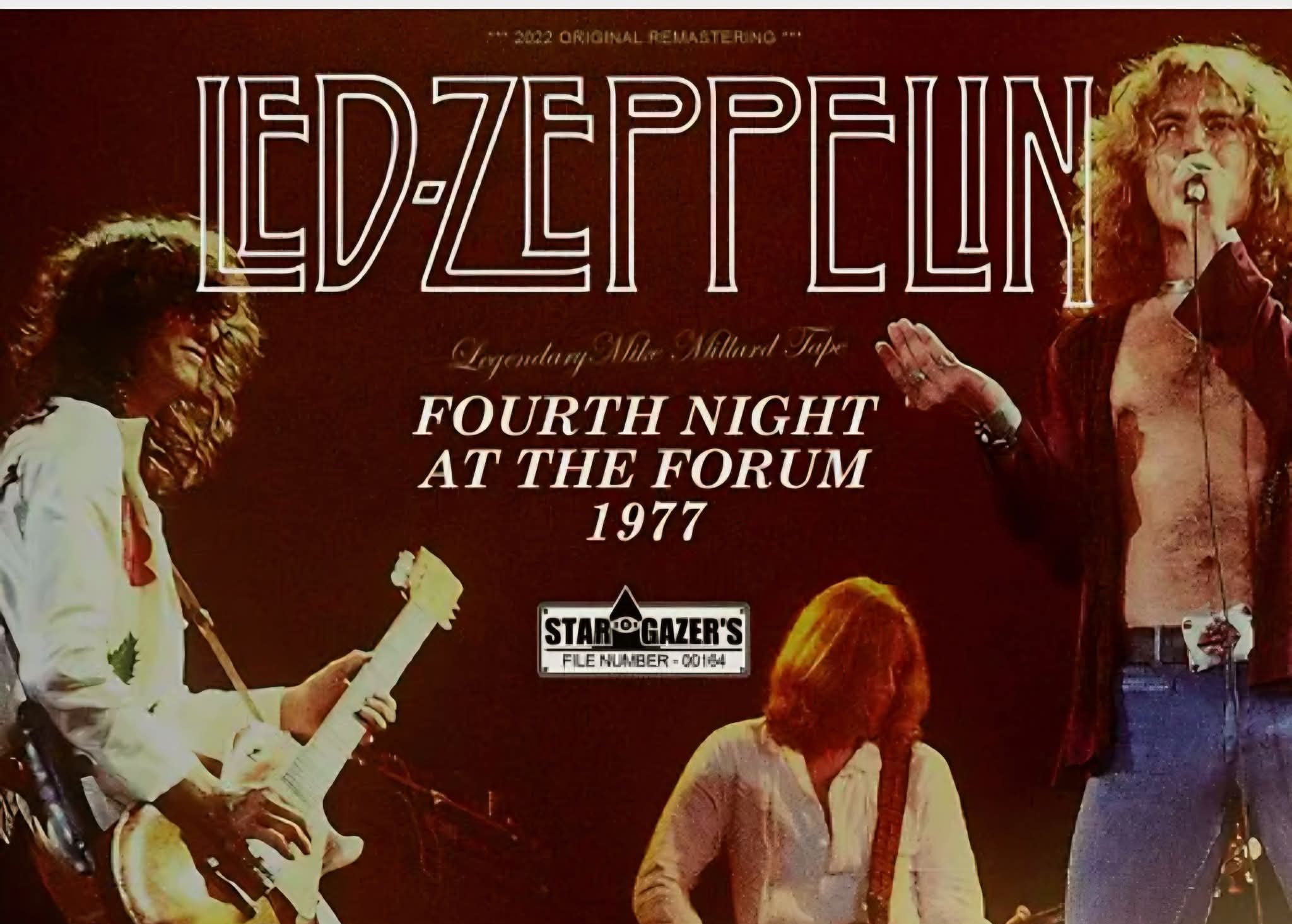
By mid-1977, Led Zeppelin had already ascended beyond superstardom. They were no longer merely a band dominating charts and selling out arenas; they were widely regarded as the greatest rock band of all time. Their live performances had taken on an almost mythological status, spoken about in reverent tones by fans and critics alike. The band’s 1977 North American tour, including the legendary Oakland shows, captured Led Zeppelin at the height of their raw power—brilliant, dangerous, human, and larger than life.
These concerts were defined by scale and intensity. Shows stretched far beyond conventional lengths, with songs expanding into long, unpredictable explorations. Familiar tracks were transformed nightly, reshaped by improvisation and the mood of the moment. Audiences did not come to hear note-for-note recreations of studio recordings; they came to witness musical journeys that could soar, collapse, and rise again within the span of a single performance. Every night carried an element of risk, and that risk was central to the band’s mystique.
Jimmy Page stood at the eye of the storm. His guitar work during this period was both mesmerizing and bewildering, marked by extended solos, layered effects, and sudden shifts in tone and texture. Page pushed his instrument to its limits, conjuring sounds that ranged from haunting delicacy to overwhelming ferocity. His playing could feel chaotic, yet it was guided by an instinctive sense of drama that kept audiences spellbound.
Behind him, John Bonham delivered drumming of staggering force and precision. His relentless power drove the band forward, anchoring even the most free-form passages with an undeniable physical presence. Bonham’s ability to shift tempos and dynamics gave the music its muscular backbone, turning each performance into something visceral and unforgettable. His drums did not merely accompany the songs—they defined them.
Often overlooked by casual observers, John Paul Jones was the band’s quiet architect. As the silent backbone of Led Zeppelin, he wove complex bass lines and rich keyboard textures that held the music together amid the turbulence. Jones provided structure without rigidity, allowing the band to roam freely while ensuring the performances never completely unraveled.
At the front of the stage, Robert Plant remained a commanding presence despite facing significant personal challenges during this period. His voice, though strained at times, retained its emotional power, and his connection with the audience was undeniable. Plant moved fluidly across the stage, engaging fans directly and revealing moments of warmth beneath the intimidating aura of rock stardom. His interaction with a fan during the Oakland show became emblematic of that human connection, a reminder that beneath the mythology stood real people.
The 1977 concerts were also notorious for their raucous crowds and occasional security breakdowns. Chaos sometimes surrounded the events, adding to their infamy. Yet it was precisely this unfiltered atmosphere that defined Led Zeppelin’s greatness. They were a band willing to walk the edge, embracing imperfection in pursuit of something transcendent.
Ultimately, the 1977 tour proved why Led Zeppelin’s legacy endures. They were not just performers; they were innovators who reshaped rock music itself. Blending blues, folk, jazz, hard rock, boogie, and heavy metal, Led Zeppelin changed the course of popular music. In those thunderous, unforgettable shows, they cemented their place as the greatest band in the history of rock and roll.