
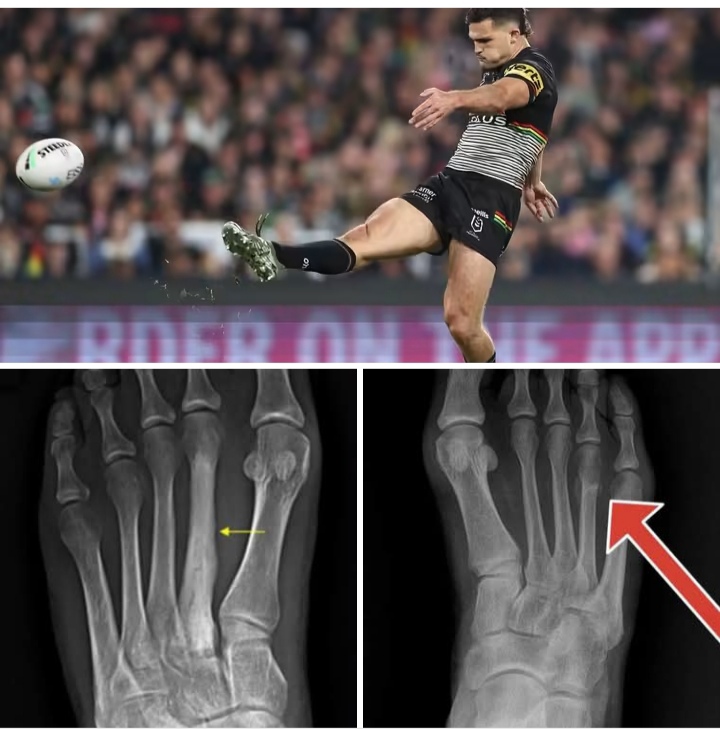
A Difficult Question for Penrith
Nathan Cleary’s foot injury has prompted an important discussion about the risks involved when an elite athlete attempts to compete through significant pain. With the Penrith Panthers halfback dealing with a stress fracture in his kicking foot, questions have emerged about whether local anaesthetic could potentially allow him to take the field.
An anaesthetist and Newcastle Knights supporter recently offered a personal medical perspective on the issue, stressing that decisions involving pain management and serious injuries require careful assessment by the athlete’s medical team.
Why Local Anaesthetic Could Be Considered
The reasoning behind using local anaesthetic is relatively straightforward. If Cleary experiences significant pain from the fracture, it could affect his ability to perform, particularly when kicking the football.
Temporarily reducing sensation might make it possible for an injured player to compete with less discomfort. However, removing or reducing pain also has potential disadvantages because pain can provide the body with an important warning that something is wrong.
Concerns About Sensation and Coordination
The medical discussion highlighted concerns that injecting local anaesthetic into the foot could potentially affect sensation, coordination or balance.
Reduced feeling in an injured area may make it harder for an athlete to recognise movements or impacts that could aggravate an existing problem. People with conditions involving reduced sensation can sometimes sustain injuries without immediately realising the extent of the damage.
For an elite athlete already dealing with a stress fracture, those considerations become particularly important.
Lessons From Andrew Johns
The discussion also recalled an incident involving Newcastle great Andrew Johns during the 1997 finals series. Johns suffered a rib injury during the preliminary final and reportedly received local anaesthetic to manage the pain.
According to the account, complications from the injection resulted in a punctured lung, requiring hospital treatment during the week before the grand final. Johns eventually recovered and played in the decider.
The example serves as a reminder that injections themselves are medical procedures and can carry risks, even when undertaken to help an athlete manage pain.
Risk Versus Reward
The central question for Penrith’s medical staff is therefore not simply whether local anaesthetic can reduce pain. Any decision would require consideration of the nature of Cleary’s fracture, his symptoms, the potential effect of reduced sensation and the possibility of further injury.
The appropriate decision must ultimately be made by qualified medical professionals familiar with Cleary’s individual condition, examination findings and imaging.
A Personal View After the Match
The original commentary also included a humorous suggestion that Penrith should keep Cleary on the sidelines and replace him with somebody unable to play or kick a football. The writer later clarified that the remark was intended as sporting humour rather than a serious medical recommendation.
Following the game, the tone changed considerably, with the writer acknowledging that decisions about competing with injuries are difficult judgement calls and that Cleary’s situation was unfortunate.
Focus Turns to Recovery
The priority now is Cleary’s recovery rather than assigning blame. The writer noted that the injury could require approximately six months of recovery, making rehabilitation and long-term health more important than any single match.
For Penrith, the situation represents a significant challenge. For Cleary, it is another difficult chapter in a career that has already demanded enormous physical commitment.
Ultimately, the debate highlights the delicate balance between managing pain, protecting an athlete and allowing them to compete at the highest level.