
A Firm Stance on Competitive Integrity
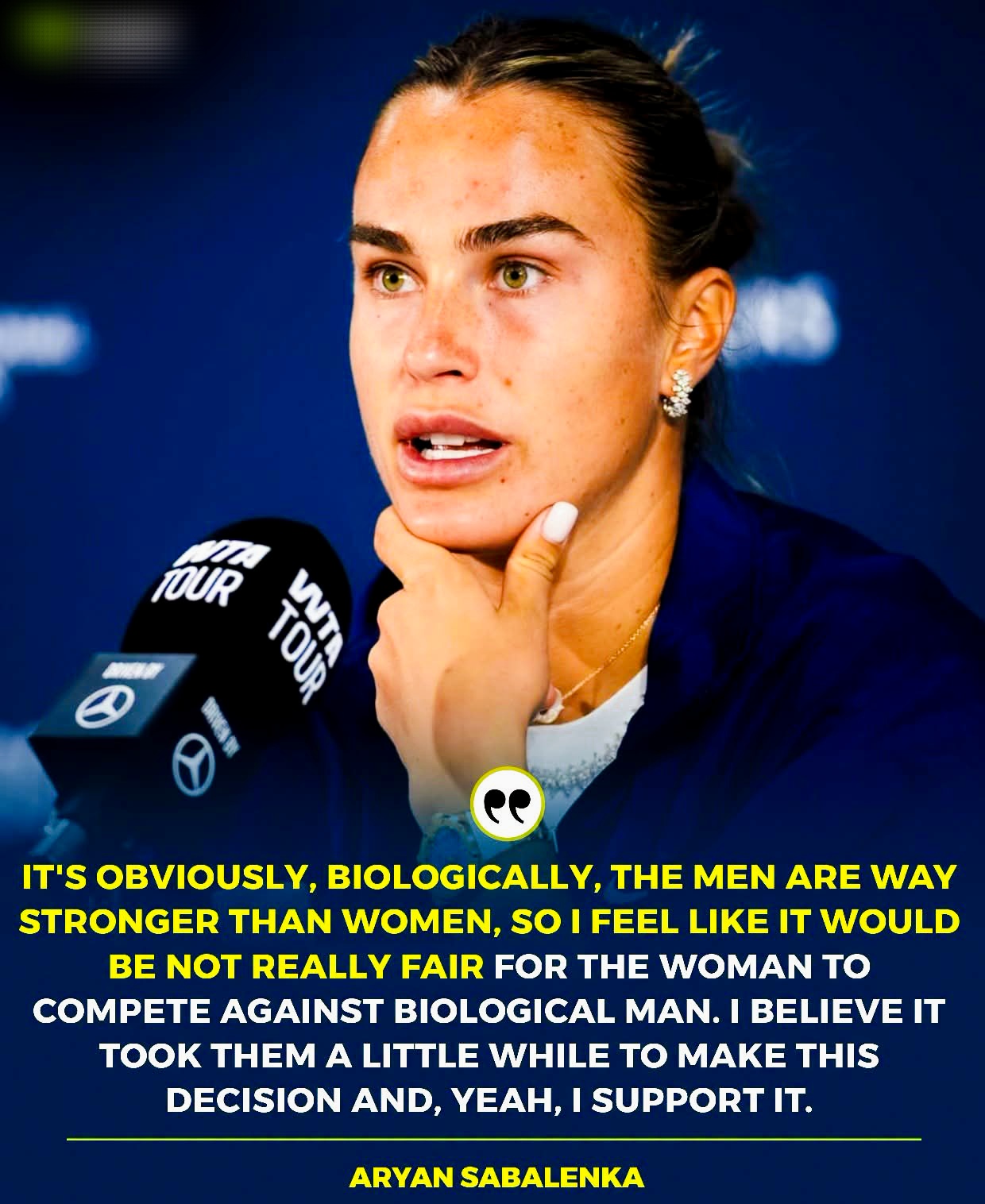
Ahead of her North American hard-court campaign at the Canadian Open, World No. 1 Aryna Sabalenka has publicly voiced her support for the Women’s Tennis Association’s (WTA) revised gender verification guidelines. Speaking to the media during her pre-tournament press conference, the multi-time Grand Slam champion endorsed the governing body’s newly implemented eligibility framework, which introduces mandatory, one-time genetic testing for athletes competing on the professional women’s circuit. Under the updated regulations, players are screened for the presence of the SRY gene, aligning tennis eligibility with standards set by other major international sports federations. Sabalenka emphasized that establishing clear biological criteria is essential for safeguarding fair competition and protecting the integrity of female athletics.
The Science and Scope of the WTA Guidelines
The WTA’s decision to update its gender participation framework marks a pivotal shift in professional tennis governance. Previous rules permitted transgender women to participate provided they met specific testosterone suppression targets and underwent verified medical procedures. However, the revised protocol establishes biological characteristics as the defining baseline for the female category, requiring all active competitors to undergo a simple swab or blood sample test. WTA administrators noted that the policy change aims to align the tour with global sporting bodies—such as World Athletics and the International Olympic Committee’s evolving frameworks—while explicitly distinguishing biological traits from personal identity. For Sabalenka, the clear-cut scientific testing provides much-needed certainty and transparency across the professional tour.
Sabalenka Advocates for Level Playing Fields
During her media availability, Sabalenka was direct about her views on biological advantages in elite sports, reiterating that elite female athletes work their entire lives to reach the absolute pinnacle of performance. She stated that allowing individuals with male physiological development to compete in the female category creates an inherent, unfair advantage that compromises decades of progress in women’s sports. The Belarusian star reaffirmed her willingness to undergo the required testing procedure herself, noting that clear, universal rules are necessary to preserve equal opportunities. Her candid statements highlight growing consensus among top-tier competitors who view standard biological verification as an indispensable measure for professional fairness.
Refocusing on the Hard-Court Swing in Montreal
While the administrative updates dominated early headlines, Sabalenka remains deeply focused on shifting her momentum back to her preferred hard-court surface. Following mid-season exits at the French Open and Wimbledon, the top seed is looking to rebuild her dominant baseline rhythm at the National Bank Open in Canada. Hard courts have historically brought out Sabalenka’s finest tennis, anchoring all of her Grand Slam victories at the Australian Open and US Open. By stripping back tactical complexities and refocusing on high-percentage groundstrokes, the World No. 1 aims to use the Canadian Open as a vital springboard toward the upcoming US Open in New York.
Navigating Tour Dynamics and Locker Room Consensus
Sabalenka’s endorsement of the WTA’s policy reflects a broader, ongoing dialogue within the locker room regarding equity, safety, and modern athletic standards. While policy adjustments of this magnitude frequently invite intense public discussion, the overall response from many veteran tour players has centered on establishing long-term clarity for future generations. As sports federations worldwide refine their framework to balance fairness and inclusion, tennis has taken a definitive step toward unified regulatory standards. With major tournaments on the horizon, players and administrators alike are eager to maintain focus on high-caliber athletic competition.
Setting the Stage for the Canadian Open Challenge
As main-draw play commences, Sabalenka’s combination of off-court leadership and on-court power places her at the center of attention in Montreal. Entering the tournament as the top seed, she carries both the pressure of maintaining her World No. 1 ranking and the momentum of an athlete fully focused on title success. With her position on tour governance clearly articulated, the Belarusian champion turns her complete attention to navigating a stacked draw, determined to let her formidable game do the talking throughout the North American summer.