
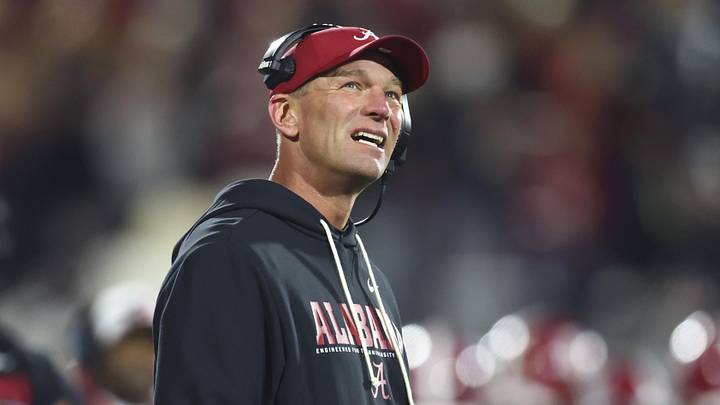
The strategic landscape of the Southeastern Conference (SEC) has officially shifted into high gear following a series of dramatic scheduling announcements from the league office. As head coach Kalen DeBoer prepares to navigate his highly anticipated inaugural campaign at the helm of the Alabama Crimson Tide, the path to a potential College Football Playoff berth has become significantly more complex. The conference’s latest television scheduling release has laid bare a grueling, high-stakes gauntlet that could force the Crimson Tide to endure an unprecedented stretch of high-pressure, late-night environments, culminating in a defining showdown against Lane Kiffin and the Ole Miss Rebels.
According to the official scheduling update, television networks have heavily targeted Alabama’s core conference matchups for premium television windows. The Crimson Tide have already locked in massive, high-profile home night games in Tuscaloosa against both the South Carolina Gamecocks and the Georgia Bulldogs. However, the true logistical wrinkle lies in a newly implemented “flex” scheduling system. Four additional marquee matchups on Alabama’s slate are now explicitly designated for potential promotion into primetime television slots, threatening to subject DeBoer’s roster to a physically and mentally exhausting stretch of consecutive night games.
Navigating the October Gauntlet
The core of this potential scheduling nightmare begins in mid-October, transforming a standard month of conference play into an absolute war of attrition. Following the confirmed marquee night game against Georgia under the bright lights of Bryant-Denny Stadium, the Crimson Tide must immediately travel into hostile territory. Alabama’s highly anticipated road trip to Knoxville to face the Tennessee Volunteers has been flagged as a prime candidate to be flexed into the evening broadcast window.
The relentless pressure shows absolutely no signs of slowing down the following week. Upon returning to Tuscaloosa, a fierce matchup against the Texas A&M Aggies has also been placed on the primetime flex list, potentially moving from its traditional mid-afternoon slot into a high-intensity night environment. If television executives exercise their options on these games, Alabama would find itself playing in three consecutive emotional blockbusters under the lights, completely draining the squad’s energy reserves before they even hit their annual end-of-month bye week on October 31.
The Death Valley Trap and the Kiffin Factor
The true apex of this scheduling hurdle materializes immediately after the Halloween rest period. On November 7, the Crimson Tide are scheduled to travel to Baton Rouge for their annual, bitter clash against the LSU Tigers in Death Valley. This historic rivalry has already been heavily earmarked for a primetime flex broadcast. Should this designation hold, it would mark a staggering fourth consecutive night game for Alabama, presenting DeBoer with a historic operational challenge in one of the most intimidating stadiums in all of American sports.
Looming large at the end of this systemic gauntlet is a high-stakes chess match against Lane Kiffin. With both programs aggressively reloading their rosters through the transfer portal to secure a top-twelve seeding in the expanded postseason format, the margin for error has completely vanished. If Alabama’s battle-tested roster is emotionally or physically compromised by the preceding stretch of primetime marathons, Kiffin’s explosive offensive machine will be perfectly positioned to capitalize, turning this foundational SEC battle into the ultimate hurdle of the 2026 season.