
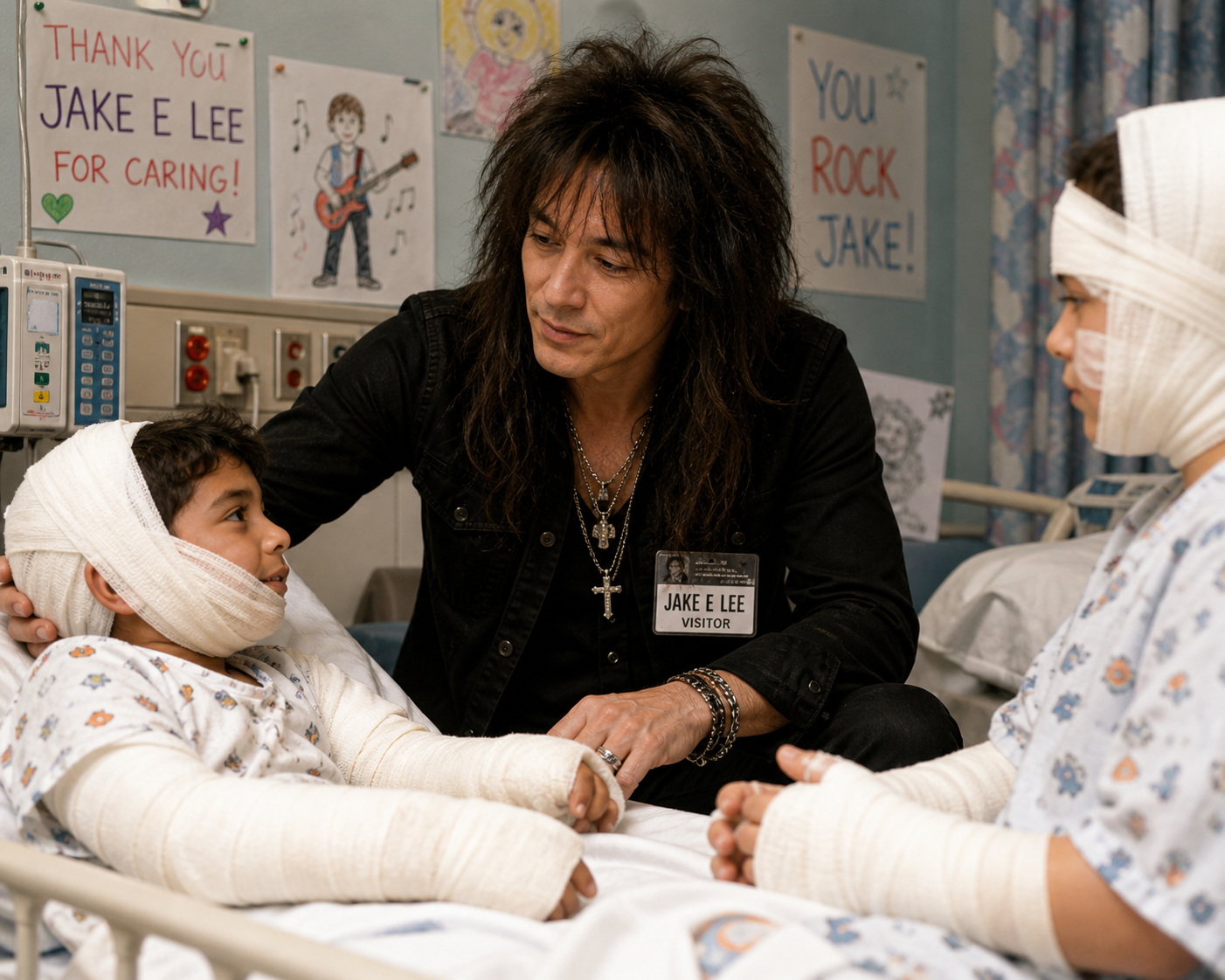
Jake E. Lee is synonymous with high-octane riffs and the legendary precision that defined the post-Ozzy Osbourne era of rock. However, the guitarist recently traded the roar of a stadium for the quiet, sterile corridors of a local pediatric ward, proving that his most resonant notes are those played on the heartstrings of the vulnerable. In a move that has stunned both the music industry and the medical community, Lee visited a group of children recovering from severe injuries, leaving behind a legacy of hope far more valuable than any platinum record.
Comfort in the Quiet Moments
Walking through the intensive care unit, Lee met with young patients whose lives have been temporarily defined by medical gauze and recovery cycles. For children wrapped in bandages and confined to hospital beds, the presence of a legendary rocker might have seemed out of place, yet Lee’s approach was one of quiet humility. Rather than the swagger of a rock star, he offered the steady presence of a sympathizer. Witnesses described a scene where the “Bark at the Moon” guitarist sat bedside, listening to the stories of the children and their families, offering words of encouragement that bridged the gap between a musical icon and those facing their darkest hours.
Bridging the Financial Gap
The emotional support was only the beginning. Understanding that the road to recovery is often paved with staggering financial hurdles, Lee announced a staggering donation of $2 million to be applied directly to the outstanding hospital bills of the children he visited. For many of these families, the weight of medical debt is a secondary trauma that lingers long after physical wounds have healed. By stepping in to clear these balances, Lee has provided more than just money; he has provided a clean slate and the freedom for these families to focus entirely on the rehabilitation of their children.
A Legacy Beyond the Stage
This act of philanthropy serves as a poignant reminder that the “Golden Age” of rock was built on a foundation of community and rebellious empathy. While Lee’s career has been defined by his technical mastery of the guitar, this $2 million gift defines his character. In an era where celebrity news is often dominated by excess, Lee’s decision to invest in the future of injured youth sets a new standard for artistic responsibility. As these children continue their journey toward health, they do so with the knowledge that a hero—not from a comic book, but from the annals of rock history—is standing firmly in their corner.