
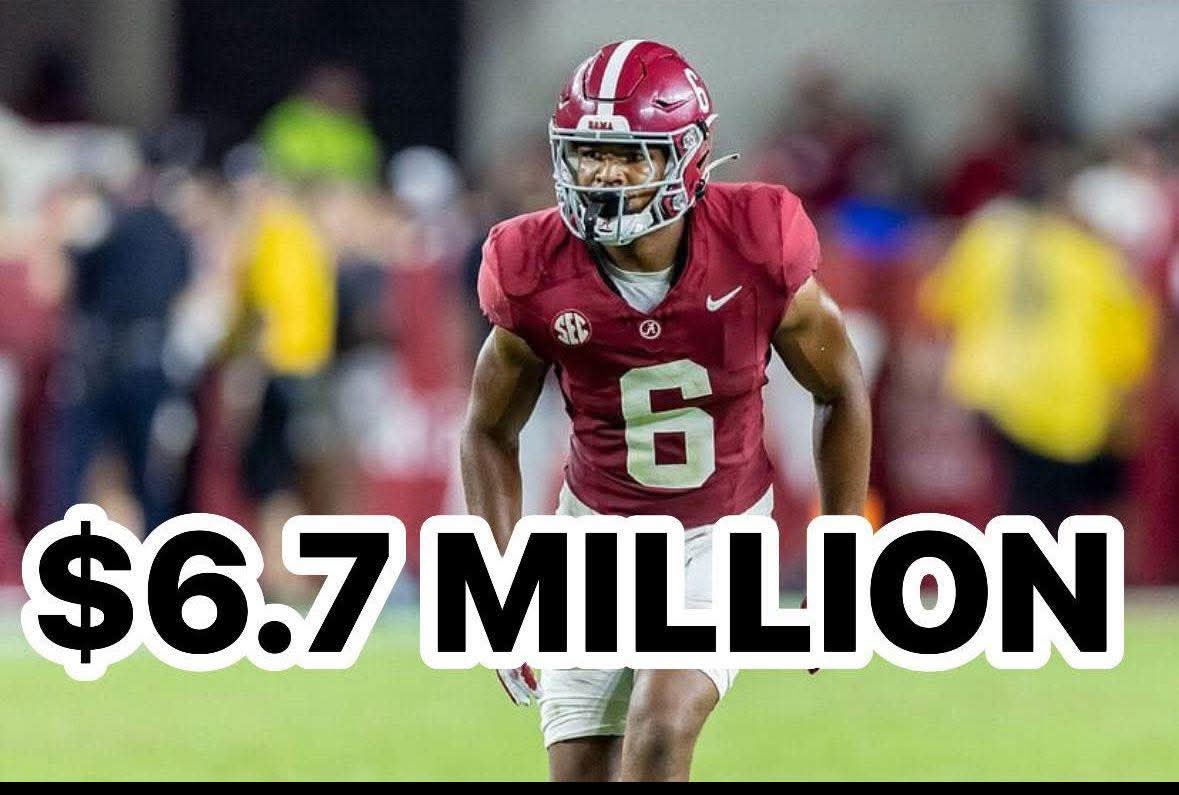
In an era of collegiate athletics defined by bidding wars and the fluid loyalty of the transfer portal, Alabama standout Kameron Howard has delivered a message that resonates far beyond the confines of Bryant-Denny Stadium. Reports surfaced this morning that the Crimson Tide star officially declined a staggering **$6.7 million NIL package** from the University of Tennessee, a deal that would have effectively doubled his current valuation.
The Recruitment Storm
The Volunteers’ pursuit of Howard was reportedly aggressive, utilizing the modern “free agency” atmosphere of the transfer portal to tempt the playmaker toward Knoxville. For weeks, rumors swirled that the financial gap between Alabama’s collective and Tennessee’s boosters was becoming insurmountable. However, Howard’s decision to shut down negotiations has effectively silenced the noise, proving that while the “Pay-to-Play” culture is thriving, it is not yet universal.
“I’m Not For Sale”
Insiders close to the program suggest that Howard’s refusal was not about the numbers, but about the colors he wears. When presented with the final terms of the Volunteers’ offer—a package that would have made him one of the highest-paid athletes in the history of amateur sports—Howard reportedly told confidants, **”I’m not for sale.”** By choosing to remain in Tuscaloosa, Howard has prioritized his development under the Alabama coaching staff and his standing within the program’s storied history over an immediate windfall.
A Seismic Shift in NIL Narrative
This move has sent shockwaves through the SEC and the broader landscape of the NCAA. For the past several seasons, the narrative has been dominated by the idea that traditional powerhouse programs are vulnerable to “poaching” by any school with a larger checkbook. Howard’s defiance provides a rare counter-argument, suggesting that brand heritage, locker room culture, and personal legacy still carry significant weight for elite talent.
Building a Crimson Legacy
For Alabama fans, Howard’s commitment cements his status as a “Crimson Warrior.” In a locker room where players are constantly being scouted by rival collectives, his presence provides a stabilizing force. He isn’t just choosing a playbook; he’s choosing to chase a national championship with the teammates he started his journey with.
As the college football world grapples with the implications of this rejected mega-deal, Kameron Howard stands as a singular figure: a player who looked at a $6.7 million life-changing payday and decided that some things—like loyalty to a program and a quest for a specific kind of greatness—simply don’t have a price tag.