
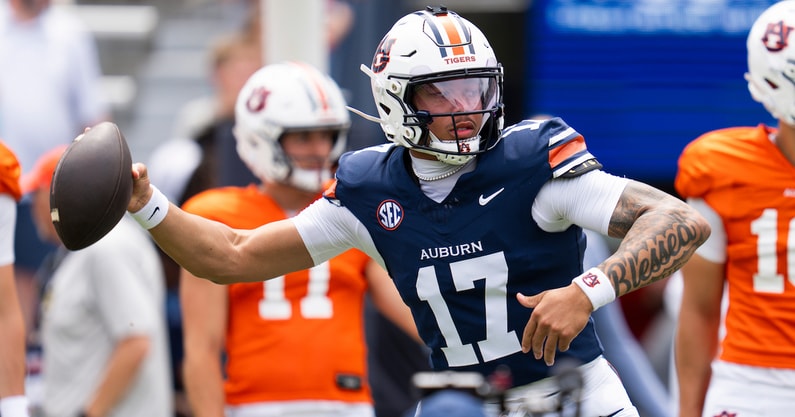
The air on the Plains feels different this spring. Following a string of five consecutive losing seasons, the Auburn Tigers are no longer just looking for a spark—they’ve imported an entire lightning storm. The arrival of transfer quarterback Byrum Brown, who followed head coach Alex Golesh from South Florida to Auburn, has transformed the program’s 2026 outlook from a rebuild into a high-stakes revitalization project.
A Proven Engine for the SEC
Byrum Brown isn’t your typical transfer portal gamble. He arrives in Auburn as one of the most prolific dual-threat weapons in recent college football history, having previously joined the elite club of quarterbacks to record 3,000 passing yards and 1,000 rushing yards in a single season. Most importantly, he is the hand-picked navigator for Alex Golesh’s high-tempo offensive system. Having triggered this specific offense for the past three seasons, Brown bypasses the traditional learning curve, allowing the Tigers to play with a “warp-speed” rhythm that hasn’t been seen at Jordan-Hare Stadium in years.
Snapping the Dry Spells
The expectations surrounding Brown extend beyond just winning games; he is being tasked with breaking decades-old statistical droughts. Brown has already made waves by forecasting a 1,000-yard season for wideout Chas Nimrod—a milestone no Auburn receiver has reached since 1999. His confidence reflects a broader shift in the program’s culture. By bringing a significant portion of his USF supporting cast with him via the portal, Brown has helped establish an immediate baseline of chemistry that usually takes years to cultivate.
Grit Under the Bright Lights
While his performance at the recent A-Day scrimmage saw a few uncharacteristic turnovers, the coaching staff remains unshaken. Offensive coordinator Joel Gordon describes Brown as “tough as nails,” a trait that will be tested as he transitions from the AAC to the weekly gauntlet of the SEC. Brown’s history of performing in high-pressure moments—including a 42-touchdown campaign last year and a signature scare given to Alabama in 2023—suggests he is uniquely prepared for the scrutiny that comes with being “QB1” at a university of Auburn’s prestige.
The Bottom Line
Auburn’s strategy is clear: lean on the established rapport between a visionary coach and a veteran playmaker to bypass the typical SEC transition period. As the Tigers move toward the fall, the success of the 2026 campaign rests squarely on Brown’s shoulders. If he can replicate his “Bullish” numbers in the most demanding conference in the country, the Golesh era won’t just start with a bang—it will signal the official return of Auburn to the national conversation.