
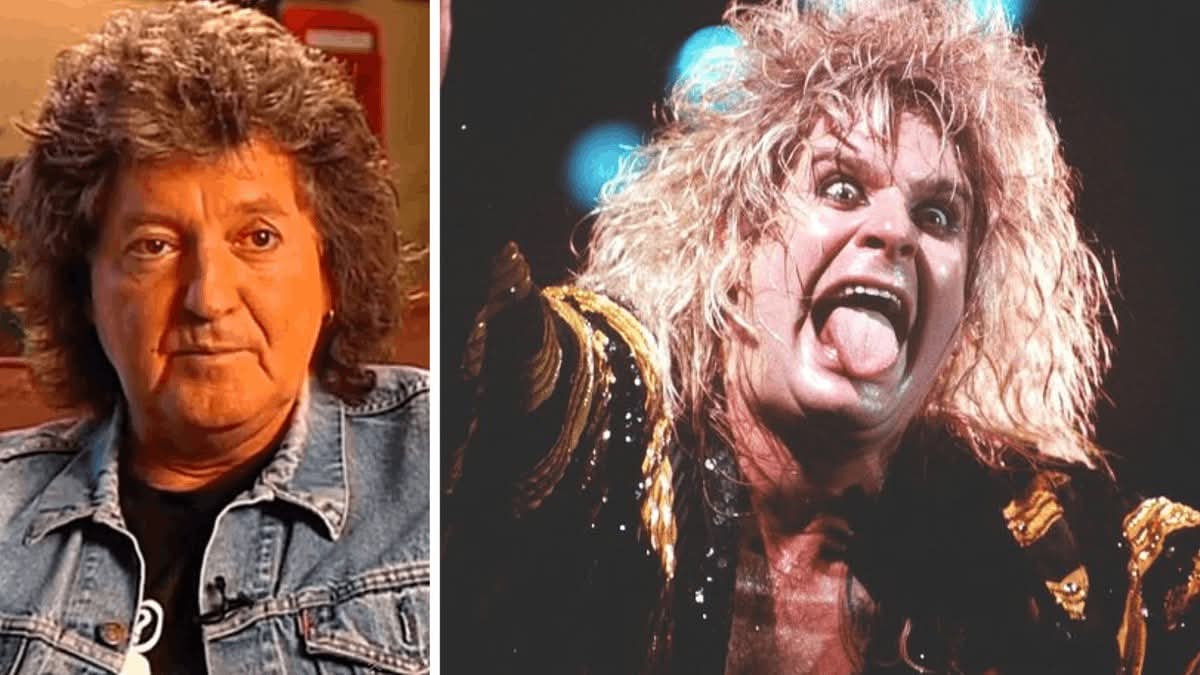
The history of heavy metal is often written by the victors, but the shadows of the 1980s are starting to reveal a more complex story. Recently, comments from guitar virtuoso **Jake E. Lee** went viral, reigniting a long-smoldering fire regarding the “travesty” of the credits on Ozzy Osbourne’s seminal 1981 album, *Diary of a Madman*. At the heart of the storm is bassist **Bob Daisley**, who has once again stepped forward to label the omission of his and drummer Lee Kerslake’s names as a “true crime.”
A Legacy Denied
For decades, fans have debated the lineup that created the masterpiece *Diary of a Madman*. While Rudy Sarzo and Tommy Aldridge appeared on the album’s back cover and were credited, it was actually Daisley and the late Kerslake who performed on the tracks. Daisley recently spoke out with renewed vigor, describing the situation not just as a professional slight, but as a moral failing that impacted the history of rock.
> “It was a true crime against Lee Kerslake and me,” Daisley stated. “We poured our souls into the songwriting and the performance, only to be erased from the visual history of the record.”
>
Jake E. Lee Breaks the Silence
Adding fuel to the fire, Jake E. Lee—who famously faced his own credit battles during the *Bark at the Moon* era—offered a perspective that resonated across social media. Lee’s commentary highlighted a pattern of behavior within the Osbourne camp during that era, suggesting that the “theft” of intellectual property was a systemic issue rather than an isolated incident. Lee’s support for Daisley has turned a niche historical debate into a viral conversation about artist rights and the ethics of the music industry.
The Human Cost of the “Travesty”
The weight of this “crime” is amplified by the passing of Lee Kerslake in 2020. Before his death, Kerslake famously requested his platinum plaques for *Blizzard of Ozz* and *Diary of a Madman*, a wish that was eventually granted, though the official credits on many reissues remained a point of contention. Daisley’s insistence on calling it a “travesty” reflects a desire to set the record straight for his fallen bandmate as much as for himself.
A Modern Reckoning
In 2026, as the industry moves toward greater transparency, these revelations serve as a cautionary tale. The viral nature of the Lee-Daisley discourse suggests that modern audiences are no longer willing to ignore the “ghosts” who built the foundations of metal. While the music of *Diary of a Madman* remains immortal, the fight for the names behind the notes continues to roar as loud as a Marshall stack.