
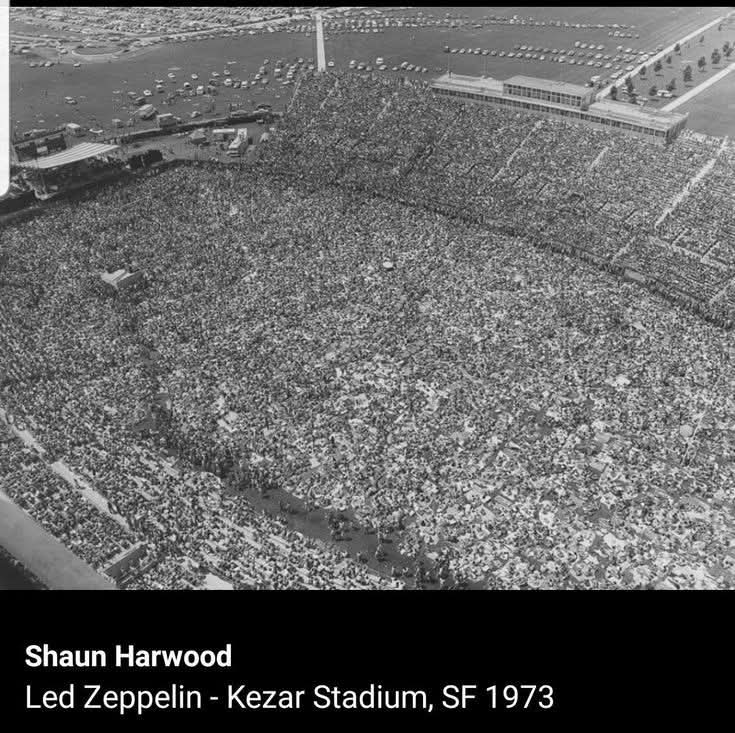
In the summer of 1973, the air in San Francisco’s Golden Gate Park didn’t just carry the usual coastal fog; it carried the weight of a cultural seismic shift. On June 2, a roaring ocean of nearly 50,000 people descended upon the aging Kezar Stadium. They weren’t there for a sporting event; they were there to witness Led Zeppelin at the absolute zenith of their powers. It was a day where music transcended the auditory, morphing into a visceral force of nature that defined an era.
The Raw Power of a Pre-Digital Era
The Kezar performance remains a holy grail for rock historians primarily because of its purity. In 1973, there were no towering LED screens to bridge the gap between the nosebleed sections and the stage, and no smartphones to mediate the experience. The connection was direct and dangerous. When Jimmy Page struck the opening chords, the sound didn’t just hit the ears—it vibrated through the concrete of the stadium and the bones of every attendee. This was a collective immersion, where thousands of individuals lived within the same rhythmic heartbeat for three hours of sonic exploration.
Guitars, Rebellion, and the Sonic Occult
Led Zeppelin’s presence in 1973 was wrapped in a cloak of mystery and unmatched technical proficiency. Robert Plant’s soaring vocals and Page’s bow-shredding guitar solos acted as a call to arms for a generation seeking rebellion through art. The Kezar setlist, featuring staples like “Dazed and Confused” and “Stairway to Heaven,” showcased a band that was no longer just playing songs; they were conducting an energy ritual. The stadium became a pressure cooker of “pure energy,” proving that the band’s mastery lay in their ability to balance heavy, blues-driven aggression with moments of delicate, acoustic vulnerability.
A Timeless Chapter in the Rock Canon
Looking back from the 21st century, the Kezar Stadium show stands as a testament to the “Music Legacy” of the 1970s. It wasn’t merely a stop on a tour; it was a demonstration of unity. Despite the sheer volume of the crowd and the rebellious spirit of the age, the event was a moment of shared purpose. Legends were made not just by the four men on stage, but by the communal atmosphere that transformed a simple outdoor concert into a historical monument.
The Lasting Echo of 1973
As the final notes of “Whole Lotta Love” faded into the San Francisco evening, the crowd left Kezar knowing they had witnessed the peak of the rock-and-roll gods. The performance solidified Led Zeppelin’s status as the definitive stadium act, capable of commanding tens of thousands with nothing but raw talent and a wall of amplifiers. Decades later, the echoes of that afternoon continue to inspire, serving as a reminder of a time when rock and roll was the most powerful language on earth.