
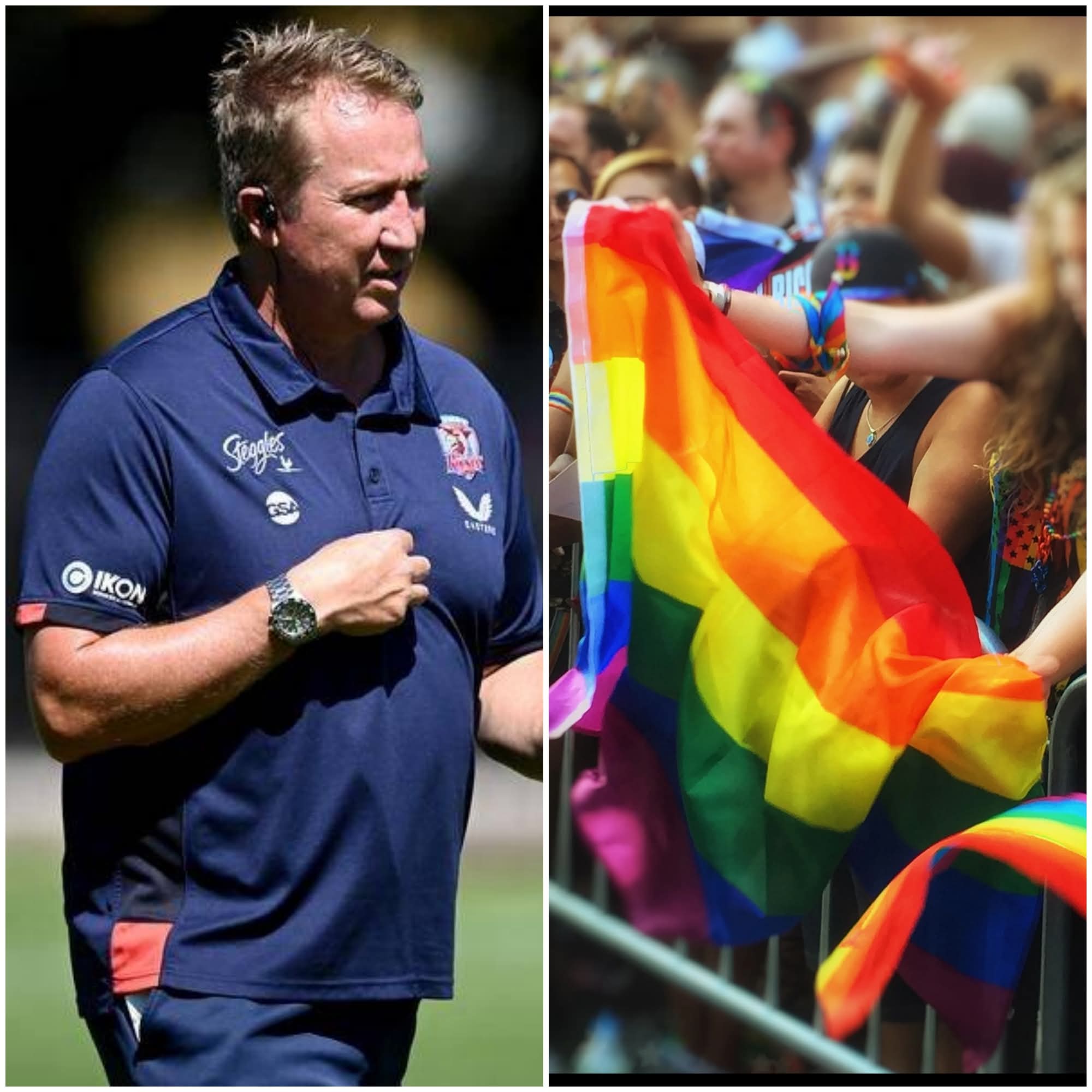
The rugby league landscape has been plunged into a familiar ideological divide following the official confirmation that Sydney Roosters coach Trent Robinson has declined to wear an LGBTQ+ pride-themed jacket at an upcoming National Rugby League event. Robinson, one of the game’s most decorated modern mentors, made his stance clear by affirming that his singular professional focus remains locked on rugby league, tactical preparation, and positioning his squad to win matches. The decision instantly ignited a fierce, multi-layered debate that has gripped fans, social media platforms, and league commentators alike.
Unwavering Convictions Under the Spotlight
In the immediate aftermath of the announcement, reaction across the sporting community was swift and sharply divided. Veteran journalist Mark Robinson defended the Roosters mentor, describing him as “unwavering” and “true to his convictions” in maintaining a separation between personal presentation and his coaching duties. However, the decision also drew significant criticism from advocacy groups and progressive commentators who viewed the refusal as a missed opportunity for the sport to promote inclusivity. As opinions clashed, the Roosters headquarters became the focal point of a massive public relations storm.
The Quiet Actions Behind Closed Doors
Just as the initial social media firestorm appeared to reach its absolute peak, the narrative took an unexpected turn. In a move that initially received far less public attention than his original refusal, Robinson quietly took action behind closed doors. Operating entirely away from the glare of television cameras, media headlines, and political grandstanding, the veteran coach initiated direct dialogues and internal steps that left club insiders, supporters, and critics stunned. Rather than retreating from the discourse, Robinson engaged on his own terms, adding a complex layer to an already volatile situation.
Leadership and Public Expectations in the Modern Era
This unfolding saga highlights the growing tension between corporate-driven social initiatives and the individual boundaries of high-profile sporting figures. Modern coaches are increasingly expected to serve as societal ambassadors, a role that often clashes with the traditional, single-minded focus required to succeed in elite professional sports. By refusing to follow the traditional public relations crowd, Robinson has forced a broader conversation regarding what should be expected of sports leaders when social issues intersect with the playing field.
An Escalating Conversation With No End in Sight
As the Sydney Roosters prepare for their upcoming fixtures, the noise surrounding their head coach shows no signs of dissipating. While the club attempts to steer the focus back toward on-field performance, the rugby league world remains deeply engrossed in a debate over principles, public expectations, and true leadership. One thing remains certain: Trent Robinson’s resolute approach has ensured that the conversation surrounding his choices is only getting louder.