
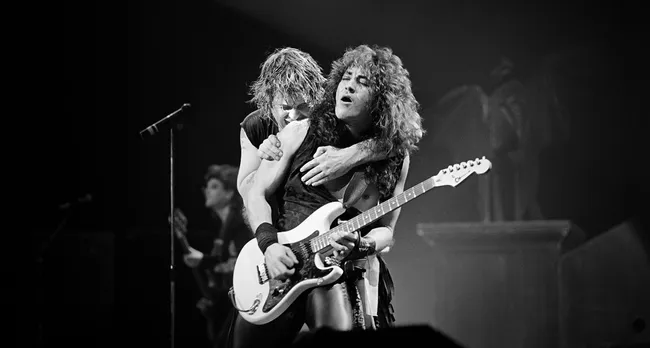
A Rocky Start in the Osbourne Camp
When Jake E. Lee joined forces with Ozzy Osbourne in 1982, he entered one of heavy metal’s most high-pressure environments. Young, immensely talented, but lacking industry experience, Lee quickly found himself navigating the complexities of fame, contracts, and creative control. His debut with Ozzy, the 1983 album Bark at the Moon, brought commercial success but left Lee dissatisfied behind the scenes.
Songwriting Disputes and Hard Lessons
Despite his contributions, Lee received limited recognition in songwriting and publishing credits for Bark at the Moon. It was a situation he later described as a harsh lesson in the realities of the music business. According to Lee, both Ozzy and Sharon Osbourne were aware of the imbalance. “They realized they got away with something,” he recalled, suggesting that the experience hardened his resolve. Determined not to repeat history, Lee approached the next project with a firm stance on creative rights.
Fighting for Control on The Ultimate Sin
By the time work began on 1986’s The Ultimate Sin, Lee was no longer the inexperienced newcomer. He pushed for proper credit and a more equal role in shaping the album’s sound. The sessions, however, were not without tension. Balancing artistic ambition with commercial expectations proved challenging, and the pressure to deliver a hit record weighed heavily on the guitarist.
Critical Backlash and Self-Doubt
Upon release, The Ultimate Sin achieved commercial success but was met with mixed to negative critical reception. Over time, it developed a reputation among some fans and critics as one of Ozzy’s weaker records. Lee admits that the criticism affected him deeply. By the late 1990s, he had internalized much of the negativity, even questioning his own performance. “I thought, ‘I guess it was. I just really sucked on it,’” he confessed in hindsight.
Revisiting the Past with Fresh Perspective
Years later, Lee’s view of the album began to shift. With distance from the pressures and expectations of the time, he reassessed The Ultimate Sin more objectively. He came to appreciate the musicianship and songwriting that went into the project, recognizing that it captured a specific moment in his evolution as an artist. Rather than viewing it as a failure, Lee now sees the album as a meaningful chapter in his career.
Legacy Beyond Criticism
Today, The Ultimate Sin stands as a testament to both the struggles and growth of Jake E. Lee during his tenure with Ozzy Osbourne. While opinions on the album remain divided, Lee’s journey—from frustration and self-doubt to acceptance—adds a deeper layer to its legacy. In the end, it is not just a record shaped by criticism, but one defined by resilience and artistic persistence.