
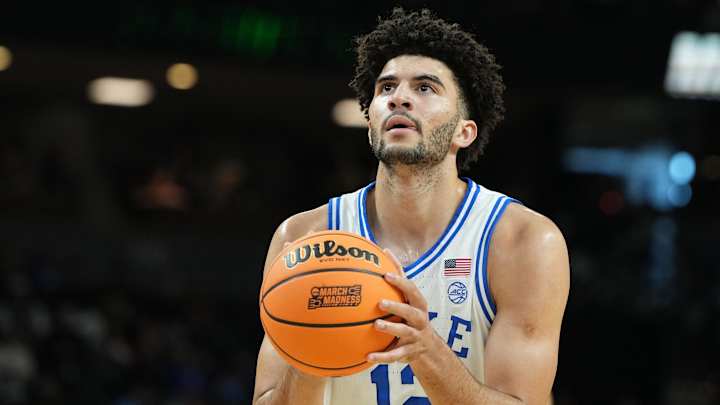
Duke’s opening round performance in the NCAA Tournament raised more questions than confidence, as the Blue Devils struggled early against 16-seeded Siena. What was expected to be a routine victory instead turned into a revealing display of under-preparation, particularly in a first half that lacked urgency, discipline, and focus.
Slow Start Signals Bigger Issues
From the opening tip, Duke appeared out of sync. Defensive lapses, poor shot selection, and a noticeable lack of intensity allowed Siena to stay competitive longer than anticipated. The gap in seeding suggested a mismatch on paper, but on the court, Siena capitalized on Duke’s sluggish approach and kept the pressure on.
Rather than asserting dominance early, Duke seemed reactive, scrambling to adjust to a game they had clearly underestimated. The first-half performance alone was enough to spark concern among analysts and fans alike.
Halftime Comments Raise Eyebrows
Those concerns were amplified by remarks made during halftime. Maliq Brown candidly admitted that the team had initially approached the matchup as a “cakewalk.” The statement, while honest, quickly drew criticism as it confirmed what many had already suspected from watching the game unfold.
In high-stakes tournament play, mindset often separates contenders from pretenders. Brown’s comment suggested that Duke may have overlooked a fundamental principle of March basketball—respect every opponent.
Postgame Reflection Adds Fuel
After the final buzzer, Cameron Boozer provided further insight into the team’s mentality heading into the game. His comments reinforced the narrative that Duke underestimated Siena, acknowledging that the team did not bring the level of preparation expected at this stage of the tournament.
While Boozer’s transparency may have been intended as accountability, it instead intensified scrutiny around the program’s readiness and leadership. For a team with championship aspirations, such admissions can be damaging, particularly when they validate visible shortcomings on the court.
Coaching Decisions Under Scrutiny
The fallout from both the performance and player comments has inevitably shifted attention toward head coach Jon Scheyer. Critics argue that preparation and mindset begin at the top, and Duke’s lack of readiness reflects a broader issue within the coaching approach.
Scheyer now faces mounting pressure to ensure his team is mentally locked in moving forward. Tournament success demands consistency, focus, and respect for every opponent—qualities that seemed absent in Duke’s opening act.
Looking Ahead with Lessons Learned
Despite the rocky start, Duke still has an opportunity to regroup and recalibrate. Early scares are not uncommon in tournament play, but how a team responds often defines its path. The challenge now is turning this moment of criticism into a catalyst for sharper execution and renewed focus.
If Duke hopes to make a deep run, the lessons from this near-misstep must be taken seriously—and immediately.