
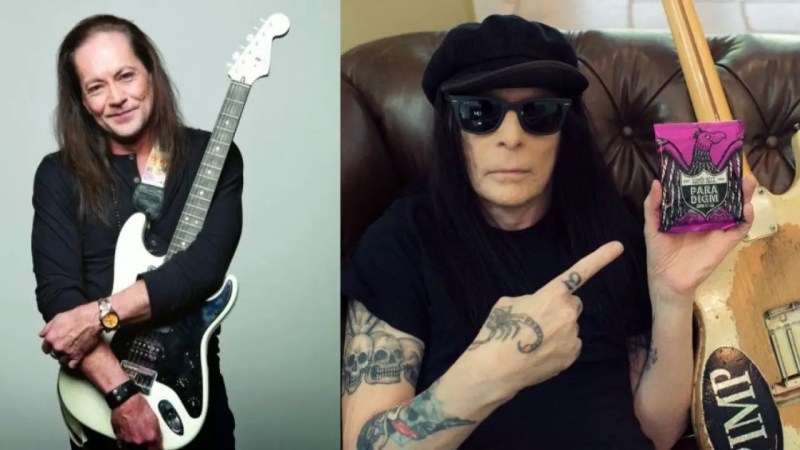
The history of heavy metal is littered with “what-if” scenarios, but few are as provocative as the revelation that Jake E. Lee was nearly the man to replace Mick Mars in Mötley Crüe. In a business defined by excess and ego, the mid-1980s saw a collision of talents that could have fundamentally altered the DNA of the Sunset Strip’s most notorious export. However, according to Lee, the missed opportunity didn’t just change the band’s sound; it sparked a lifelong rift and allegations of deep-seated personal prejudice.
The Audition That Divided a Band
While Mötley Crüe’s core lineup of Nikki Sixx, Tommy Lee, Vince Neil, and Mick Mars is often viewed as an inseparable unit, internal tensions during the band’s early rise led to a search for a more technically proficient guitarist. Jake E. Lee, then a rising star who would eventually land the coveted gig with Ozzy Osbourne, was the primary candidate for the role.
“They wanted me to replace Mick,” Lee recalled in a candid reflection on the era. The move would have been a stylistic pivot. While Mars was the architect of the band’s blues-drenched, heavy-riffing foundation, Lee brought a flashy, neo-classical dexterity that defined the shred era. According to Lee, the transition was halted not by creative differences, but by financial logistics. He claims that a relative of Mars was providing crucial funding for the band at the time, making Mick “unfireable” despite the band’s interest in a new direction.
There were even discussions of expanding the Crüe to a five-piece with two guitarists. Lee, however, remained skeptical. “MÖTLEY CRÜE. Two guitar players. I don’t know about that,” he remarked, noting that the unique chemistry of the quartet didn’t seem built for a twin-guitar attack.
A Rift Rooted in Race
While the professional arrangement fell through, the interpersonal fallout was permanent. Lee asserts that these discussions were the catalyst for a long-standing “rift” between him and Mars. However, the conflict allegedly went deeper than mere professional jealousy.
In several accounts of his interactions with the band, Lee has been vocal about his experiences with Mick Mars, even leveling accusations of racism against the Crüe guitarist. Lee, who is of Japanese and Welsh descent, has suggested that his heritage played a role in the friction. While Mars has largely remained silent on these specific allegations over the years, the tension remains a dark footnote in the band’s history.
What Could Have Been?
If Lee had joined, the 1980s hair metal landscape might have looked entirely different. Mick Mars was the primary songwriter for the band’s most iconic riffs, providing the “sludge” and “grind” that balanced Nikki Sixx’s pop-sensible melodies. Replacing that grit with Lee’s high-octane precision might have pushed the band toward a sound more akin to The Ultimate Sin-era Ozzy Osbourne.
Instead, Mars remained the backbone of the Crüe for four decades, surviving health battles and lineup shifts involving vocalists like John Corabi. Meanwhile, Lee carved out a legendary path with Badlands and Red Dragon Cartel.
Ultimately, the friction between Lee and Mars serves as a reminder that behind the platinum records and sold-out stadiums, the world of rock is often fueled by personal politics and behind-the-scenes drama that never quite makes it into the liner notes.