
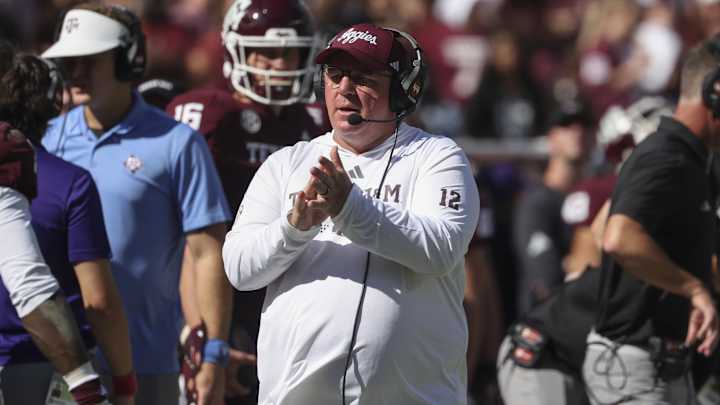
🏈 The Mike Elko era at Texas A&M is quickly taking shape, and the theme is unmistakable: continuity. In a move that aims to stabilize the staff amidst the chaotic college football transition period, Elko announced Monday that he has promoted wide receivers coach and co-Offensive Coordinator Holmon Wiggins to the role of Offensive Coordinator. This decision follows the departure of Collin Klein, who accepted the head coaching position at Kansas State.
Elko’s promotion of Wiggins is a bold strategic stroke, prioritizing familiarity and internal cohesion over an external search for a high-profile, experienced coordinator. The decision mirrors the approach taken on the defensive side of the ball, signaling a clear commitment to maintaining the established culture and system.
A Controversial, Yet Strategic, Promotion
While the move was anticipated by some within the program, it is likely to generate some controversy among fans and analysts who might have preferred a coordinator with previous play-calling experience. Wiggins has never formally coordinated an offense before, yet his pedigree is exceptional. He is widely regarded as an elite receivers coach and has spent time around some of the most successful offensive minds in the game throughout his career.
Wiggins’s background includes work at programs known for dynamic offenses, and his ability to develop top-tier wide receiver talent is unquestioned. However, transitioning from position coach to full offensive coordinator in the demanding landscape of the SEC is a significant step. Elko is clearly betting that Wiggins’s deep understanding of the current roster and his coaching acumen will outweigh his lack of coordinator experience.
Preserving Staff Cohesion: The Elko Blueprint
The primary benefit of the Wiggins promotion is the preservation of staff continuity. This is the second high-level coordinator spot Elko has filled by promoting from within, establishing a pattern for his leadership.
On the defensive side, when Jay Bateman departed, Elko elevated Lyle Hemphill to Defensive Coordinator. Hemphill had been with the program this past year and shares extensive experience working with Elko’s defensive schemes. By promoting both Wiggins and Hemphill, Elko ensures that the core philosophical tenets of his coaching staff—both offensively and defensively—remain intact.
This approach minimizes the learning curve for players and coaches alike, avoiding the potentially disruptive process of integrating a completely new voice and system during a critical transition year. In a league like the SEC, where recruiting and development never slow down, maintaining stability is arguably as valuable as experience.
The challenge for Wiggins will now be proving that his success as a position coach translates to effective game planning and play-calling under the intense scrutiny of the Texas A&M faithful. His close relationship with the current offensive players, particularly the receivers he has coached, should help smooth the transition in the locker room, giving him a head start in building trust and confidence.
Mike Elko’s initial staff decisions reveal a coach focused on building an internal, loyal, and cohesive unit, believing that established relationships and shared vision are the fastest route to success in College Station.