
The Initial Sting in Lexington
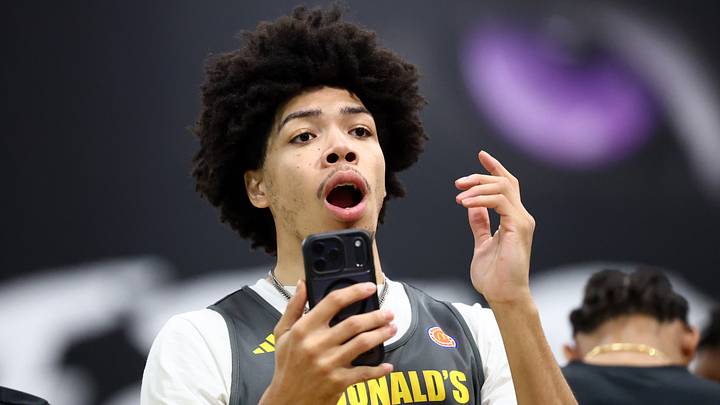
When top-ranked recruit Tyran Stokes officially pledged his commitment to Bill Self and the Kansas Jayhawks earlier this offseason, panic predictably coursed through Big Blue Nation. Fans and local analysts immediately questioned head coach Mark Pope, criticizing the second-year Kentucky leader for dedicating immense recruiting capital to a singular, high-profile target who ultimately opted for the deep NIL pockets and storied sideline clout of Lawrence.
Losing a consensus five-star forward—a physical 6-foot-7 powerhouse capable of completely altering a program’s ceiling—feels like an undeniable setback on paper. However, stripping away the initial emotional reaction reveals a different tactical reality. The failed pursuit of Stokes may actually provide the Wildcats with a distinct advantage when these two blue-blood powerhouses square off this November.
Avoiding the One-and-Done Trap
Modern college basketball has shifted drastically away from relying exclusively on top-heavy freshman talent. While landing the nation’s No. 1 overall prospect generates major recruiting headlines, it also creates an unstable structural balance. Teams built around elite one-and-done freshmen often spend November and December struggling with defensive cohesion, shot selection, and spatial chemistry.
By swinging and missing on Stokes, Kentucky avoided allocating a massive chunk of its financial and roster real estate to a single teenage focal point. Instead, the miss forced Pope to pivot toward constructing a deeply balanced, veteran-heavy roster through the transfer portal and targeted high-school fits. The resulting Wildcats depth chart features experienced multi-year talent built specifically for modern offensive spacing, rather than an isolated offense tailored around one elite freshman’s isolation touches.
Structural Pressure on the Jayhawks
For Kansas, securing Stokes brings immense immediate pressure. Bill Self must now integrate a highly touted forward into a system that was largely gutted by offseason transfer portal departures. Bridging the gap between high school dominance and the rigorous physical demands of high-major division-one basketball takes time.
Early-season marquee matchups frequently favor the more cohesive, veteran squad over the group relying on young prodigies working through early learning curves. When Kansas and Kentucky take the floor in November, the Jayhawks will likely still be determining rotational hierarchies and defensive rotations around Stokes. Kentucky, conversely, will arrive with established positional clarity and collective continuity.
Pope’s Strategic Flexibility
Losing out on the recruitment duel liberated Mark Pope’s offensive system. His coaching style relies on quick ball movement, five-out spacing, and continuous perimeter motion. Integrating a dominant downhill creator like Stokes can occasionally lead to stagnant possessions and ball-stopping habits while the rest of the unit watches.
Without a single dominant recruit demanding high usage rates from day one, Kentucky’s offensive workload can be distributed dynamically based on matchups. Opposing scouting reports cannot simply lock in on neutralizing one star player; they must prepare for an unpredictable, multi-faceted attack.
The November Advantage
Narratives in recruiting battles rarely match the final outcomes on the court. While Jayhawk fans celebrated a major victory on the recruiting trail, Kentucky quietly re-engineered its squad into a deeper, more adaptable roster.
When the ball goes up in November, the high-school ranking charts will no longer matter. Kansas will be forced to shoulder the high expectations and early structural growing pains that come with housing the nation’s top recruit. Kentucky will walk onto the floor with a chip on its shoulder, a balanced rotation, and a tactical edge that only materialized because that initial bag fell short.