
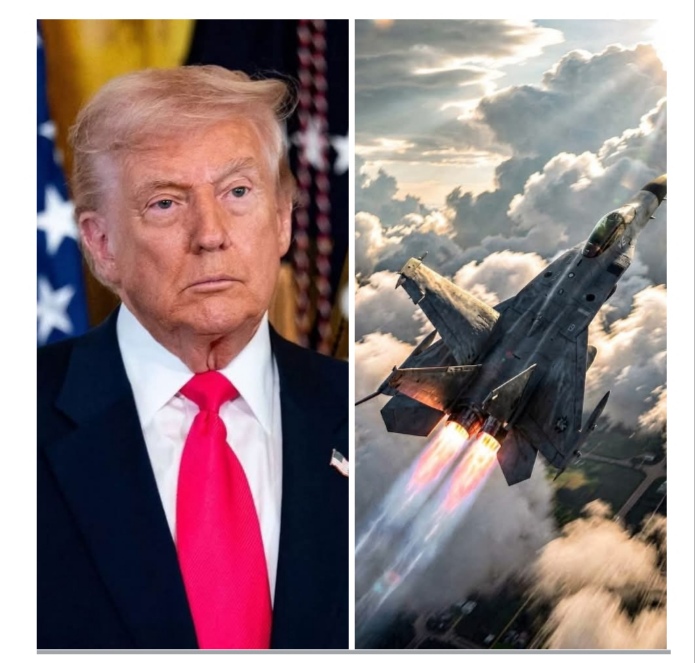
A Strategic Demonstration of Power
President Donald Trump has authorized a large-scale deployment of advanced U.S. military aircraft in what officials describe as a calculated show of force aimed at deterring potential adversaries. The operation involves several of the nation’s most sophisticated platforms operating in and around contested airspace, a move that has immediately drawn global attention and diplomatic scrutiny.
According to defense officials, the maneuver is intended to reinforce U.S. security commitments and send a warning that American interests and allies will be protected. The administration insists the flights are defensive in nature, designed to discourage escalation rather than provoke conflict.
Elite Aircraft Take Center Stage
Among the aircraft participating are F-35 stealth fighters, B-2 Spirit strategic bombers, F-22 Raptors, and carrier-launched F/A-18 Super Hornets. Military analysts note that each platform serves a specific role — stealth penetration, air superiority, and precision strike capability — making the combined deployment symbolically powerful.
Defense planners often use such coordinated operations to demonstrate readiness and interoperability across different branches of the armed forces. The presence of stealth bombers and advanced fighters together signals that the United States can operate across multiple domains simultaneously, from surveillance to potential strike operations.
Message to Adversaries and Allies
Administration officials say the operation is meant to deter hostile actions and reassure regional partners. By visibly projecting military capability, Washington hopes to convince rivals that confrontation would carry significant risks. Supporters of the move argue strong deterrence can prevent war by making the consequences of aggression unmistakably clear.
The White House has framed the flights as part of a broader strategy emphasizing strength in diplomacy. Officials say military preparedness strengthens negotiating leverage, particularly in regions where tensions have risen in recent months.
Critics Warn of Escalation Risks
Not everyone is convinced the approach will reduce tensions. Some foreign policy experts and opposition lawmakers warn that such demonstrations, while intended as deterrence, can be interpreted as provocation. They caution that close encounters between rival forces could lead to miscalculations or unintended incidents.
International observers also note that large-scale military displays often trigger reciprocal actions, raising the risk of a rapid cycle of escalation. Diplomats have urged communication channels remain open to prevent misunderstandings and maintain stability.
A Familiar Doctrine Revisited
The strategy reflects a longstanding doctrine in U.S. foreign policy: peace through strength. Advocates believe visible readiness discourages conflict, while critics argue diplomacy should take precedence over military signaling. The debate underscores a broader question about how nations balance deterrence with de-escalation in an era of heightened geopolitical competition.
For now, the flights serve as a reminder of America’s global military reach — and of the delicate line between deterrence and confrontation.