
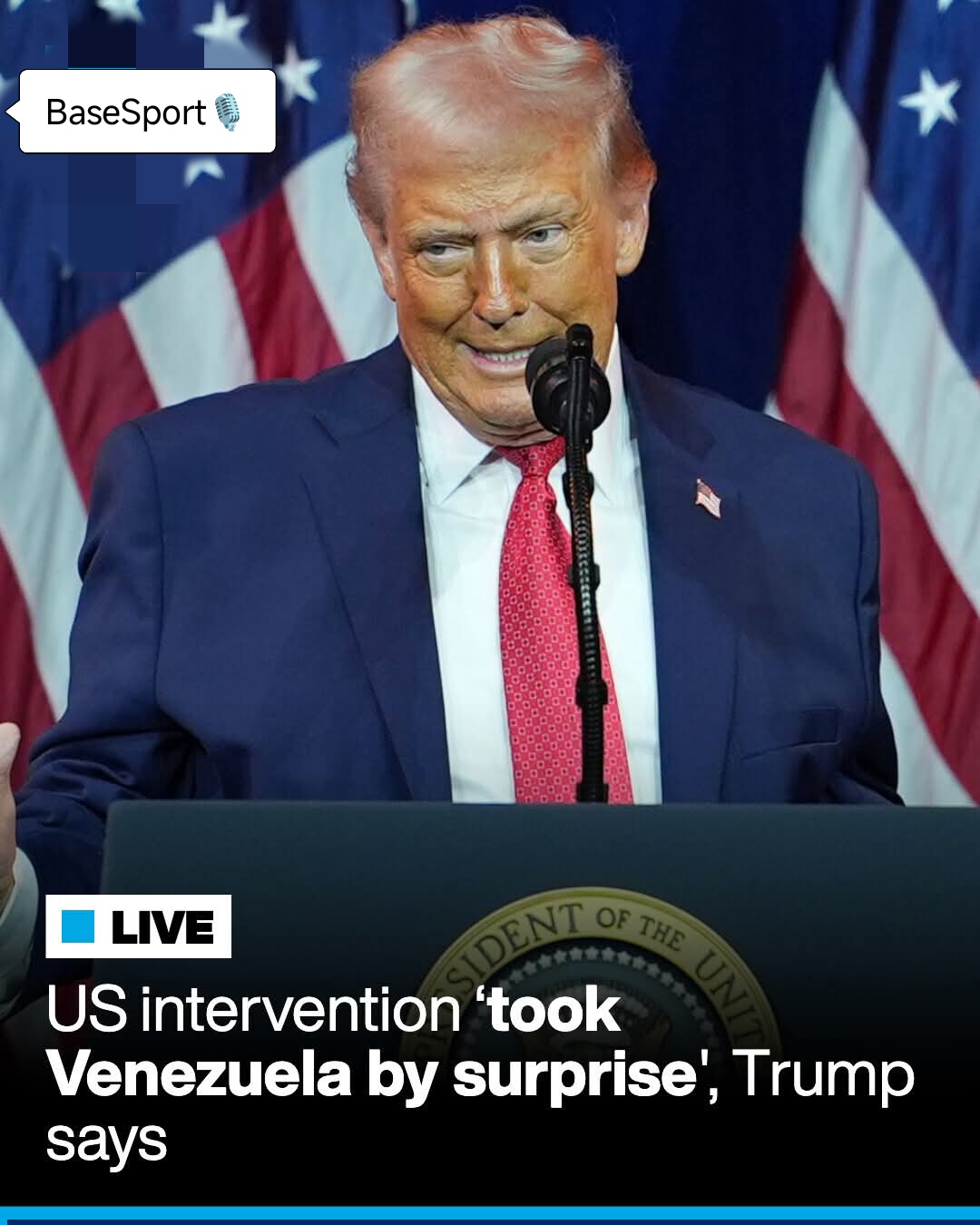
WASHINGTON — U.S. President Donald Trump on Tuesday defended the unprecedented American military operation that ousted Venezuelan President Nicolás Maduro, saying the extraction mission “took Venezuela by surprise” and marked a bold assertion of U.S. power in the Western Hemisphere. The comments came amid intense global debate over the legality and implications of the operation, which resulted in Maduro’s capture and removal from power earlier this month.
Speaking from the White House, Trump described the operation as the product of meticulous planning and surprise, designed to prevent Maduro’s allies from anticipating or disrupting the mission. “We executed this with speed and precision,” Trump said. “It took Venezuela by surprise, and the objective was clear — to remove a corrupt leader who had long defied international norms.”
The strike, which took place in the early hours of January 3, involved U.S. military forces targeting strategic locations in Caracas and elsewhere in Venezuela as part of what Trump called an effort to protect American interests and bring a wanted criminal to justice. Maduro and his wife, Cilia Flores, were captured and flown to New York, where they now face federal charges related to drug trafficking and terrorism.
Operation Details and Domestic Reaction
According to U.S. military officials, the operation utilized overwhelming force and coordination, including air, land, and sea elements, to seize Maduro without significant American casualties. Trump highlighted the element of surprise as critical to the mission’s success, crediting intelligence and special operations units with achieving their goals swiftly and effectively.
However, the dramatic raid drew immediate and widespread criticism. Human rights advocates and legal scholars argue the U.S. intervention violated international law and bypassed essential constitutional and legislative processes. Members of both parties in the U.S. Congress have called for scrutiny of Trump’s authority to order such an operation without explicit congressional approval.
International reaction has also been sharply divided. Venezuela’s interim government declared a period of mourning and condemned the U.S. action as a “war crime,” citing the deaths of Venezuelan security personnel and civilians during the strike. Several nations, including Mexico and Spain, joined in denouncing the intervention as a breach of sovereignty.
Trump’s Strategic Rationale and Future Intentions
Trump has framed the United States’ role in Venezuela as part of a broader strategy to combat narcotics trafficking and dismantle powerful criminal networks. He also reiterated his administration’s intention to oversee Venezuela’s oil industry in the aftermath of Maduro’s removal, asserting that American energy companies would help rebuild the country’s struggling infrastructure and benefit both Venezuelans and U.S. interests.
In remarks to reporters, Trump signaled that the U.S. role in Venezuela could extend beyond Maduro’s capture. While insisting that the mission was not an occupation, he said Washington would ensure a “safe and orderly transition” to a new governing structure. “We want peace and stability for the Venezuelan people,” Trump said, reinforcing his administration’s stance that direct involvement was necessary to prevent a power vacuum.
Legal and Geopolitical Implications
The operation has ignited debate regarding executive authority and international norms governing the use of force. Critics argue that the unilateral intervention sets a dangerous precedent and risks destabilizing the region, potentially inviting retaliatory actions by other global powers. Supporters in Washington maintain that decisive action was justified given Maduro’s history of corruption, repression, and alleged ties to international drug trafficking.
Meanwhile, Maduro’s legal team has entered pleas of not guilty on the charges brought in U.S. federal court, with Maduro himself characterizing his removal as a kidnapping. The United Nations and other international bodies have called for de-escalation and respect for sovereign governance, even as the situation in Venezuela continues to evolve and U.S. forces remain influential in shaping the country’s political landscape.