
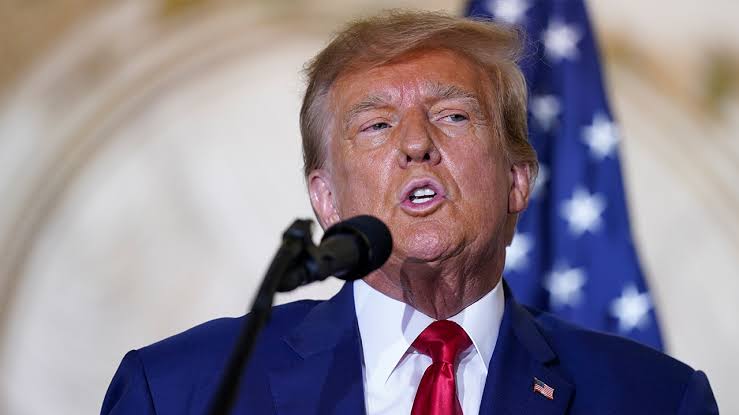
WASHINGTON — President Donald Trump used remarks at the House Republican retreat on Tuesday to once again promote his long-standing and widely discredited claim that the 2020 presidential election was stolen, choosing the anniversary of the January 6 Capitol attack to revisit an issue that continues to divide the nation.
Speaking to Republican lawmakers in Washington, D.C., Trump told attendees, “We gotta straighten this out,” as he launched into familiar assertions that the election process was manipulated against him. Despite repeated court rulings, recounts, audits, and reviews that found no evidence of widespread fraud capable of changing the outcome, Trump reiterated his belief that the vote was “rigged,” drawing applause from some in the room.
The comments came on a politically sensitive date. January 6 marks the anniversary of the 2021 riot at the U.S. Capitol, when a pro-Trump mob disrupted the certification of President Joe Biden’s electoral victory. Trump’s renewed rhetoric underscored how central the election narrative remains to his political identity and his relationship with the Republican Party.
Trump did not present new evidence to support his claims but repeated allegations about mail-in ballots, voting machines, and election administration in key battleground states. Election officials from both parties, as well as Trump’s own former administration officials, have consistently rejected such claims. Former Attorney General William Barr previously stated that the Justice Department found no evidence of fraud on a scale that would have altered the election’s outcome.
Reaction From Lawmakers and Critics
Democrats and some Republicans quickly criticized Trump’s remarks, accusing him of undermining public trust in democratic institutions. “This kind of rhetoric continues to fuel division and misinformation,” said one Democratic lawmaker, noting that election denial has become a persistent challenge to democratic norms.
Some Republican leaders, while stopping short of openly rebuking Trump, attempted to shift focus toward policy priorities ahead of the upcoming election cycle. Others, however, embraced Trump’s message, arguing that election integrity reforms remain a legitimate concern for voters.
The White House declined to comment directly on Trump’s remarks, but administration officials have repeatedly emphasized that the 2020 election was secure and legitimate. Federal and state election agencies have echoed that position, calling it one of the most secure elections in U.S. history.
A Familiar Strategy
Trump’s renewed focus on the 2020 election reflects a broader strategy that has defined much of his post-presidency and return to office. By framing himself as a victim of a flawed system, Trump continues to galvanize a loyal base that views his claims as evidence of broader institutional corruption.
Political analysts note that Trump’s persistence on the issue serves both a political and personal purpose. “For Trump, the election narrative is about legitimacy,” said one political scientist. “Acknowledging defeat would undermine the foundation of his movement, so the claim remains central to his messaging.”
At the same time, critics warn that revisiting these claims risks reigniting tensions that culminated in violence four years ago. Law enforcement agencies remain cautious around January 6 commemorations, mindful of how misinformation and political rhetoric can escalate.
Looking Ahead
As the nation moves further into another election cycle, Trump’s remarks signal that disputes over election legitimacy are unlikely to fade. While many voters express fatigue with relitigating the past, polling suggests that a significant portion of the Republican electorate remains skeptical of the 2020 outcome.
For now, Trump shows no sign of backing away from his claims. Instead, his speech at the House Republican retreat reinforced how deeply the issue remains embedded in American political discourse. On a day meant by some to reflect on the fragility of democracy, Trump’s words highlighted the enduring fault lines that continue to shape U.S. politics.