
WASHINGTON — President Donald Trump reignited controversy this week by reiterating a widely debunked claim that he foresaw the threat posed by Osama bin Laden before the September 11, 2001 terrorist attacks, asserting that he warned U.S. officials in his 2000 book The America We Deserve and that the tragedy might have been prevented had his advice been heeded.
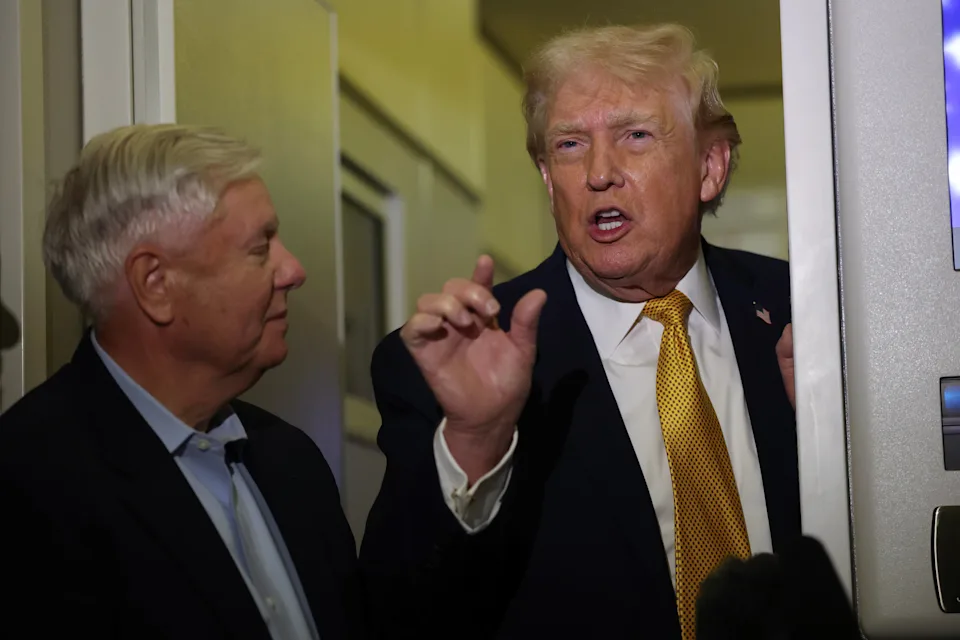
Trump, 79, brought up the claim Sunday night aboard Air Force One as he flew back to Washington, D.C., engaging in an impromptu exchange with reporters and South Carolina Republican Senator Lindsey Graham. While discussing the recent U.S. military operation that resulted in the capture of Venezuelan leader Nicolás Maduro, Trump pivoted to national security, saying he had foreseen the danger of bin Laden a full year before the World Trade Center attacks, and lamented that authorities did not listen to him.
“You know I wrote about Bin Laden one year before the attack on the World Trade Center,” Trump told reporters, claiming that his 2000 book included a warning that “you gotta go after Bin Laden.” He added that if officials had acted on his alleged warning, “you wouldn’t have had the World Trade Center tragedy.”
Trump then turned to Senator Graham and declared, “Did you know that? I predicted bin Laden.” Graham responded noncommittally: “I learn something new every day.”
Fact Check: Claim Does Not Hold Up
Media fact-checking organizations and historians have repeatedly refuted Trump’s interpretation of his own book. The book does contain a passing mention of bin Laden — who had already been on the FBI’s “Ten Most Wanted Fugitives” list well before 9/11 — but it does not include a substantive warning that he would lead the attacks, nor does it call for pre-emptive action against him.
According to Wikipedia, The America We Deserve, co-written by ghostwriter Dave Shiflett and published in January 2000, mentions bin Laden only once and does not urge U.S. officials to target or kill him. The reference is part of a broader discussion of terrorism and foreign policy, but there is no explicit foresight into the 9/11 attacks or calls for action against al-Qaeda’s leader.
Experts and former officials have noted that intelligence about bin Laden and al-Qaeda was already well established by 2000, following major bombings of U.S. embassies in East Africa in 1998 and long before the 9/11 attacks occurred.
Persistent Narrative Despite Repeated Debunking
Trump has made similar claims on multiple occasions over the past decade, including during his 2016 presidential campaign and in public remarks in subsequent years. Fact-checkers have consistently pointed out that he exaggerates his role in foreseeing the threat posed by bin Laden, often framing the narrative to portray himself as having unique insight.
Despite repeated debunking by independent fact-checkers, including by outlets such as FactCheck.org and CBS News, Trump’s assertions persist in his public rhetoric, especially in settings that mix commentary on national security with political messaging.
Reactions and Broader Impact
Critics have seized on the remarks as another example of Trump’s tendency to make inaccurate statements about historical events, particularly when such claims bolster his leadership narrative. Observers say that conflating brief mentions of historical figures with predictive insight misrepresents both the historical record and the content of the book itself.
The bin Laden claim comes amid broader conversations about Trump’s stance on national security and foreign policy, as well as the role of presidential memory and accuracy in public discourse. While supporters may view Trump’s comments as reflective of foresight, detractors see them as emblematic of a pattern of self-aggrandizing statements that do not align with documented evidence.
Looking Ahead
Trump’s remarks are likely to resurface in political debates, particularly as Republicans emphasize toughness on terrorism and security issues ahead of upcoming election cycles. However, independent assessments of his claims underscore the importance of separating factual record from repeated personal assertions — a challenge that continues to shape discussions of presidential credibility in the modern era.