
WASHINGTON — President Donald Trump has rejected a Kremlin claim that a recent Ukrainian drone strike targeted a residence belonging to Russian President Vladimir Putin, saying U.S. officials found no evidence to support the allegation.
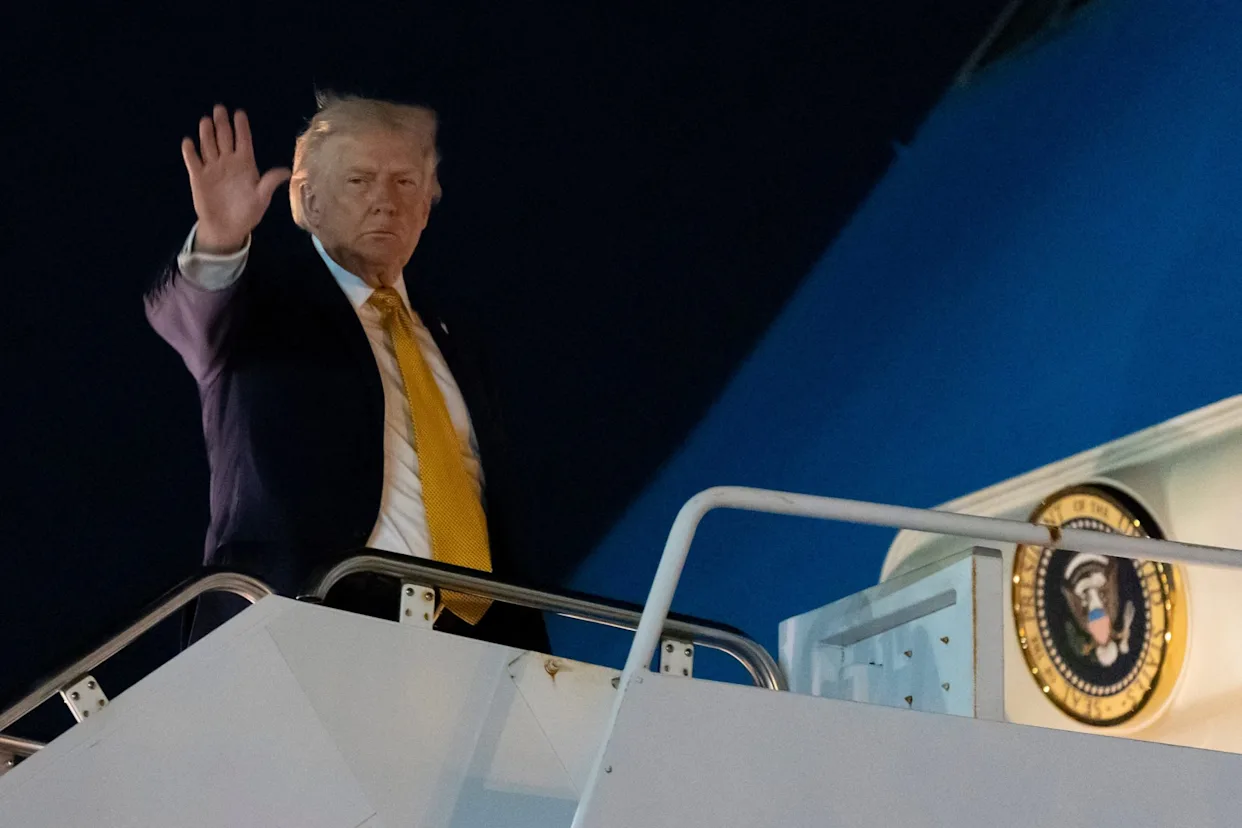
Speaking to reporters on Sunday as he returned to Washington after a two-week stay at his Florida residence, Trump said American intelligence assessments concluded that while an incident may have occurred near the area, Putin’s residence itself was not targeted.
“Something happened nearby,” Trump said, “but we don’t believe that strike happened the way it was described. After checking, we don’t believe Putin’s residence was targeted.”
The remarks directly contradicted claims made last week by Russian Foreign Minister Sergey Lavrov, who accused Ukraine of launching a wave of drones at Putin’s state residence in Russia’s northwestern Novgorod region. Lavrov said Russian air defenses successfully repelled the attack and sharply criticized Kyiv for allegedly carrying out such an operation at a sensitive moment in diplomatic efforts to end the war.
The Kremlin’s accusation emerged just one day after Ukrainian President Volodymyr Zelenskyy traveled to Florida for talks with Trump as part of the U.S. administration’s still-developing 20-point framework aimed at ending the conflict. Zelenskyy promptly denied the Russian claims, calling them baseless and politically motivated.
Trump’s comments appeared to align with skepticism expressed by several European officials, who argued that Moscow’s allegation was designed to derail peace talks and cast Ukraine in a reckless light. According to those officials, Russia has frequently used unverified security claims to shift blame and influence negotiations.
However, Trump’s response to the allegation evolved over the course of the week. Initially, he appeared to accept the Kremlin’s account. Last Monday, Trump told reporters that Putin had raised the issue during a phone call between the two leaders earlier that day. At the time, Trump said he was “very angry” about the accusation, suggesting concern that Ukraine might be escalating tensions.
By midweek, the president’s tone had noticeably softened. On Wednesday, Trump shared a New York Post editorial on his social media platform that questioned the credibility of Russia’s claim. The editorial criticized Putin for spreading what it described as falsehoods at a critical moment, accusing the Russian leader of choosing “lies, hatred, and death” instead of compromise.
Trump has faced mounting challenges in delivering on his campaign promise to bring a swift end to the war in Ukraine. During the 2024 campaign, he repeatedly claimed he could end the conflict within a day, a pledge that has proven far more difficult to fulfill. As negotiations have dragged on, Trump has shown increasing frustration with both Putin and Zelenskyy, signaling impatience with what he views as obstacles on both sides.
Despite the tensions, Trump and Zelenskyy said last week that their discussions at Trump’s Mar-a-Lago resort were productive. Both leaders indicated progress had been made toward narrowing differences and advancing proposals to halt the fighting, though neither provided specific details.
The Kremlin has not publicly responded to Trump’s latest dismissal of the drone strike claim. Meanwhile, Ukrainian officials continue to deny any attempt to target Putin personally, maintaining that Ukraine’s military actions are focused strictly on strategic objectives related to the war.
As diplomatic efforts continue, the episode highlights the fragile nature of negotiations and the ease with which unverified claims can complicate already delicate talks. Whether Trump can translate recent discussions into tangible progress toward peace remains an open question.