
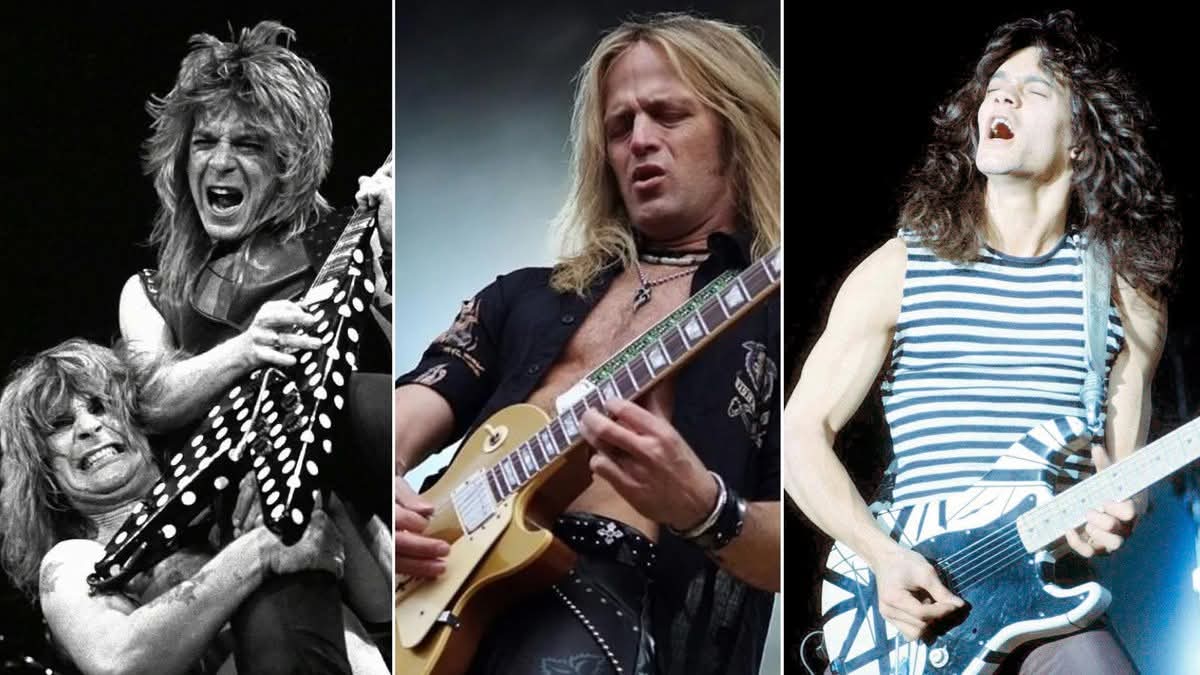
The dawn of the 1980s marked a seismic shift in the landscape of heavy music, a period defined by the collision of dark theatricality and technical wizardry. According to celebrated guitarist Doug Aldrich—known for his tenure with Whitesnake and Dio—the era was anchored by two opposing yet complementary forces: Ozzy Osbourne and Van Halen. In a recent retrospective, Aldrich described the relationship between these two titans as the “Yin and Yang” of the decade, a balance that fundamentally reshaped the DNA of hard rock.
The Rise of the “Angelic” Shredder
At the heart of Aldrich’s analysis is the late, legendary Randy Rhoads. When Ozzy Osbourne emerged from the shadow of Black Sabbath to launch his solo career, he did so with a secret weapon that defied the era’s gritty stereotypes. Rhoads, a classically trained prodigy, brought a sense of sophisticated elegance to the heavy metal stage. Aldrich notes the fascinating dichotomy of Rhoads’ presence: “He’s got this angelic guitar player,” Aldrich explains, referring to Rhoads’ slight frame and blonde, almost ethereal aesthetic.
However, the contrast lay in the sonic assault Rhoads produced. Despite his “angelic” appearance, he was “playing these mean riffs.” This juxtaposition of neoclassical beauty and raw, aggressive power gave Ozzy a fresh, modern edge that separated his solo work from the doom-laden sludge of his Sabbath years. Rhoads wasn’t just playing loud; he was composing with a precision that demanded the respect of musicians across all genres.
Van Halen: The Technicolor Revolution
On the other side of the spectrum stood Van Halen, led by the revolutionary Eddie Van Halen. While Ozzy leaned into the “Prince of Darkness” persona, Van Halen brought a bright, West Coast energy to the scene. Their sound was a celebratory explosion of “brown sound” guitar tones and David Lee Roth’s flamboyant showmanship. If Ozzy represented the shadows and the occult, Van Halen was the ultimate high-octane party.
Together, these two camps created a complete ecosystem for fans. Aldrich suggests that you couldn’t have one without the other; they represented the full emotional range of the early ’80s. Van Halen proved that rock could be fun and technically jaw-dropping simultaneously, while Ozzy and Rhoads proved that it could be serious, sophisticated, and dark without losing its melodic soul.
A Lasting Sonic Legacy
The “Yin and Yang” dynamic described by Aldrich remains the blueprint for modern guitar-driven music. The tension between the “mean riffs” and the “angelic” delivery seen in Rhoads’ work opened the door for the shred movement of the mid-80s, influencing everyone from Yngwie Malmsteen to Aldrich himself.
As the music world looks back on this golden era, the consensus remains that the early 1980s were a perfect storm of creativity. By balancing the light and dark, the gritty and the polished, Ozzy Osbourne and Van Halen ensured that heavy metal would not just survive the decade, but dominate it. For Aldrich and countless other guitarists, that era wasn’t just about the music—it was about a fundamental shift in how the world perceived the power of six strings.