
In the modern era of the WTA, few players command as much attention—or generate as much kinetic energy—as World No. 1 Aryna Sabalenka. Fresh off a historic “Sunshine Double” with titles in Indian Wells and Miami, the 27-year-old has cemented her status as the most dominant force in women’s tennis. Yet, for fans and commentators alike, the most “crazy” aspect of Sabalenka isn’t just her 23–1 start to the 2026 season; it is the jarring, almost theatrical contrast between her off-court persona and her on-court “Tiger” avatar.
The Gentle Giant Off the Clock
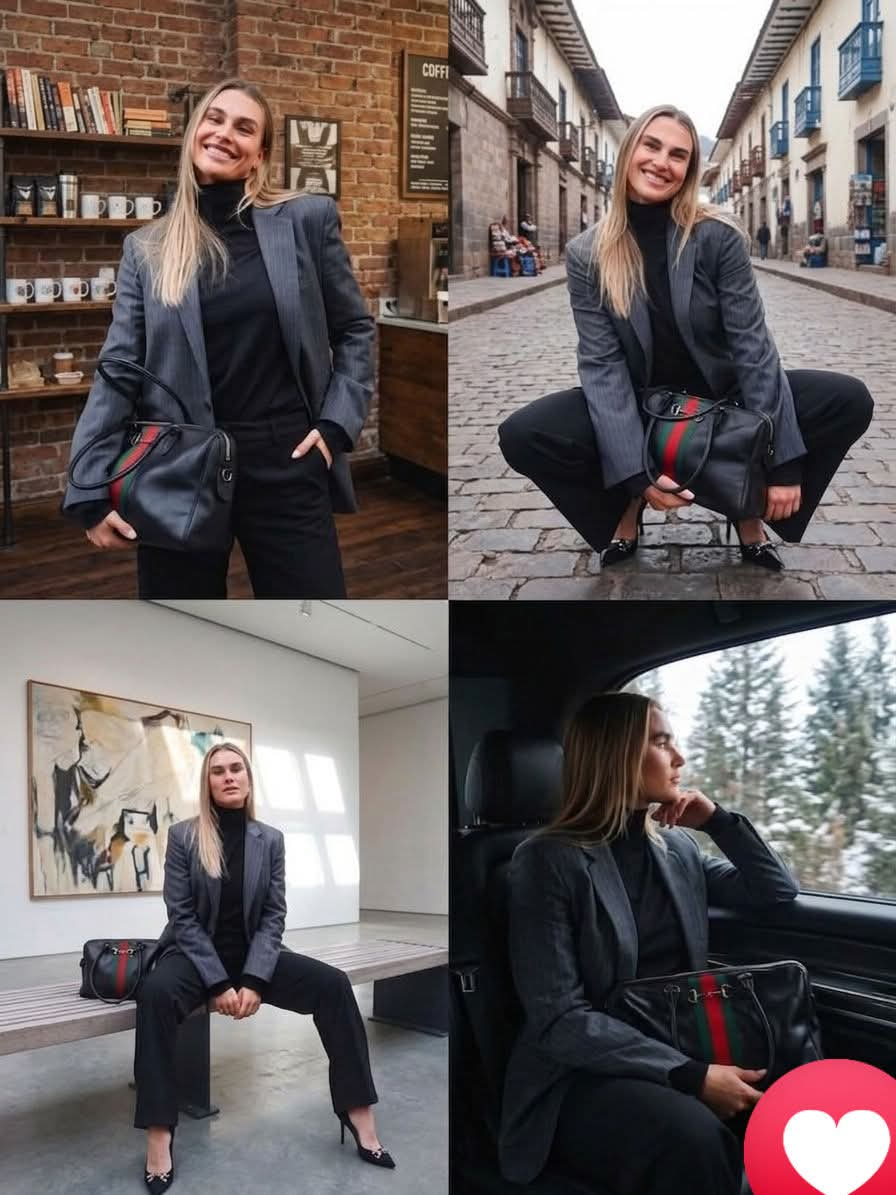
To follow Sabalenka on social media or watch her in post-match interviews is to meet a woman who is “bubbly, funny, and sweet.” Whether she is filming lighthearted TikToks with her team or posing with fans, Sabalenka radiates a warm, approachable energy. She has often described herself as an “open book,” using her platform to showcase a lighter side of her personality that helps balance the immense pressure of staying at the top of the rankings. Off the court, the Belarusian star is quick to laugh, often poking fun at her own intensity and expressing a genuine, “sweet” disposition that stands in stark contrast to the athlete who steps onto the baseline.
Unleashing the “Tiger”
The moment Sabalenka crosses the white line of the court, the transformation is total. The “sweet” influencer vanishes, replaced by a competitor whose game is built on raw, uncompromising power. Known for launching balls with a velocity that rivals many of the top men on the ATP tour, Sabalenka’s “Tiger” nickname—inspired by the tattoo on her left forearm—is a perfect descriptor for her predatory style of play.
She doesn’t just hit the ball; she imposes her will upon it. Her serve is a weapon of mass destruction, and her groundstrokes are delivered with a relentless pace that Andy Roddick recently compared to the intensity of Rafael Nadal. On court, she is a “gangster,” as she once jokingly put it—a fighter who understands that there is “no time for jokes” when a trophy is on the line.
Balancing the Burn
This duality is not a facade; it is a survival mechanism. Sabalenka has admitted that she often finds her own on-court behavior “embarrassing” to watch back, noting the high-decibel grunts and emotional explosions that defined her early career. However, by embracing her “sweet” side away from the stadium, she has found the mental equilibrium necessary to sustain her World No. 1 ranking. As she prepares for the clay-court swing, the tennis world remains captivated by the woman who can charm a room with a smile, only to dismantle an opponent with the most ferocious power the game has ever seen.