
A Blockbuster Move Meets Real-World Realities
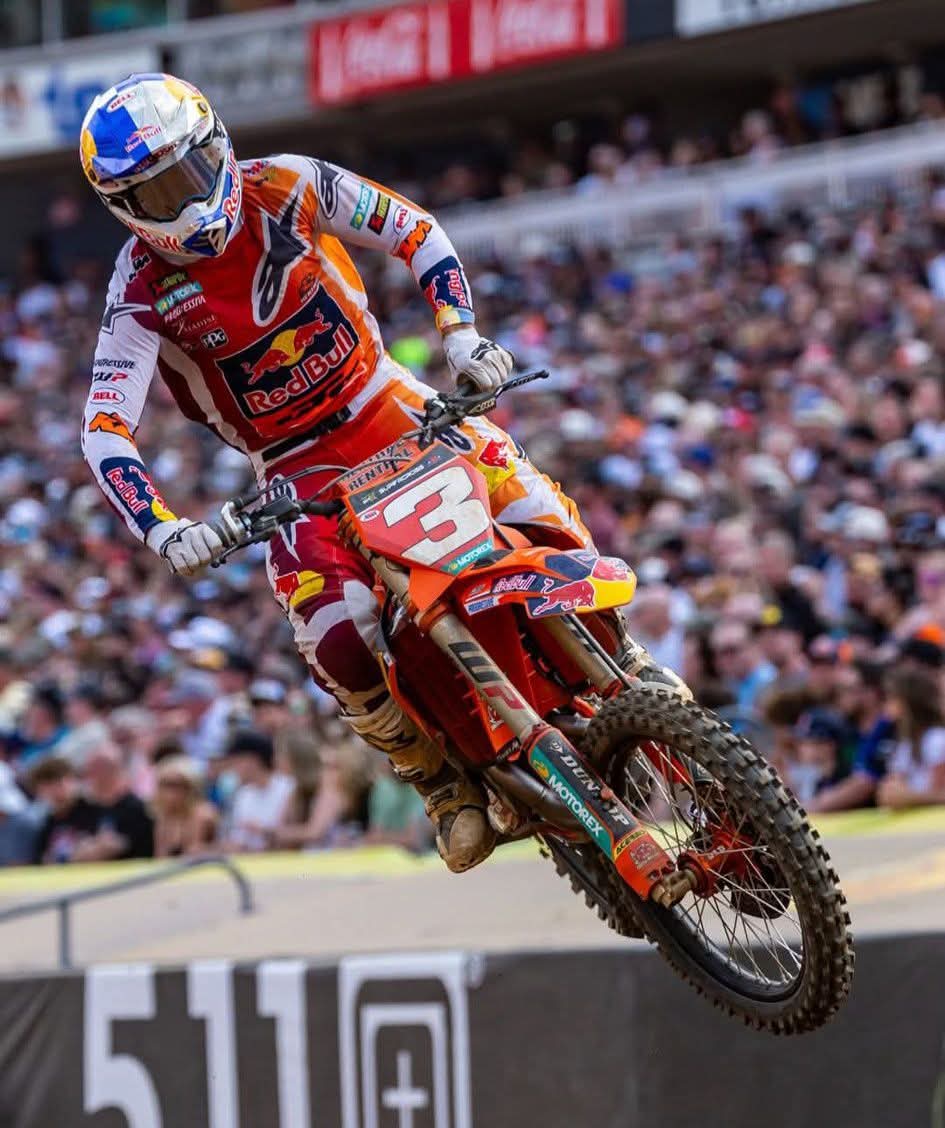
When multi-time champion Eli Tomac shocked the motocross world by switching to Red Bull KTM Factory Racing for the 2026 season, expectations were sky-high. Fresh off an opening-round statement win under the lights of Anaheim, the ET3 era on orange appeared destined for frictionless dominance. However, as the grueling Monster Energy AMA Supercross series progressed into the spring rounds—and a recent devastating neck injury disrupted his Pro Motocross campaign—it became clear that the road has been paved with unexpected hurdles.
For months, industry insiders and fans at Vital MX hypothesized that Tomac’s minor performance dips and setup frustrations were tied exclusively to the distinct KTM motor package. Now, Red Bull KTM Team Manager Ian Harrison has finally broken his silence to clarify the exact nature of the technical, mechanical, and physical obstacles his star rider has truly been battling.
Beyond the Engine: The Clutch and Frame Conundrum
While public speculation heavily emphasized the power delivery of the Austrian motor, Harrison revealed that the engine itself was never the core issue. In fact, Tomac has openly praised the raw power package of the KTM 450 SX-F Factory Edition. Instead, the actual technical shift centered around a fundamental philosophy change in how that power is managed.
Historically, KTM utilizes a cutting-edge hydraulic clutch system across its racing platforms. Tomac, heavily dialed into the feedback of a traditional cable clutch from his previous machinery, requested a complete reconfiguration. To accommodate his hyper-aggressive style, KTM’s engineers in Austria had to fast-track a custom cable-actuated setup.
Furthermore, Harrison pointed out that adapting to KTM’s signature chromoly steel chassis—a sharp contrast to the rigid aluminum frames Tomac rode for over a decade—required a massive mental and physical recalibration. The steel frame offers a different flex profile and ground feedback, meaning the sweet spot for suspension dampening and chassis balance had to be built from scratch to match Tomac’s high-force demands.
The Nashville Tire Dilemma and Track Evolution
The technical debate peaked during round thirteen in Nashville, where Tomac displayed dominant speed in qualifying and his heat race, only to struggle heavily in the main event. Harrison addressed the post-race fallout directly, focusing on a critical setup gamble: the decision to run a scoop tire.
As modern Supercross tracks degrade more rapidly and unpredictably, finding traction becomes an evolving chess match. In Nashville, the team opted for the aggressive scoop tire to gain a massive advantage off the gate and through the heavy loam. However, as the track hardens and bakes out under the stadium lights, a scoop tire loses its lateral stability on hard-pack transitions. Harrison noted that while the tire choice amplified their struggles, “you can’t pin it all on the tire.” The deeper issue was a compounding effect of the bike’s chassis balance altering as the track surface rapidly deteriorated.
Progress Interrupted but the Fire Remains
Despite these hurdles, the progress made by the Red Bull KTM squad has been monumental. Tomac collected major milestones along the way, including an iconic victory at the Daytona International Speedway. Harrison expressed immense awe at the 33-year-old’s unwavering work ethic and precision feedback during testing, noting that the legendary veteran is simply “wired differently.”
Though a racing incident at the Fox Raceway season opener left Tomac with a torn neck muscle, forcing him to sit out the summer outdoors stretch to heal, the foundational blueprint has been laid. The adjustment period is no longer a mystery; it is an ongoing masterclass in elite engineering. When ET3 returns to the gate fully fit, the synergy between the rider and his machine will be sharper than ever.