
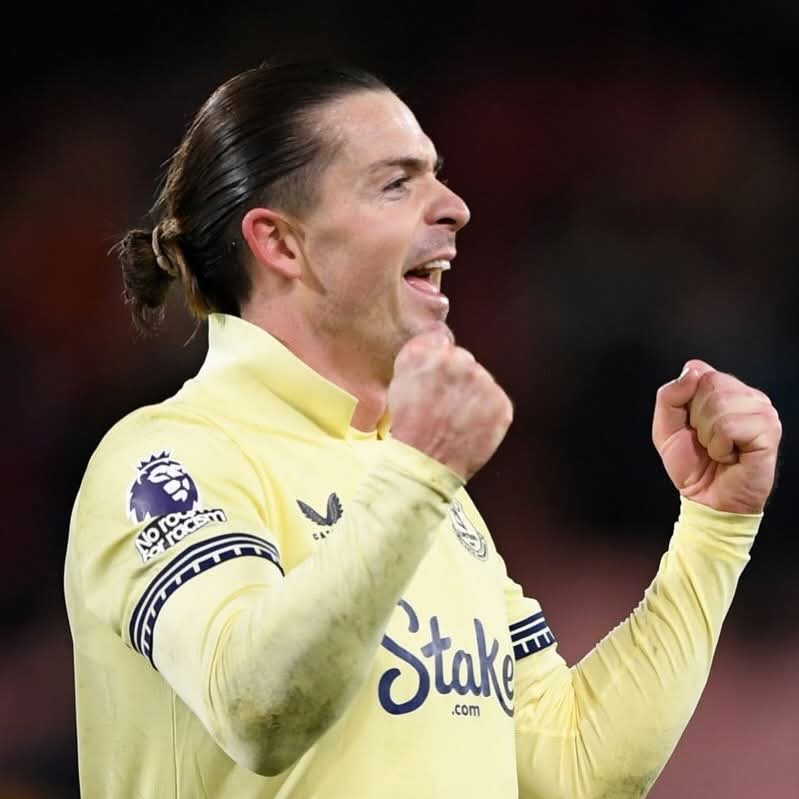
The corridors of Everton’s Finch Farm are buzzing with a quiet, calculated optimism this week. As the 2025/26 campaign enters its final stretch, the primary focus for the Toffees’ hierarchy has shifted from the pitch to the boardroom. The objective is clear: ensuring that Jack Grealish, the man who has become the creative heartbeat of the side, remains on Merseyside long after his current loan deal expires.
Negotiations are reportedly intensifying between Everton and Manchester City. While the initial agreement brought the 30-year-old playmaker to the Hill Dickinson Stadium on a season-long loan, the narrative has evolved. What was once a temporary fix for David Moyes’ attack has turned into a project centered around the former British-record signing. There is now a growing confidence within the club that a middle ground can be found to make his stay permanent.
A Career Reborn in Royal Blue
When Jack Grealish arrived at Everton last August, he was a player in need of a home. After a trophy-laden but increasingly peripheral stint under Pep Guardiola at Manchester City, the move to Everton offered a chance for reinvention. He seized it with both hands. Before a cruel stress fracture in his foot sidelined him in January, Grealish had registered two goals and six assists in 20 appearances, statistics that barely scratch the surface of his influence.
His ability to draw fouls, dictate the tempo of play, and provide a veteran presence in a rebuilding squad has endeared him to the Goodison faithful. Crucially, Grealish himself appears to have found a sense of belonging. The fact that he has chosen to remain on Merseyside for his intensive rehabilitation, rather than returning to City’s medical facilities, is being viewed by club insiders as a significant “green light” regarding his long-term intentions.
The Financial Chess Match
The hurdle, as is often the case in modern football, remains the arithmetic. Grealish still has one year left on his contract at the Etihad Stadium, where he earns upwards of £300,000 a week. While the current loan agreement includes an option to buy for £50 million, Everton are reportedly pushing for a fee closer to the £20 million mark.
The Toffees believe that Grealish’s age, his recent injury history, and his proximity to the end of his City contract make a lower valuation more realistic. Manchester City, meanwhile, may be tempted to sanction a cut-price deal to remove his significant wages from their books. Sources suggest that a secondary option—a second consecutive loan deal with a mandatory purchase clause—is also on the table to help spread the financial impact.
Building for the Future
For David Moyes, securing Grealish is about more than just one player; it is about identity. As Everton looks to return to European competition, having a player of Grealish’s caliber serves as a statement of intent. The club’s improved financial standing, bolstered by the move to their state-of-the-art stadium, has provided the Friedkin Group with the leverage needed to pursue such ambitious deals.
While the injury has likely ruled Grealish out of Thomas Tuchel’s England squad for the upcoming 2026 World Cup, his focus is firmly on being fit for pre-season. Whether that pre-season begins in royal blue remains the multi-million-pound question, but for the first time in years, the future for both Jack Grealish and Everton looks brightly intertwined.