
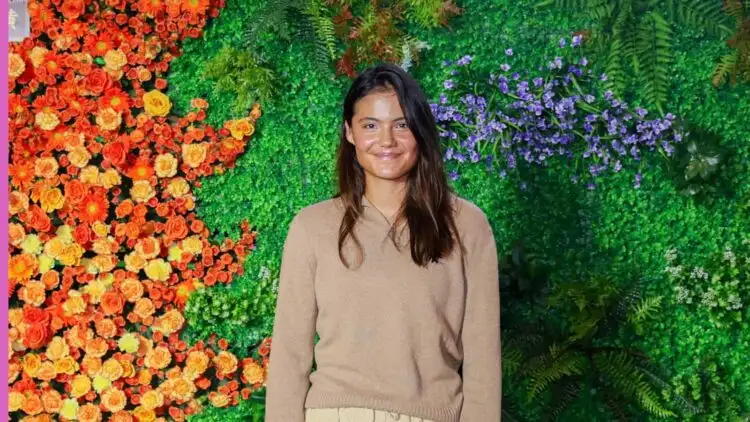
In the world of professional sports, marketability usually follows a predictable trajectory: win titles, sign deals. However, Emma Raducanu continues to defy this conventional logic. As the 2026 season approaches, the British star is reportedly on the verge of a seismic shift in her commercial portfolio, with rumors circulating that she will end her long-standing partnership with Nike to sign a lucrative new deal with Uniqlo. If confirmed, this move would mirror the iconic transition made by Roger Federer, proving that Raducanu’s value to global brands remains at an all-time high, despite her struggle to replicate the on-court magic of 2021.
The Unfading Glow of New York
The foundation of Raducanu’s enduring appeal remains her historic triumph at the 2021 US Open. By becoming the first qualifier in the Open Era to win a Grand Slam, she didn’t just win a trophy; she became a global phenomenon. That “Cinderella story” secured her a spot in the sporting zeitgeist that few athletes ever achieve. While injuries and a difficult transition to the full-time WTA tour have seen her ranking fluctuate—currently sitting at world No. 29—the interest in her journey has never waned. Sponsors are betting on the “person” as much as the “player,” viewing her as a long-term asset rather than a short-term results-based endorsement.
A Portfolio of Elite Alliances
Raducanu’s current list of partners reads like a directory of the world’s most prestigious brands. From the luxury of Tiffany & Co. and Dior to the global reach of British Airways, Evian, and Porsche, she has maintained a blue-chip presence that transcends tennis. While some deals, such as her partnership with Vodafone, reached their conclusion in 2025, her ability to attract new interest from a giant like Uniqlo suggests a strategic evolution. Uniqlo’s model typically favors “Global Brand Ambassadors” who offer longevity and lifestyle appeal, a perfect fit for a 23-year-old athlete with nearly three million social media followers and a multicultural heritage that resonates in both European and Asian markets.
The Influence of the “Tennis Influencer”
Beyond the baseline, Raducanu has become a pivotal figure for young girls, particularly in Britain. Her ability to stay relevant in the fashion and lifestyle sectors provides brands with a gateway to a younger, broader demographic that may not even follow tennis closely. This “crossover” appeal is a rare commodity; it allows sponsors to maintain their investment even when the trophies aren’t piling up.
As she undergoes a rigorous pre-season training block in Barcelona with coach Francisco Roig, Raducanu is focused on a rankings breakthrough in early 2026. However, even if a second Grand Slam remains elusive, the “Raducanu brand” appears to be built on bedrock. By prioritizing identity and storytelling over a performance-heavy contract model, she is redefining what it means to be a successful athlete in the modern, digital-first era.