
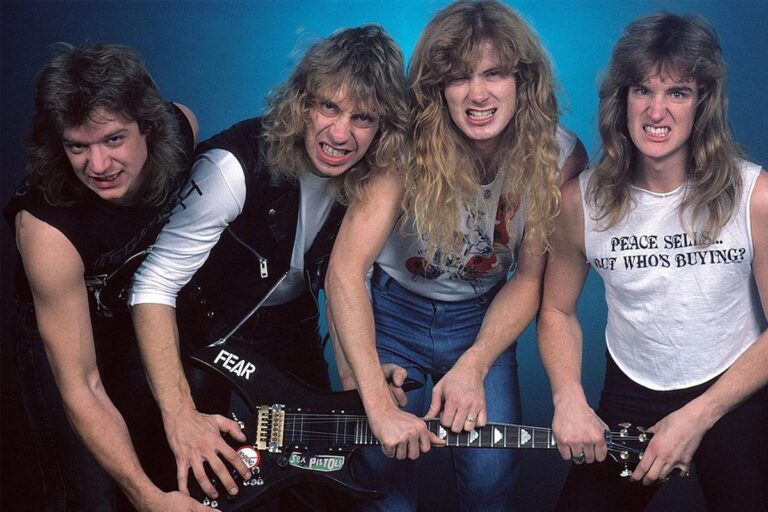
In the volatile world of 1980s thrash metal, loyalty was often measured in riffs, but survival was measured in dollars. For decades, the narrative surrounding Megadeth’s early business dealings was one of tension and perceived inequality. However, in a surprising turn of events, former lead guitarist **Chris Poland** has come forward to defend the financial gatekeeping of the band’s founder, Dave Mustaine. Speaking on the *Beyond the Vibe Podcast*, Poland offered a rare, retrospective look at the fiscal decisions that kept the Megadeth machine from collapsing under its own weight.
The Gold Record Reality Check
The friction began when Megadeth’s debut efforts finally crossed the threshold of mainstream success. As the band’s first record achieved gold status, the influx of capital was significant—specifically, checks for **$60,000** began hitting the band’s accounts. While a democratic, four-way split had been the original verbal agreement among the members, Mustaine ultimately decided to keep the lion’s share of the funds under his control. While such a move would typically be branded as greed in the rock world, Poland now views it as a masterstroke of pragmatism.
Legal Wisdom Over Bandroom Democracy
Poland suggests that Mustaine wasn’t acting solely on instinct, but rather on the sharp advice of legal counsel. “I’m sure his attorney at the time said, ‘You’re not going to do that,’” Poland remarked during the interview. The guitarist acknowledged that while the individual members wanted their payout, the “checks and balances” required to sustain a rising global act necessitated a centralized fund. By refusing to dilute the capital, Mustaine ensured that the band had the necessary resources to reinvest in better touring rigs, higher production values, and the relentless promotion required to compete with their peers.
Fueling the Megadeth Engine
The core of Poland’s realization lies in the difference between personal wealth and brand longevity. He noted that the money wasn’t necessarily used for a lavish lifestyle, but as a war chest to “keep the band progressing and moving forward.” In the mid-80s, the cost of maintaining a heavy metal empire was astronomical. Had the money been distributed equally, Poland admits it likely would have vanished into the personal lives of the musicians rather than being used as a strategic tool to advance the group’s professional standing.
A Legacy of Survival
Today, Poland’s perspective carries the weight of a man who has seen the industry from both sides. His candid admission serves to humanize Mustaine’s often-criticized leadership style. It suggests that the very ruthlessness that made Mustaine a polarizing figure was also the reason Megadeth survived the pitfalls that claimed so many of their contemporaries. As the band’s history is re-examined through a modern lens, it appears that the “dictatorship” was, in fact, a necessary foundation for one of metal’s most enduring legacies.