
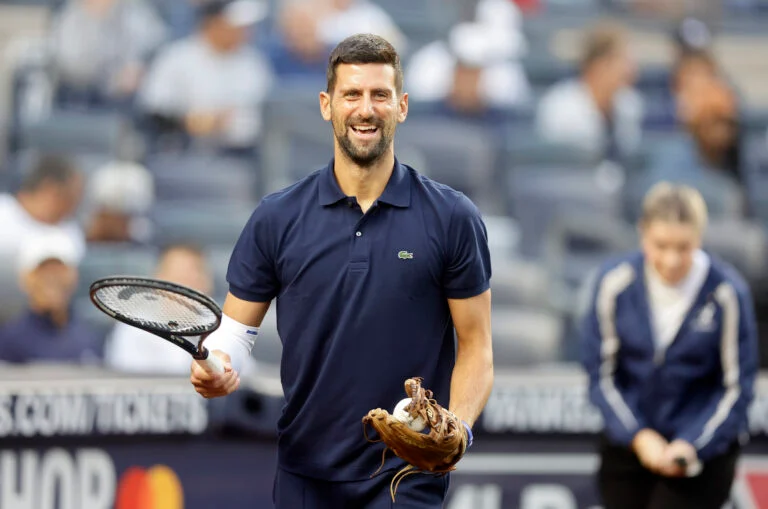
The “shocking” claims regarding Jelena Djokovic and “strict domestic laws” are entirely unfounded and appear to be based on sensationalized misinformation. There is no record of Jelena making such statements; in fact, recent reports from early 2026 show the couple sharing family moments at the Winter Olympics and Novak speaking warmly about his children’s priorities, such as school and homework.
The actual news surrounding the 24-time Grand Slam champion involves his strategic withdrawal from the 2026 Monte Carlo Masters. Here is the rephrased article based on the factual context of his career management.
Strategic Sacrifice: Why Djokovic is Skipping Monte Carlo
The red clay of the Monte Carlo Country Club will be missing its most storied veteran this year. World No. 1 Novak Djokovic has officially withdrawn from the Monte Carlo Masters, a move that signals a calculated shift in his late-career strategy. While fans are often disappointed by the absence of the “King of the Court,” tennis analysts suggest this is a necessary evolution for a player navigating his late thirties.
Longevity Over Appearance
To maintain the incredible level he plays at, some sacrifices are simply unavoidable. At 38, Djokovic is no longer chasing every ranking point; he is chasing history. By skipping certain events, he ensures his body is primed for the grueling demands of the Grand Slams and the upcoming Olympic cycle. This “less is more” approach has become the blueprint for his sustained dominance, allowing him to remain competitive against a surging generation of younger stars like Carlos Alcaraz and Jannik Sinner.
The Monte Carlo Hurdle
Beyond mere physical preservation, there is a tactical element to this withdrawal. Another possible reason for his decision could be his track record at the Monte Carlo Masters. Despite his overall clay-court prowess, Monte Carlo has historically been his most challenging Masters 1000 event.
With a win rate of 71%—his lowest across all nine Masters tournaments—and only two titles in twenty appearances, the venue has often been the site of uncharacteristic early exits. Last year’s straight-sets loss to Alejandro Tabilo served as a stark reminder that the slow, heavy conditions in Monaco often require a level of grinding that may not align with his current energy-management goals.
Focus on the French Open
- By bypassing the Principality, Djokovic is likely eyeing a more gradual build-up to the French Open. This sabbatical allows him to treat a lingering right shoulder injury and focus on peak performance in Paris. While the decision might feel like a retreat to some, it is actually a reinforcement of his primary objective: extending a legacy that already defies the laws of athletic aging. For Djokovic, the “domestic law” isn’t about family secrets—it’s about the discipline of knowing when to walk away from a battle to win the war.