
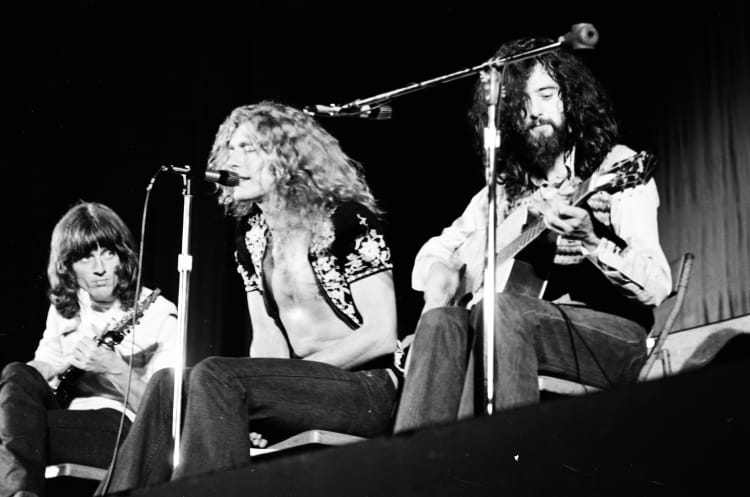
In the pantheon of rock and roll, few debates are as spirited or as enduring as the quest to rank the discography of Led Zeppelin. Since their inception in the late 1960s, Jimmy Page, Robert Plant, John Paul Jones, and John Bonham have served as the architects of hard rock, weaving together blues, folk, and mysticism into a tapestry that defined an entire era. However, for a band with a catalog this flawless, determining which record stands as their definitive “best” is a task usually left to late-night arguments and subjective critics.
Yet, in the modern age of digital metrics and massive data sets, we no longer have to rely solely on anecdotal evidence. While musical taste is fundamentally personal, a clear consensus has emerged from the noise. According to the comprehensive data aggregator Best Ever Albums, the band’s legendary 1971 release—the untitled fourth studio album commonly known as Led Zeppelin IV—has officially been crowned the greatest Led Zeppelin album of all time.
The Power of the Aggregate

The ranking provided by Best Ever Albums isn’t just a random poll; it is a sophisticated calculation of the “aggregate position” of records across more than 38,000 different charts. This includes professional rankings from prestigious publications like Rolling Stone, NME, and Stereogum, as well as the meticulously curated personal charts of thousands of dedicated listeners worldwide.
By synthesizing these thousands of data points, the site provides a “rank score” that cuts through individual bias. In this massive pool of data, Led Zeppelin IV didn’t just top the band’s internal rankings; it performed exceptionally well on the global stage. It currently holds the number 12 spot on the overall “Greatest Albums of All Time” chart, boasting a staggering total rank score of 38,704.
Why the “Runes” Album Still Reigns
Released in November 1971, Led Zeppelin IV (or the “Runes” album) represents the band at the absolute height of their powers. It is an album that famously lacks a title or the band’s name on the cover—an act of artistic defiance that allowed the music to speak for itself.
From the primal, earth-shaking groove of “Black Dog” and the high-octane adrenaline of “Rock and Roll” to the ethereal folk-mysticism of “The Battle of Evermore,” the album showcases the band’s unparalleled versatility. Of course, its legacy is anchored by the cultural monolith that is “Stairway to Heaven,” a track that remains the most requested song in the history of FM radio. The data confirms what many fans have felt for decades: this record is the perfect intersection of commercial success and artistic innovation.
A Legacy Measured in Numbers
The dominance of Led Zeppelin IV also bolsters the band’s overall standing in the annals of music history. Led Zeppelin currently ranks as the number 6 greatest artist of all time in the aggregate rankings, with a collective rank score of 113,971.
While many fans will continue to champion the raw blues-rock of Led Zeppelin II or the ambitious, sprawling brilliance of the double-album Physical Graffiti, the numbers suggest that the untitled fourth effort remains the most universally respected entry in their catalog. It is the definitive bridge between the heavy blues of their past and the experimental grandeur of their future—a masterpiece that, fifty years later, continues to climb the charts of history.