
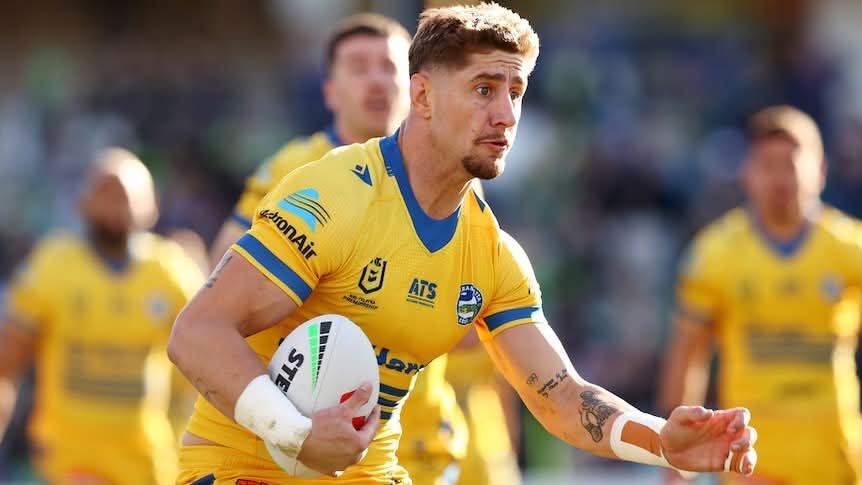
Speculation is growing across the NRL after reports emerged that the Melbourne Storm have made an approach to sign former Parramatta Eels outside back Zac Lomax for the 2026 season. However, Parramatta have quickly shut down the move, citing strict contractual conditions attached to Lomax’s release that prevent him from joining certain rival clubs before the end of the agreed period.
Lomax, who departed the Eels under a negotiated release arrangement, remains one of the most talked-about names on the player market despite still being tied to long-term contractual limitations. While he is officially free to negotiate with any club after the 2028 season, any move before then is subject to conditions designed to protect Parramatta’s interests.
According to reports, the Storm identified Lomax as a potential long-term solution to bolster their backline depth. Melbourne, renowned for their strategic recruitment and ability to develop elite talent, are believed to admire Lomax’s versatility, size, and attacking upside. His ability to play across the centres, wing, and even as a goal-kicker makes him an attractive option for a club constantly planning for succession as senior players age or move on.
However, Parramatta have reportedly declined Melbourne’s attempt to secure Lomax, pointing to clauses included in his release that restrict him from joining certain clubs during the contract window. These conditions are not uncommon in the NRL, particularly when a club allows a player to leave early while still under contract. Such clauses are often designed to prevent strengthening direct competitors or rivals with strong premiership credentials.
Sources indicate that while the Eels have taken a firm stance, discussions between Parramatta and Melbourne have not been completely shut down. Negotiations are said to be ongoing, though any potential breakthrough would likely require significant concessions, including financial compensation or player movement, to satisfy the Eels’ demands.
For Lomax, the situation places him in a holding pattern. While he remains focused on his current commitments and long-term career development, the ongoing speculation highlights his perceived value within the league. At just entering what many consider the prime years of an NRL career, Lomax represents both immediate impact and future potential—qualities that naturally attract interest from elite clubs like the Storm.
From Parramatta’s perspective, maintaining control over Lomax’s immediate future is a strategic move. The Eels are navigating their own roster planning challenges and are keen to avoid scenarios that could see a former player contribute to the success of a rival club in the short to medium term. Allowing Lomax to join Melbourne, a perennial finals contender, could be viewed as a risk they are unwilling to take.
Melbourne, meanwhile, are no strangers to recruitment hurdles. The club has historically shown patience in negotiations, often willing to wait for the right opportunity rather than overpay or compromise long-term plans. Whether the Storm persist with talks or turn their attention elsewhere remains to be seen.
As it stands, Lomax is free to sign with any club after 2028, when all contractual restrictions expire. Until then, any move will depend on complex negotiations between clubs and adherence to NRL contract regulations. With both Parramatta and Melbourne reportedly still in discussions, the situation remains fluid, and the NRL world will be watching closely for the next development in what has become one of the more intriguing off-field stories heading toward the 2026 season.