
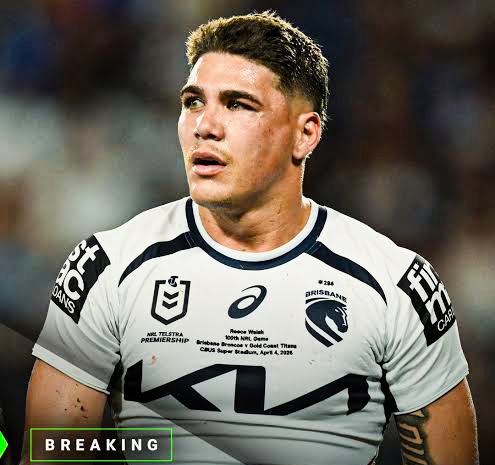
The Brisbane Broncos’ casualty ward has claimed its most influential inhabitant at the worst possible moment. Marquee fullback Reece Walsh has been officially ruled out of further action following a high-stakes medical assessment that triggered the NRL’s strictest safety protocols. The superstar number one was deemed to have displayed “clear and obvious” signs of a Category 1 concussion following a low-tackle collision, a diagnosis that carries immediate and significant ramifications for Brisbane’s season trajectory.
The Category 1 Verdict
The incident occurred when Walsh put his body on the line in a defensive effort, only to emerge visibly shaken. Under the NRL’s tightened player-safety mandate, the Independent Doctor—monitoring the game via high-definition broadcast feeds—identified symptoms consistent with a Category 1 head injury. Unlike a Category 2 assessment, which allows for a sideline “Head Injury Assessment” (HIA) and a potential return to play, a Category 1 ruling is an automatic “day-ending” event. Walsh was immediately prohibited from returning to the field, leaving the Broncos to finish the contest without their primary attacking spark.
The 11-Day Hurdle
The fallout extends far beyond the final whistle of tonight’s match. By being tagged with a Category 1 HIA, Walsh now enters the NRL’s mandatory 11-day concussion protocol. This non-negotiable stand-down period is designed to prioritize long-term brain health, but it serves as a massive blow to the Broncos’ immediate plans. Unless a miraculous recovery and a series of independent clearances occur, Walsh is effectively scratched from next week’s lineup, forcing coach Michael Maguire to drastically reshuffle his backline.
Potential for a Medical Appeal
While the diagnosis seems definitive, there remains a slim avenue for dispute. In previous seasons, clubs have occasionally challenged Category 1 rulings if they believed an independent doctor misidentified a “musculoskeletal” injury as a neurological one. For instance, a stinger to the shoulder or a neck jar can sometimes mimic the stumbling gait associated with a concussion. If the Broncos’ medical staff believes Walsh’s symptoms were the result of a different physical trauma rather than a brain injury, they may attempt to provide evidence to the NRL to have the 11-day stand-down waived.
Implications for the Broncos
Losing Walsh at a time when the club is already navigating internal instability creates a perfect storm. As the “quarterback” of the Broncos’ attack, his absence leaves a void in speed and creativity that few in the competition can fill. As the medical team begins the recovery process, the rugby league world will be watching Red Hill to see if the club accepts the 11-day ruling or prepares for a medical showdown to get their superstar back on the park.