
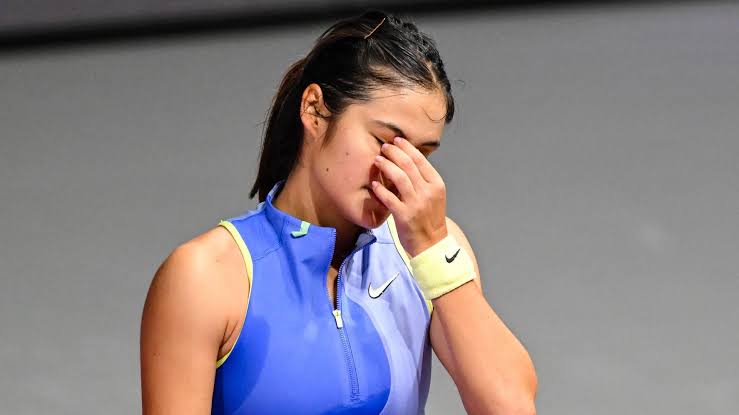
The professional tennis circuit is currently facing a ideological rift that threatens to pit the sport’s biggest icons against its governing structures. While the elite tier of the WTA—led by world number one **Aryna Sabalenka** and American sensation **Coco Gauff**—has recently signaled a willingness to entertain radical collective action, British star **Emma Raducanu** has effectively doused those flames with a more conservative stance.
The brewing storm reached a fever pitch during the Italian Open, where Sabalenka utilized her platform to address long-standing grievances regarding the grueling nature of the tennis calendar and inequitable prize distribution. For years, the idea of a Grand Slam boycott remained a whisper in locker rooms, a “nuclear option” discussed only in theory. However, Sabalenka’s public validation of the movement transformed a fringe debate into a mainstream crisis overnight. Gauff soon added her significant weight to the cause, suggesting that players are reaching a breaking point.
Yet, any revolution requires a united front, and Raducanu’s recent refusal to endorse such extreme measures has created a visible crack in that foundation. When asked for her perspective on the prospect of a strike, the former US Open champion delivered a measured response that stood in stark contrast to the militant tone of her peers. Rather than joining the chorus for a boycott, Raducanu emphasized her focus on the court and her gratitude for the opportunities provided by the major tournaments.
Industry insiders suggest that Raducanu’s comments will be a significant blow to the “strike movement.” Without the backing of the sport’s most marketable figures, the leverage held by Sabalenka and Gauff begins to erode. Raducanu’s stance highlights a generational or perhaps philosophical divide: the tension between established veterans demanding structural change and younger stars who are simply eager to compete after injury-plagued seasons.
The timing of this disagreement is critical. As the tour moves toward the business end of the season, the governing bodies of the Grand Slams are watching closely. If more players follow Raducanu’s lead, the threat of a boycott may dissolve back into the locker room chatter from whence it came. For now, however, the optics are clear: while the world’s top-ranked players are ready to walk out, the darling of British tennis is staying firmly behind the baseline.
The result is a fractured narrative that leaves the WTA at a crossroads. As Sabalenka and Gauff push for a new era of player power, Raducanu’s pragmatism serves as a reminder that in the world of professional tennis, individual ambition often outweighs collective bargaining.