
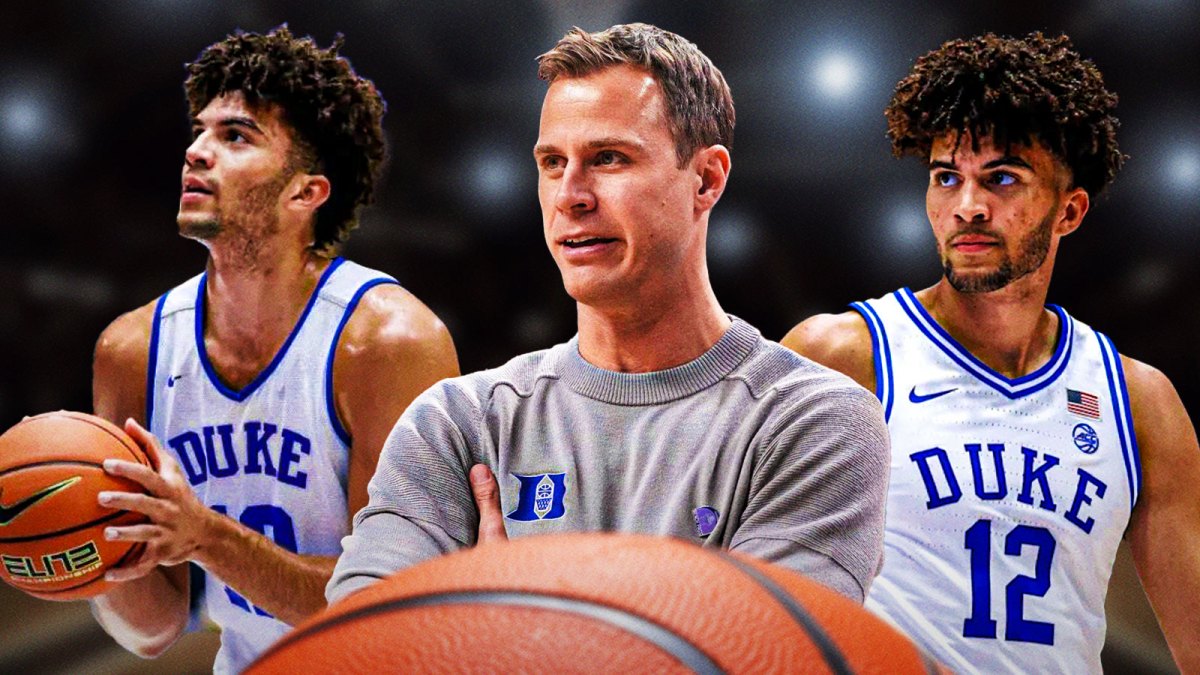
In an era where Name, Image, and Likeness (NIL) valuations often dictate the destination of elite talent, the college basketball landscape was rocked this morning by a decision that defies the modern “pay-to-play” meta. The nation’s top-ranked prospect has reportedly turned down a staggering **$8.5 million NIL package** from a rival suitor, choosing instead to “flip” his commitment to **Duke University**.
This move is being hailed by insiders not just as a recruiting win for Jon Scheyer and the Blue Devils, but as a seismic shift in the cultural fabric of collegiate athletics. When the dust settles, this choice may be remembered as the moment the game’s destiny was subtly, yet permanently, altered.
The $8.5 Million Road Not Taken
The rejected offer, rumored to be one of the largest single-year valuations in the history of the sport, underscores the massive financial stakes currently defining high-school recruiting. In most cases, such a sum would be an immediate “game over” for competing programs. However, for a player already projected as a future NBA lottery pick, the allure of the immediate windfall was apparently secondary to a different kind of value.
By walking away from nearly nine million dollars, the recruit has signaled a shift in priorities. In a world of “warehousing” talent for the highest bidder, this decision suggests that for the game’s truly elite, brand legacy and championship culture still carry a weight that raw currency cannot match.
A Cultural Reset in Durham
Duke has long been a lightning rod for the “tradition vs. money” debate. While the Blue Devils are certainly active in the NIL space, securing the country’s top player under these specific circumstances provides a powerful counter-narrative to the idea that college basketball has become a purely transactional enterprise.
For the Duke faithful, this isn’t just about adding a generational scorer to the roster; it’s about a player choosing the “Brotherhood” over a record-breaking bank account. This move resonates beyond the box score, suggesting that the sport’s most iconic programs still possess a “soft power” that can compete with the deepest pockets in the country.
Impact on the Sport’s Destiny
The implications of this flip will be felt far beyond Cameron Indoor Stadium. It challenges the assumption that the highest NIL offer will always land the top prize, potentially cooling the “arms race” that has seen valuations spiral into the tens of millions.
As priorities shift and culture evolves, this single choice transcends statistics and rankings. It places the focus back on the “bigger than the game” moments—those rare instances where a player’s decision alters the sport’s trajectory, reminding us that even in a professionalized collegiate world, the destination still matters.