
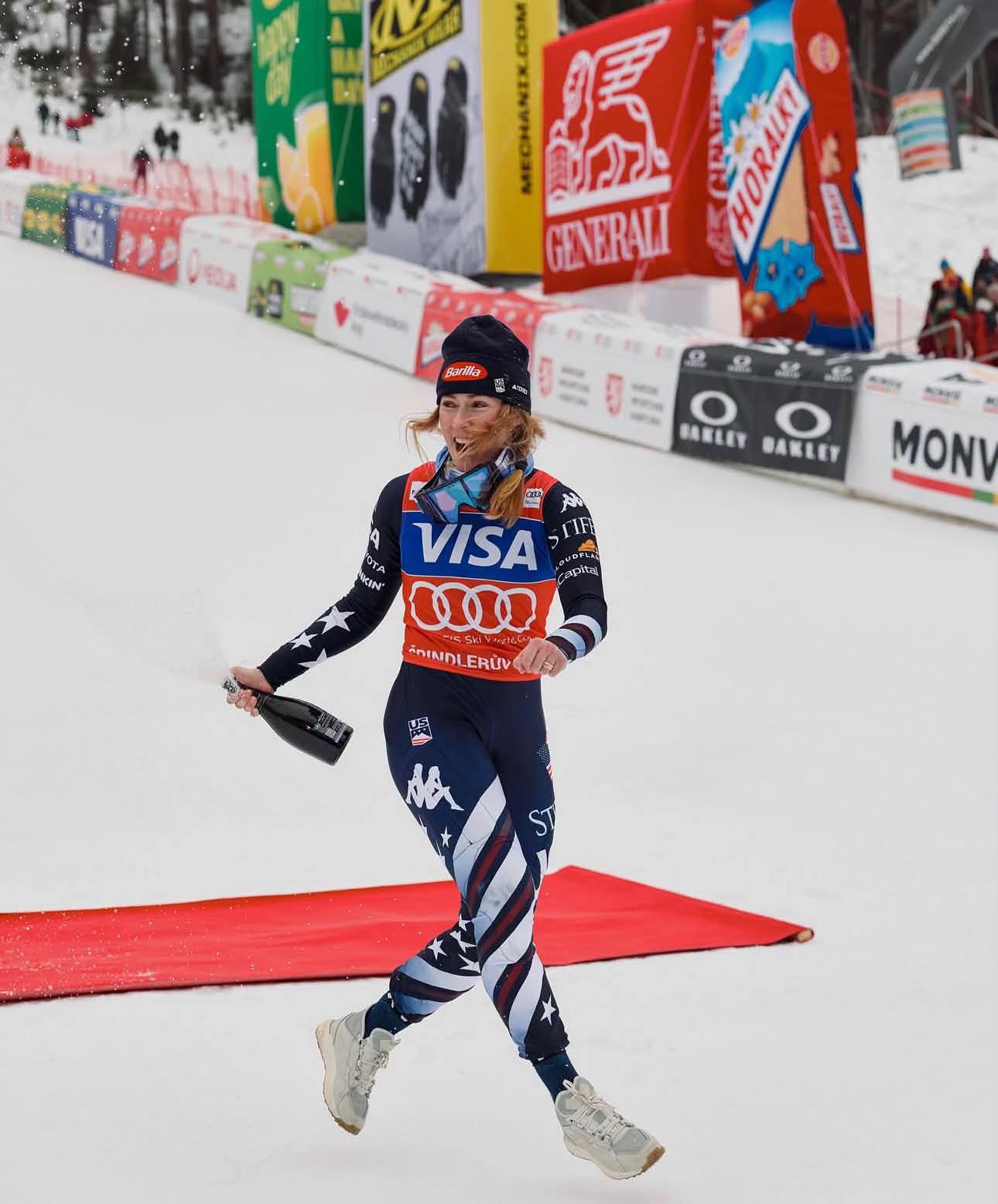
At 31 years old, Olympic champion and alpine skiing icon Mikaela Shiffrin continues to redefine the boundaries of athletic excellence. Following the conclusion of the 2026 Winter Olympic Games, where her legacy as the most decorated ski racer in history was further solidified, many expected the American superstar to taper her training intensity. Instead, Shiffrin has doubled down, engaging in a relentless physical regimen designed to preserve her dominance and keep her at the peak of world-class competition.
Six Days of Uncompromising Preparation
Shiffrin’s physical preparation is built on an extraordinary commitment to dryland conditioning. Training six days a week, her routine frequently demands anywhere from four to eight hours of rigorous work each day. This schedule seamlessly combines strength training, cardiovascular conditioning, dynamic movement prep, and targeted recovery protocols. Far from a standard gym program, her off-season phase requires the same focus, stamina, and mental toughness as standing at the top of an Olympic slalom course.
Functional Strength and Single-Leg Power
Because alpine ski racing subjects the body to immense g-forces and asymmetrical loads, traditional bilateral weightlifting plays a secondary role in Shiffrin’s regimen. Instead, her strength programming centers around unilateral movements that directly replicate the physics of carving turns at high speeds. Key exercises in her rotation include weighted crossover lateral step-ups, single-leg dumbbell squats, and heavy thrusters. These exercises develop functional motor control while strengthening the quadriceps, glutes, and critical hip stabilizers necessary for edge-control and high-speed turns.
Core Activation and Suspension Training
An elite skier’s core acts as the vital bridge between upper-body control and lower-body power transfer. Shiffrin relies heavily on advanced TRX suspension movements, Dynamic Neuromuscular Stabilization (DNS) patterns, and hanging oblique knee raises to cultivate structural stability. By challenging her rotational control and lateral flexion, she strengthens the deep abdominal walls required to absorb violent terrain impacts and maintain an aggressive athletic posture through complex gate sequences. Upper-body fundamentals like pull-ups complete her core work, enhancing shoulder stability and total body control under pressure.
Mobility, Recovery, and Longevity
Reaching peak physical condition at 31 requires an equally meticulous commitment to injury prevention and physiological recovery. Before lifting a single weight, Shiffrin dedicates extensive time to foam rolling, movement preparation, and band-assisted joint mobility exercises to safeguard her knees, hips, and lower back. Her post-workout recovery routines are as intense as the training sessions themselves, incorporating contrast bath therapy, targeted soft-tissue work, and optimized nutritional strategies to accelerate muscle repair and fight chronic fatigue.
The Mindset of a Legend
What truly sets Shiffrin apart is not just her physical strength, but her disciplined mental approach. Having begun weight training at just ten years old, she has developed an unwavering work ethic that treats every pre-season workout as a critical competitive advantage. Rather than coasting on her unmatched track record, she approaches every training block with the urgency of a rookie fighting to prove themselves.
As she looks ahead to upcoming World Cup seasons, Shiffrin’s dedication demonstrates why she remains the gold standard in alpine sports. By pairing world-class biomechanics with relentless grit, the decorated champion proves that age is merely a number when supported by unmatched preparation.