
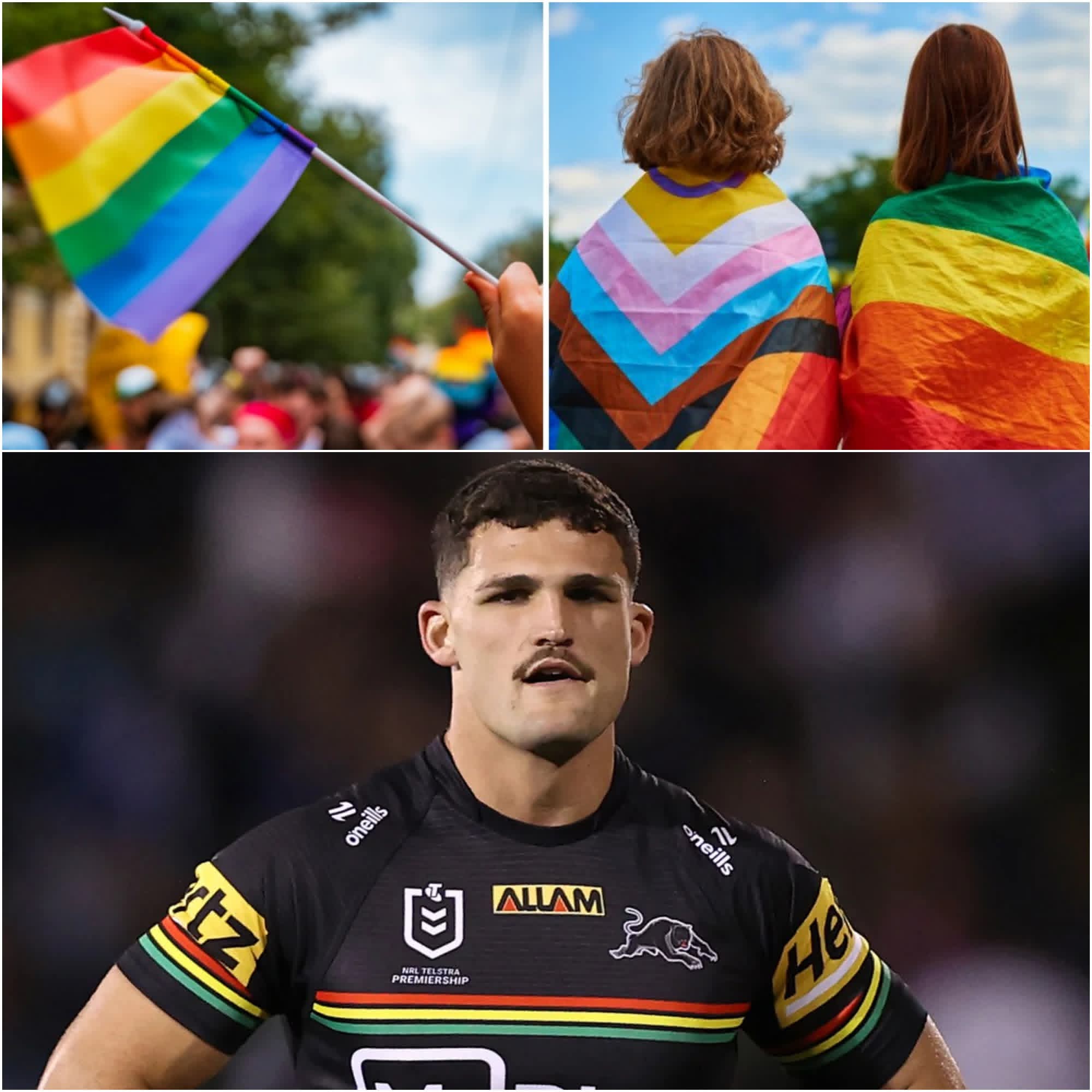
The National Rugby League (NRL) has been plunged into a heated cultural debate following reports that Penrith Panthers superstar and co-captain Nathan Cleary has taken a definitive stand against a planned league-wide social initiative. According to emerging reports, Cleary has flatly refused to wear a rainbow-colored LGBT pride armband during an upcoming match, allegedly labeling the movement a “woke agenda” that has no place on the sporting field. The move has sparked a massive divide between fans, activists, and players, placing one of the game’s most influential figures at the center of a national firestorm.
A Bold Defiance of League Initiatives
For years, the NRL has leaned into social inclusivity programs, but Cleary’s reported refusal represents a significant roadblock to that momentum. The halfback, who has led the Panthers to multiple premierships and is often cited as the face of the modern game, reportedly made his stance clear during a team meeting ahead of the club’s next fixture. Insiders claim Cleary expressed a firm belief that rugby league should remain an objective competitive space, free from the influence of political or social movements. “Rugby is rugby,” he is quoted as saying. “It’s not a stage for agendas I don’t believe in.” This direct challenge to league-sanctioned apparel has sent shockwaves through the NRL headquarters at Moore Park.
The Clash of Values and Team Identity
The Penrith Panthers have long been built on a foundation of unity and “Penrith pride,” but this controversy threatens to test the fabric of the locker room. While Cleary’s teammates have largely remained tight-lipped, the public response has been explosive. Supporters of the superstar argue that players should not be coerced into symbolic gestures that conflict with their personal or religious convictions. Conversely, critics argue that as a co-captain and a global role model, Cleary has a responsibility to uphold the league’s values of inclusion and diversity. The ultimatum has forced a conversation about where the line should be drawn between an athlete’s professional obligations and their personal freedom of expression.
Social Media and the “Woke” Debate
Within minutes of the reports surfacing, social media platforms were flooded with polarized reactions. The use of the term “woke” by such a high-profile athlete has particularly galvanized the debate, with “Nathan Cleary” and “NRL Pride” trending nationwide. Many fans have applauded Cleary for his perceived bravery in speaking out against what they describe as “virtue signaling” in sports. Meanwhile, advocacy groups have expressed deep disappointment, suggesting that Cleary’s refusal could alienate a significant portion of the rugby league community. The controversy comes at a delicate time for the league, which has previously faced similar challenges with the “Manly Seven” pride jersey boycott in 2022.
The Future of Professional Standards
As the Panthers prepare for their next outing, all eyes will be on the field—and specifically on Nathan Cleary’s arm. If the reports are confirmed and the star halfback takes the field without the mandated symbol, the NRL may be forced to consider disciplinary action or a major policy overhaul regarding social initiatives. For now, the “Cleary Ultimatum” serves as a poignant reminder of the tension between traditional sporting culture and the modern push for social advocacy. Whether this will lead to a broader player-led movement or a swift “culture reset” by the league remains to be seen, but the shockwaves are unlikely to dissipate anytime soon.