
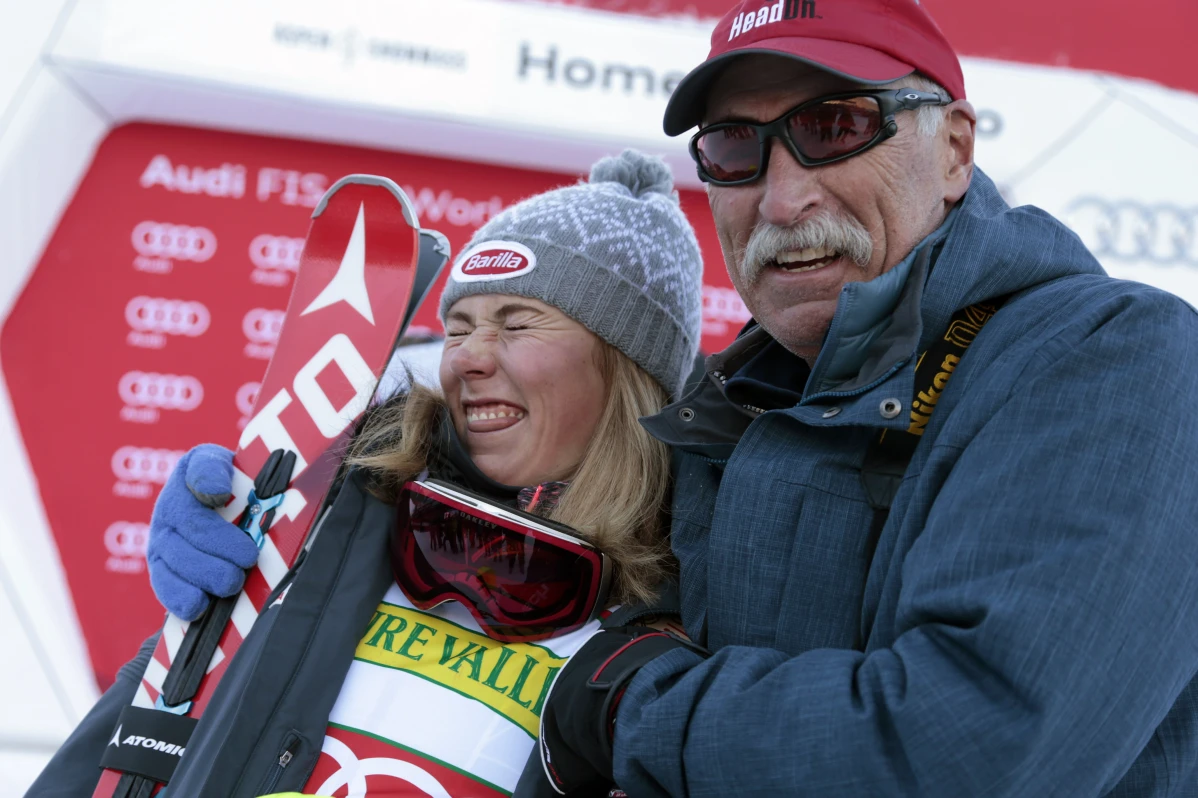
Mikaela Shiffrin, one of the most decorated American ski racers, is often reminded of her late father, Jeff Shiffrin, particularly during a season that has been marked by both profound personal achievement and significant physical and emotional hardship. Her reflections on her father, who passed away five years ago following a home accident, came into sharp focus recently during a celebration at the World Cup finals. As the band struck up Paul Simon’s “You Can Call Me Al,” a song her dad held dear, Shiffrin was suddenly overcome with emotion. The familiar melody brought an unexpected wave of tears, a testament to the enduring impact of her father’s presence in her life.
Jeff Shiffrin was instrumental in fostering Mikaela’s passion for skiing. Beyond just being a supportive parent, he was a fixture at her races, often positioned slightly to the side, a camera dangling from his neck strap, ready to capture the moment. He provided more than just moral support; he offered astute tips and suggestions, helping to shape the athlete she is today. With her recent, monumental achievement of securing her 100th World Cup victory, Mikaela’s thoughts naturally turned to him. She pondered what his reaction would have been to such a significant milestone in her career. “I just wish,” she admitted, reflecting the depth of her longing, “I could ask him.”
The current season has been exceptionally challenging for Shiffrin. As the World Cup circuit concludes with her final slalom race, she is still actively recovering from a serious crash that occurred during the giant slalom event in Killington, Vermont, in November. The accident resulted in a severe injury: a deep puncture wound that inflicted acute trauma on her oblique muscles. The physical pain and subsequent recovery have been demanding, but the crash also left a more insidious, emotional scar. Shiffrin has been candid about experiencing post-traumatic stress disorder (PTSD) specifically related to competing in the Giant Slalom event following the incident.
This difficult season has demanded immense resilience from the two-time Olympic champion. Working her way back from a painful and debilitating injury while simultaneously managing the psychological fallout has been a testament to her tenacity. Every race, every training run, has been a step not just toward the finish line, but also in her personal journey of healing and recovery. The 100th World Cup win, therefore, carries an even deeper meaning, emerging as it did from a crucible of physical and emotional distress. It stands as a beacon of her perseverance, a milestone achieved despite facing some of the toughest adversities of her career. The emotional weight of the season—the constant memory of her father alongside the struggle for physical and mental recovery—has made this year a uniquely defining chapter in the storied career of the American ski superstar.
Shiffrin’s final event of the season, her slalom race at the World Cup finals, marks the end of a grueling period. As she looks forward, she continues to draw strength from the foundation her father helped build. The bittersweet blend of professional triumph and personal grief defines her current state, reminding everyone that even the world’s elite athletes face very human battles. Her ongoing dedication to her sport, while navigating this complex emotional terrain, underscores the personal sacrifices inherent in achieving greatness.