
In the words of former U.S. international Taylor Twellman, “What are we doing?” That question is echoing loudly across college basketball this week as the sport grapples with one of its most confusing eligibility situations yet — the return of Charles Bediako.
Bediako, a former Alabama center, last appeared in college basketball during the 2022–23 season. Since then, his path has looked anything but collegiate. He declared for the NBA Draft, spent time in the G League, signed NBA contracts, and lived the life of a professional athlete for roughly three years. By any traditional standard, his college career was finished.
Yet, thanks to a temporary restraining order issued by a judge, Bediako is suddenly back in the college game. According to college basketball insider Jeff Goodman, Alabama plans to play him this Saturday in a high-profile matchup against Tennessee — a development that has stunned coaches, fans, and administrators alike.
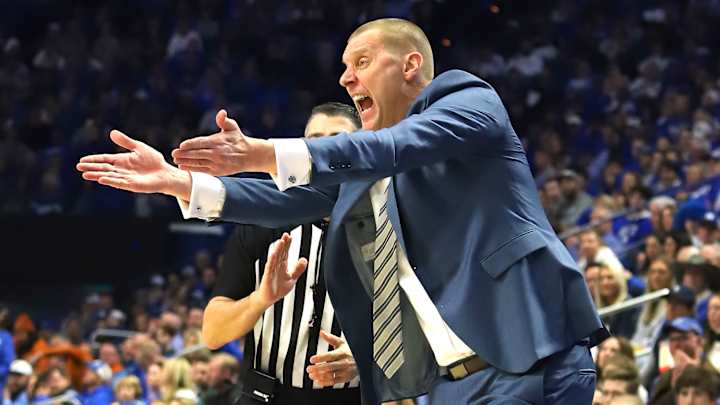
The ruling has reopened long-simmering concerns about where the NCAA’s authority begins and ends in the modern era of name, image, and likeness (NIL), transfers, and legal challenges. While many coaches have privately expressed frustration, Kentucky head coach Mark Pope chose to voice his concerns publicly.
Pope, who is typically laser-focused on his own program, paused near the end of his postgame press conference to address what he sees as a growing crisis in the sport’s governance. His comments were measured but unmistakably urgent.
“This is not about blaming coaches,” Pope said. “We all understand the industry we’re in. Coaches are going to do what’s best for their programs within the rules that exist.”
But Pope argued that the current situation illustrates a deeper problem — a lack of clear, enforceable boundaries. When a player can move from college to the professional ranks and then return years later through legal intervention, Pope believes the system has lost its grounding.
He called on the NCAA to “regain some tiny ounce of sanity” and take a firm stand before the sport drifts further into uncertainty. In Pope’s view, the NCAA still holds one meaningful point of leverage: the NCAA Tournament.
“The tournament is the one thing everyone wants to be a part of,” Pope implied. “That’s where the NCAA still has authority, and it’s time to use it.”
Importantly, Pope did not criticize Alabama or any other program for taking advantage of the ruling. He acknowledged the competitive reality of modern college basketball, where coaches are under immense pressure to win and survive. Instead, his frustration was aimed squarely at the governing structure — or lack thereof — that allows such situations to unfold.
The Bediako case has become a flashpoint in the broader debate over player eligibility, NIL rights, and the role of the courts in college sports. With judges increasingly willing to intervene, the NCAA’s traditional enforcement mechanisms appear weaker than ever.
For many within the sport, the concern is not just about one player, but about the precedent being set. If professional experience no longer definitively ends college eligibility, what comes next? Multiple returns? Open-ended careers? A system where legal outcomes matter more than competitive balance?
As college basketball barrels toward March, questions like these are growing louder. Mark Pope’s comments may not provide answers, but they reflect a sentiment shared by many: the sport is at a crossroads.
Whether the NCAA responds — and how decisively — may determine not just the outcome of this season, but the future structure of the game itself.