
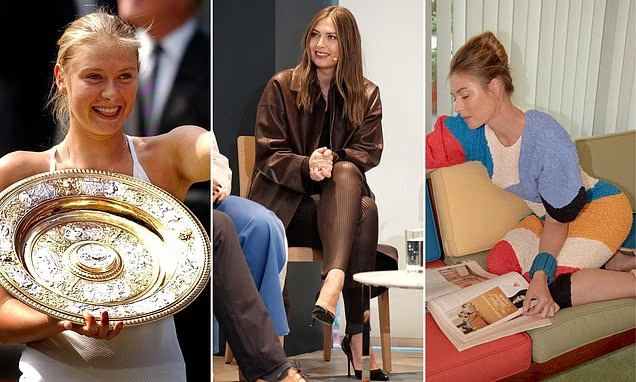
The Making of a Global Icon
When Maria Sharapova stunned the tennis world by winning Wimbledon as a teenager, she instantly became more than an athlete. The victory did not just deliver a Grand Slam trophy; it introduced a marketable global personality. With her powerful baseline game, distinctive intensity, and unmistakable presence, Sharapova quickly evolved into one of the most recognizable figures in sports.
Sponsors recognized her crossover appeal immediately. She attracted luxury fashion houses, sportswear companies, and global advertisers, turning on-court success into commercial dominance. For years, Sharapova’s earnings off the court far exceeded her prize money. She was no longer only competing for titles — she was building a personal brand.
Building a Financial Empire
Unlike many athletes who rely solely on endorsement deals, Sharapova took a more hands-on approach to business. She studied branding, consumer behavior, and marketing strategy while still competing on the WTA Tour. Her ambition extended beyond temporary partnerships. She wanted ownership.
That vision materialized with the launch of her premium confectionery company, which quickly grew into a multimillion-dollar enterprise. The brand leaned heavily on her personality — playful yet sophisticated — and connected with a younger audience who saw her as both champion and entrepreneur.
Within a few years, the company was stocked in international retailers and airports worldwide. Analysts valued the brand at roughly $187 million at its peak, transforming Sharapova from highly paid athlete into serious business executive.
The Athlete as Entrepreneur
Sharapova’s approach was deliberate. She attended investor meetings, reviewed packaging concepts, and participated in distribution strategy. Former colleagues say she often balanced training sessions with conference calls, refusing to delegate key decisions entirely.
Her dedication reflected a broader shift in sports, where athletes began seeking equity rather than endorsements. Sharapova understood that tennis careers are finite. Injuries, rankings, and age eventually intervene, but a business can endure beyond retirement.
Even during injury layoffs, she used the time to expand her commercial ventures, appearing at trade shows and negotiating retail partnerships. By the time she returned to the court, she was effectively managing two careers simultaneously.
Challenges and Controversy
Her professional journey, however, was not without setbacks. A suspension from competition disrupted both her athletic momentum and her brand partnerships. Some sponsors distanced themselves, and questions arose about the sustainability of her business empire.
Yet Sharapova responded strategically. Instead of retreating, she repositioned her brand image, focusing on authenticity and transparency. The company survived the turbulence and maintained a loyal consumer base, showing the strength of a brand built on identity rather than mere celebrity association.
The Sudden Business Shift
Years later, observers were surprised when the once-rapidly expanding company quietly scaled down and eventually ceased independent operations. The move fueled speculation about finances and internal strategy. In reality, industry insiders suggested it was less collapse and more evolution.
Sharapova began transitioning toward investment and venture partnerships. Rather than running a single product-based enterprise, she shifted to backing multiple startups, technology firms, and wellness brands. The decision reflected a calculated pivot — exchanging operational responsibility for broader financial diversification.
A Legacy Beyond Tennis
Since retiring from professional tennis, Sharapova has embraced her role as investor and mentor. She now appears more often at business conferences than tennis tournaments, discussing leadership, entrepreneurship, and athlete empowerment.
Her career illustrates a rare transformation: a Grand Slam champion who leveraged fame into long-term financial influence. Wimbledon made her a star, but business sustained her relevance.
The story of Maria Sharapova ultimately extends beyond sport. It is about reinvention, strategy, and understanding that success is not defined by a single arena. She did not simply leave tennis — she expanded her playing field.