
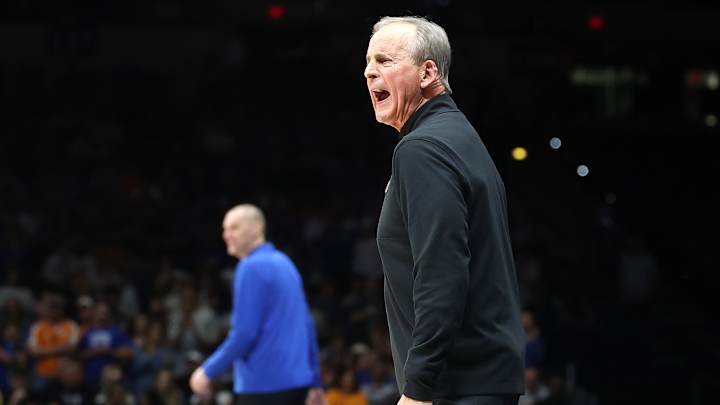
Beneath the surface of its recent success lies an uncomfortable warning sign—one that could spell trouble as the Wildcats head to Knoxville for a crucial SEC showdown.
Under first-year head coach Mark Pope, Kentucky has shown resilience and adaptability, stringing together two straight victories at a time when the roster has been stretched thin. The Wildcats have had to navigate significant adversity, losing veteran guard Jaland Lowe for the remainder of the season and seeing highly touted freshman Jayden Quaintance sidelined indefinitely. Those absences have forced Pope to reshuffle rotations, lean heavily on inexperienced players, and ask others to take on expanded roles.
So far, the Wildcats have responded with grit. The last two wins were far from polished, but they showcased Kentucky’s ability to survive ugly stretches and execute just enough when it mattered most. In a season defined by inconsistency across the college basketball landscape, survival has often been enough to keep postseason hopes alive.
Still, Kentucky’s overall position remains precarious. The Wildcats are firmly on the NCAA Tournament bubble, with little margin for error as February approaches. While recent wins have steadied the ship, they have not dramatically altered the résumé. To do that, Kentucky needs quality victories—specifically, Quad 1 wins that resonate with the selection committee.
That brings urgency to Saturday afternoon’s matchup in Knoxville.
A road date with Tennessee represents one of Kentucky’s best remaining opportunities to boost its tournament profile. Beating a ranked SEC rival away from home would not only count as a Quad 1 win, but it would also serve as a statement that Pope’s team can compete at a high level despite its mounting injuries.
However, an ugly stat looms large heading into the contest, hinting that the Wildcats’ recent success may be difficult to sustain. Kentucky has struggled mightily in one key area that often determines outcomes in hostile environments: consistency away from home. Whether it’s offensive efficiency, defensive lapses, or late-game execution, the Wildcats have shown a tendency to falter when the pressure rises on the road. Against an experienced Tennessee squad that thrives on physical defense and crowd energy, those issues could be magnified.
The concern isn’t just theoretical. Knoxville has long been one of the SEC’s toughest venues, and Tennessee’s ability to dictate tempo could expose Kentucky’s thin margin for error. Without Lowe’s steady presence and with Quaintance unavailable, ball control and decision-making become even more critical. Any prolonged scoring drought or turnover-heavy stretch could quickly tilt the game out of reach.
For Pope, the challenge is as much mental as it is tactical. His team must believe it can win in a hostile environment while also playing with the discipline required to avoid self-inflicted wounds. That means valuing possessions, defending without fouling, and staying connected defensively even when Tennessee inevitably makes runs.
Despite the warning signs, opportunity still outweighs risk for Kentucky. Bubble teams rarely get comfortable wins in February; instead, their seasons are defined by moments like this one. A victory in Knoxville would dramatically strengthen Kentucky’s case for March, while a competitive loss could still leave the door open with additional chances ahead.
As tip-off approaches, the Wildcats find themselves at a familiar crossroads: encouraged by recent progress, yet aware that the numbers suggest tougher days may be ahead. Whether Kentucky can defy that ominous stat—or whether it proves prophetic—will go a long way toward determining how this season is ultimately remembered.