
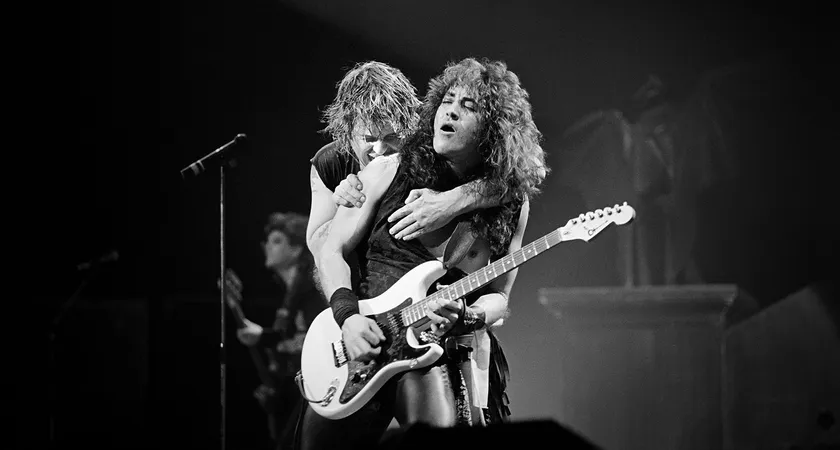
A Controversial Chapter in Heavy Metal History
Guitarist Jake E. Lee has opened up about the challenging experience of creating the album The Ultimate Sin with legendary rocker Ozzy Osbourne—a record that divided fans and critics for decades. While the album has since found appreciation among some listeners, Lee admits there was a time when even he believed the harsh criticism surrounding it might have been justified. Looking back, the guitarist described the project as a difficult yet important moment in his career, one that ultimately reshaped how he approached music and his place in heavy metal history.
Joining Ozzy’s Band as a Young Guitar Prodigy
Lee’s journey with Ozzy Osbourne began in 1982 when the young guitarist was recruited by Ozzy and his manager and wife, Sharon Osbourne. At the time, Lee was known for his exceptional technical ability but lacked experience in the business side of the music industry. His first major project with Ozzy was the album Bark at the Moon, released in 1983.
Despite contributing heavily to the album’s sound, Lee later revealed that his inexperience cost him songwriting and publishing credits on the record. While the album became a commercial success, the situation left the guitarist with mixed feelings about his early involvement in Ozzy’s band.
The Difficult Road to The Ultimate Sin
By the time work began on The Ultimate Sin, Lee was determined to play a larger role creatively. However, the recording process proved to be far from smooth. One of the biggest challenges was simply adjusting to the studio schedule. Lee, who described himself as a “night creature,” found it extremely difficult to work during the afternoon sessions required by the production team.
The pressure of expectations, combined with creative disagreements and a demanding environment, turned the project into what Lee described as “one battle after another.” Despite the struggles, the album showcased a bold evolution in metal guitar playing, with Lee experimenting with new tones, techniques, and songwriting approaches.
Criticism and Self-Doubt
When The Ultimate Sin was released in 1986, the reception was mixed. Some critics and fans considered it the weakest album in Ozzy Osbourne’s catalog. Over time, those opinions weighed heavily on Lee.
“In the late ’90s, I started to believe them,” Lee admitted in a candid reflection. “I thought, ‘Maybe it really was Ozzy’s worst record. Maybe I just wasn’t good on it.’”
The criticism led to years of self-doubt for the guitarist, even though the album contained several fan-favorite tracks and strong performances.
Finding Appreciation Years Later
With the passage of time, Lee’s perspective on the album changed. Fans began revisiting the record, and many came to appreciate the distinct guitar style he brought to Ozzy’s music during that era.
Today, Lee looks back at The Ultimate Sin with a more balanced view. While acknowledging its flaws, he also recognizes the innovation and effort behind the record. What once felt like a disappointment has become an important chapter in his musical journey—one that helped redefine his identity as a guitarist and influenced a generation of metal players.