
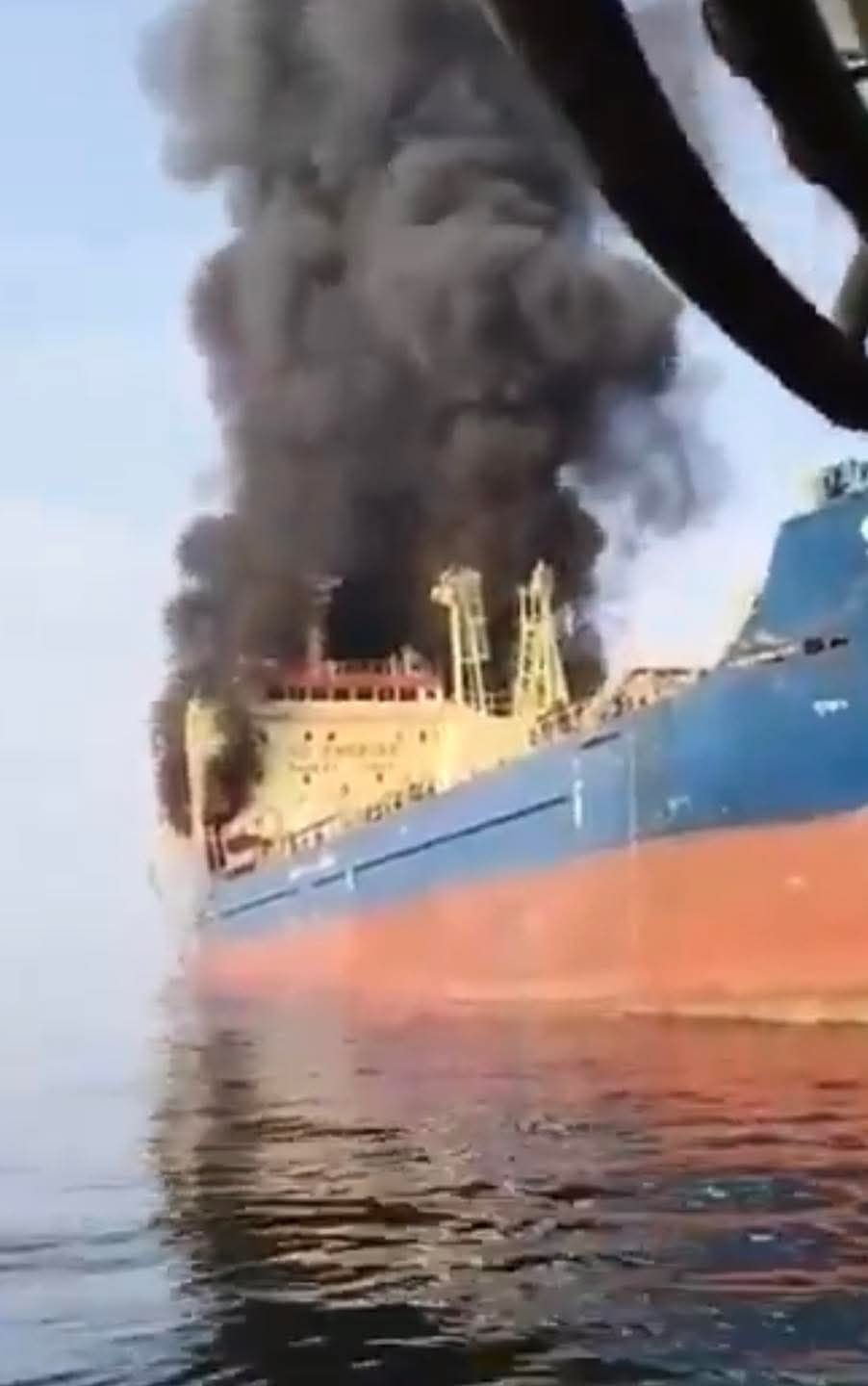
The strategic waters of the Middle East have descended into unprecedented turmoil following a reported drone strike by Iranian forces on the Skylight, a Palau-flagged tanker suspected of belonging to Tehran’s own “shadow fleet.” The incident, occurring on March 1, 2026, near Oman’s Musandam Peninsula, has sent shockwaves through global energy markets and pushed the Strait of Hormuz—the world’s most vital oil chokepoint—to the brink of total closure.
A Friendly Fire Catastrophe in the Strait
The attack on the Skylight unfolded just five nautical miles north of Khasab Port as the vessel attempted to navigate the entrance to the Strait of Hormuz. Iranian state media claimed the tanker was targeted for “defying orders” and illegally attempting to cross the passage after Tehran declared the waterway closed to international navigation.
Of the 20 crew members on board—comprising 15 Indian nationals and 5 Iranians—four were reported injured. Dramatic footage circulating on social media showed the vessel engulfed in a massive blaze, with thick plumes of black smoke visible from the Omani coastline. While the Oman Maritime Security Centre successfully coordinated the evacuation of the entire crew, the vessel’s status remains critical, with reports suggesting it may be on the verge of sinking.
Retaliation and the “Shadow Fleet” Irony
The strike comes during a weekend of extreme military escalation. On February 28, joint U.S. and Israeli forces launched “Operation Epic Fury,” a massive pre-emptive campaign that reportedly resulted in the death of Iran’s Supreme Leader, Ayatollah Ali Khamenei. In the chaotic aftermath, Iran has launched hundreds of retaliatory drones and missiles across the Gulf, targeting U.S. bases and commercial infrastructure.
The targeting of the Skylight is particularly significant. The vessel had been sanctioned by the U.S. Treasury in December 2025 for its role in a “shadow fleet” used to bypass international sanctions on Iranian crude. Analysts suggest the strike highlights a breakdown in Iranian command and control or a desperate “scorched earth” policy intended to prove that no vessel—regardless of its origin—is safe in the Strait.
Global Energy Markets on Edge
The economic fallout was instantaneous. Brent crude prices, which had already been climbing due to the initial U.S.-Israeli strikes, surged toward $100 per barrel as news of the tanker strike broke. Approximately 20 percent of the world’s daily oil flow and nearly a quarter of its liquefied natural gas (LNG) pass through this narrow waterway.
Currently, dozens of tankers are reported to be idling in open waters, refusing to enter the high-risk zone. Major shipping firms are frantically reassessing transit routes, though options to bypass the Strait are extremely limited.
A Chokepoint Under Siege
The Musandam Peninsula, which Oman shares control of with Iran, is now the frontline of a potential global energy crisis. With Iran vowing “no mercy” in its revenge for the loss of its leadership, the threat of a prolonged blockade looms large. Financial analysts warn that if the Strait remains contested or closed for more than a few days, the resulting inflationary spike could push fragile global economies into a deep recession. For now, the world watches the horizon off Oman, where the burning Skylight serves as a grim beacon of the region’s volatility.