
🏉 The End of a Turbulent Tenure
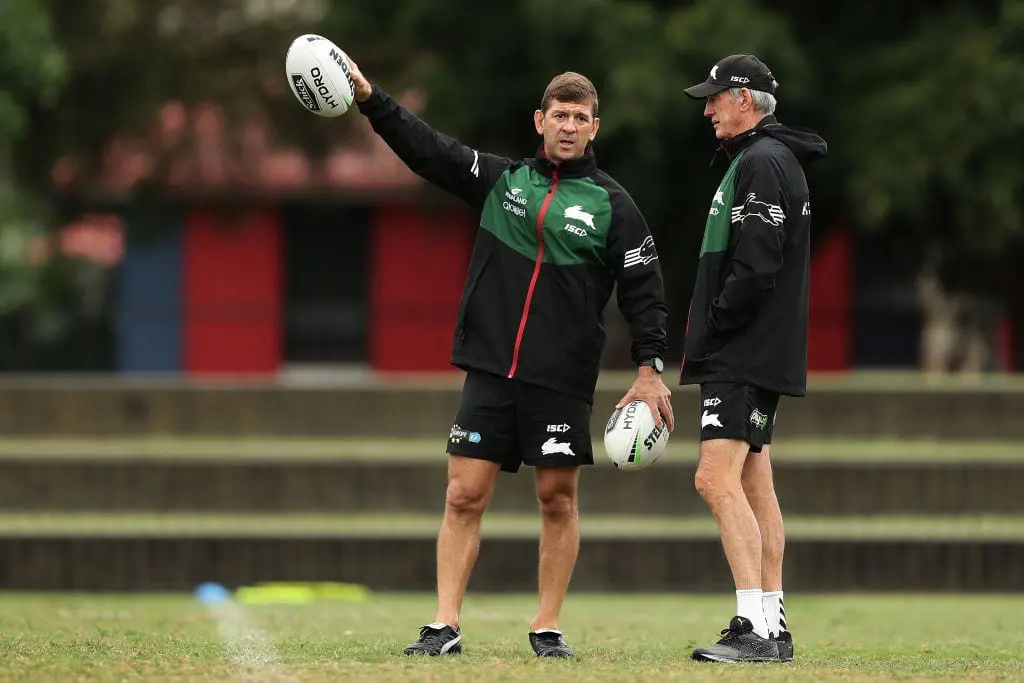
Jason Demetriou’s time as the head coach of the South Sydney Rabbitohs was, by his own admission, a profoundly challenging period that concluded with a disappointing exit. After a turbulent few years leading the Redfern club, Demetriou was ultimately axed from the position. Now serving as the head coach for the London Broncos, he has openly reflected on his experience in the National Rugby League (NRL), asserting that the experience, though difficult, ultimately provided invaluable lessons for his coaching career.
Demetriou recently shared his thoughts on the matter during an appearance on Sky Sports’ “The Bench,” detailing the personal and professional growth he gained from the high-pressure NRL environment.
Learning to Master Emotional Control
One of the most significant areas of development Demetriou highlighted was the mastery of emotional regulation. The intensity of coaching an NRL club—where every result is scrutinized and the pressure from media, fans, and the front office is immense—demanded a level of emotional stability he had to actively cultivate.
“I’m quite passionate as a coach,” Demetriou stated, acknowledging that his passion, while a strength, sometimes needed tempering. He recognized that success in such a demanding role required more than just tactical knowledge; it required consistent leadership and composure.
He continued, focusing on his post-Rabbitohs work: “[However] being able to stay emotionally in control of the way I’m thinking and feeling at certain times, I think I’ve done a lot of work on that type of thing.” This internal work suggests a realization that a head coach must project stability, especially during periods of adversity, and that unfiltered passion can sometimes be misinterpreted or counterproductive in a high-stakes professional setting.
Beyond the Box Score: The Scope of an NRL Role
Demetriou candidly admitted that the responsibilities of an NRL head coach far exceeded the technical aspects of game plans, training sessions, and monitoring box scores. The role, he learned, required a deep, holistic engagement with the entire organization.
The coach is not just responsible for the 17 players on the field, but for setting the culture and direction for the entire club. He noted that the “entire club”—from the players and support staff to the administrative side—looks to the head coach for a clear path forward. This comprehensive demand means managing expectations, handling media crises, fostering a winning environment, and ensuring that all departments are aligned, a much broader mandate than purely coaching tactics.
The intensity of leading a storied club like the Rabbitohs, with its fervent fan base and legacy of success, magnified these pressures. His reflection implies a recognition that while he had the tactical ability, the demands of being the ultimate organizational leader in the unforgiving NRL landscape required a different set of skills—skills he now feels better equipped to handle.
Eyes on a Potential NRL Return
While Demetriou is currently focused on his role with the London Broncos, his decision to openly discuss his NRL tenure and the lessons learned suggests that the door to a potential return to the Australian league is far from closed.
By acknowledging his missteps and detailing his personal and professional growth, Demetriou is essentially framing his time at South Sydney not as a failure, but as an apprenticeship in leadership under extreme pressure. His new role in London allows him to implement these learned lessons in a competitive, but perhaps less frenetic, environment, further honing the emotional control and comprehensive leadership skills he believes are necessary to succeed in the NRL. His candid reflections serve as a public testament to his renewed readiness for the challenges of coaching at the top level should another opportunity arise.