
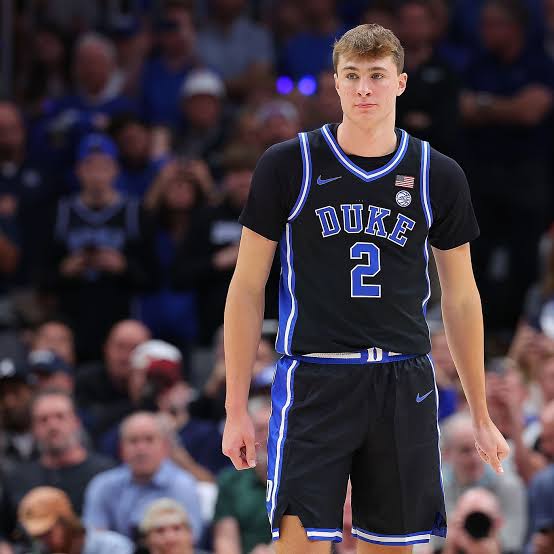
Cooper Flagg’s college career at Duke was always destined to be brief. Now, it is officially complete. The generational forward has been selected No. 1 overall in the 2025 NBA Draft, cementing his place among the most highly regarded prospects to ever pass through Durham and confirming that he will not return to Duke for another season.
From the moment Flagg stepped onto campus, the expectations were immense. Labeled a once-in-a-decade talent before he ever played a college game, he arrived carrying comparisons to some of the most impactful freshmen in modern basketball history. Rather than shrink under the spotlight, Flagg embraced it, delivering a season that justified both the hype and the historic draft position that followed.
At Duke, Flagg was more than just a scorer. He was the axis around which everything turned. His ability to influence games on both ends of the floor separated him from his peers. Offensively, he showcased a rapidly evolving skill set—attacking the rim with power, knocking down perimeter shots, and making advanced reads as a passer. Defensively, his instincts, length, and motor made him a constant disruptor, capable of guarding multiple positions and igniting fast breaks with blocks and steals.
What truly set Flagg apart, however, was his competitiveness. Night after night, he played with an edge that elevated those around him. Teammates fed off his intensity, while opponents were forced to account for his presence at all times. Whether Duke was facing a top-ranked rival or navigating the grind of conference play, Flagg was the player who set the tone.
Under head coach Jon Scheyer, Duke leaned heavily into Flagg’s versatility. He was deployed as a scorer, a secondary ball-handler, a defensive anchor, and, at times, the emotional leader of a young roster. The trust between player and staff was evident, and Flagg’s rapid development over the course of the season reflected a program adept at preparing elite talent for the professional level.
As the season progressed, the conversation around the No. 1 pick became increasingly straightforward. NBA scouts praised Flagg’s two-way impact, basketball IQ, and adaptability to the modern game. In an era that values positionless players who can defend, shoot, and create, Flagg checked every box. By the time Duke’s season ended, his status as the draft’s top prospect was widely viewed as inevitable.
His decision not to return to Duke was equally unsurprising. For a player projected to go first overall, the risk-reward balance heavily favored making the jump. Another year in college would offer little upside compared to the opportunity to begin his professional career immediately, both from a developmental and financial standpoint. In the NIL era, players have more options than ever, but the NBA remains the ultimate destination—and Flagg reached it at the earliest possible moment.
For Duke, Flagg’s departure represents both a loss and a reaffirmation of its identity. Losing the nation’s top player creates an obvious void, but it also reinforces the program’s reputation as a premier pathway to the NBA. Duke continues to recruit and develop players who arrive with immense promise and leave as fully realized prospects ready for the league’s highest stage.
Flagg leaves behind a legacy defined not by longevity, but by impact. In one season, he delivered on expectations that would overwhelm most players, carried the weight of national attention, and emerged as the best player in college basketball. His journey from Duke to the top of the NBA Draft is a testament to his talent, work ethic, and competitive fire.
As he begins his professional career, Cooper Flagg does so with history already written—and with the sense that his story is only just beginning.