
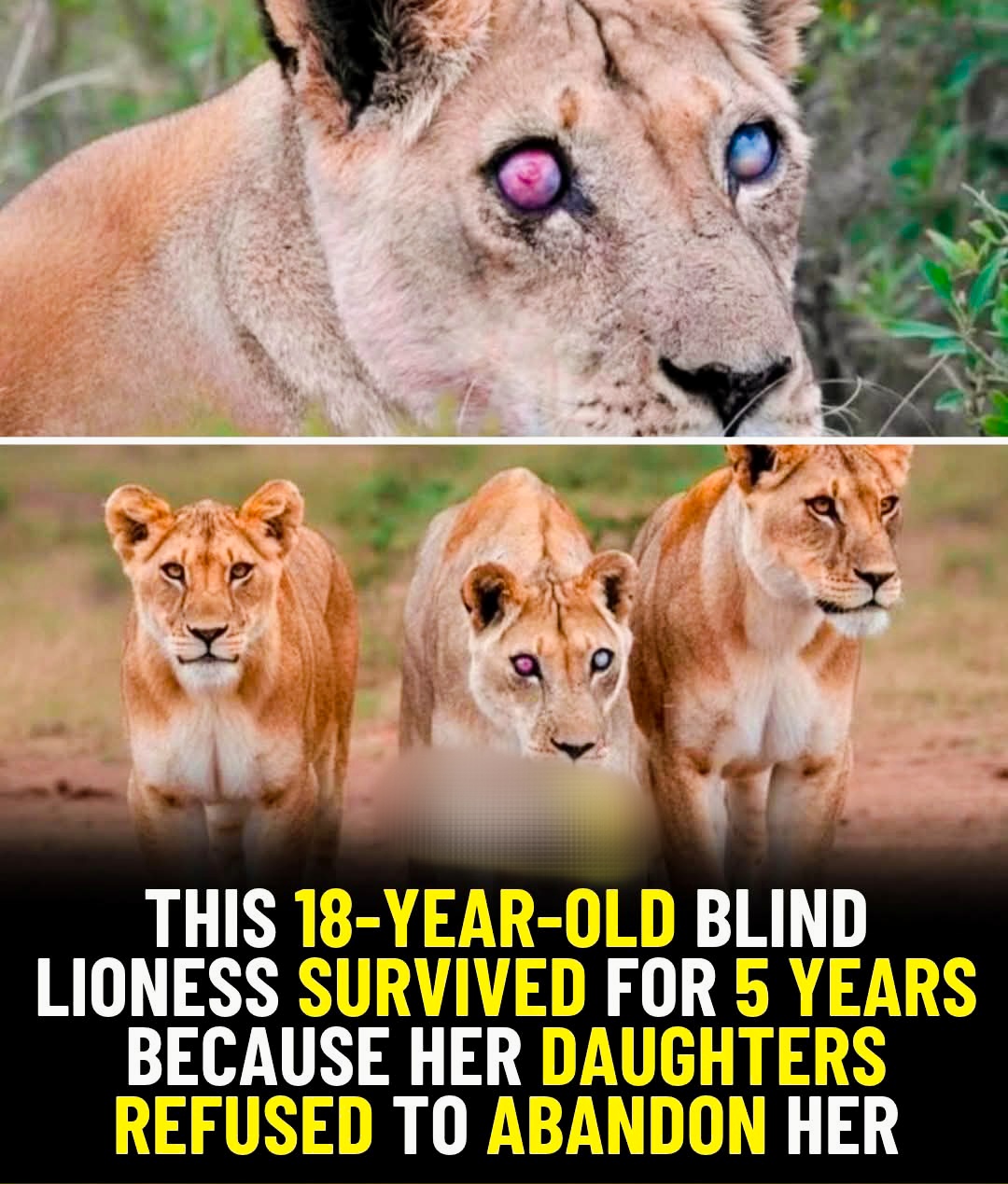
In the unforgiving African wilderness, survival often depends on strength, sharp senses and the ability to hunt. For Josie, a lioness living at Addo Elephant National Park in South Africa, losing her sight could have marked the beginning of the end. Instead, she survived for years with the help of two devoted daughters who refused to abandon their mother when she became completely blind.
Josie’s remarkable story has become a moving example of animal behaviour, family bonds and the extraordinary ways wildlife can adapt to adversity. While her condition presented enormous challenges, the continued support of her daughters, Dawn and Duffy, helped her remain part of the pride long after many might have expected her to succumb to the difficulties of life in the wild.
A Lioness Faces an Extraordinary Challenge
Wild lions face numerous threats throughout their lives, from injuries and disease to competition, food shortages and the physical demands of hunting. Many wild lions live approximately 10 to 15 years, although lifespans vary depending on their environment and circumstances.
Josie managed to live well beyond that typical range. Her challenges became even greater when she began losing her eyesight more than five years before her death, eventually becoming completely blind.
For a predator that depends heavily on vision to judge distances, coordinate attacks and locate prey, the loss was potentially devastating. Hunting requires precision, while navigating unfamiliar terrain without sight can expose an animal to injuries and other dangers.
A blind lioness could struggle to keep pace with her pride, raising the risk of isolation and starvation. Yet Josie’s experience unfolded differently, largely because her daughters remained close.
Dawn and Duffy Refuse to Abandon Their Mother
As Josie’s eyesight deteriorated, Dawn and Duffy adapted their behaviour to accommodate her changing needs.
Rather than leaving their mother behind, the two lionesses stayed near her, helping her navigate difficult terrain and avoid obstacles. Their presence offered Josie a greater degree of security as she moved through an environment that had become increasingly difficult to interpret.
Their support was particularly important because a pride’s survival often depends on cooperation. Lions live socially, and relationships within a pride can influence access to food, protection and opportunities to hunt.
Josie’s daughters appeared to maintain that connection even as their mother became less physically capable. Their continued companionship helped her remain integrated into the pride instead of facing the dangers of isolation alone.
A Different Approach to Hunting
Finding food presented another major challenge. Without functional eyesight, Josie could no longer rely on the usual visual cues that help lions stalk and capture prey.
According to accounts of her story, Dawn and Duffy took on the principal hunting responsibilities, tracking and bringing down prey before calling out to help their mother locate the kill.
Sound became an important guide, allowing Josie to approach the food despite her inability to see it.
Remarkably, she reportedly continued contributing during hunts by using her hearing and sense of smell to help flush prey from dense vegetation.
Although her role had changed, she was not simply a passive member of the pride. Her remaining senses and experience allowed her to participate in ways that suited her abilities.
Living Beyond Expectations
Josie’s survival for years after becoming blind demonstrates how adaptation and social support can influence an animal’s ability to cope with disability.
Her daughters’ behaviour also highlights the complexity of relationships among social animals. While it is difficult to establish precisely what motivates individual animals, their continued association with Josie illustrates how cooperation can help vulnerable members of a group survive.
The reported arrangement allowed the ageing lioness to remain close to her family while navigating challenges that might otherwise have proved insurmountable.
At 18, Josie lived considerably longer than the typical lifespan of many wild lions. Her story stands out not simply because she survived blindness, but because she continued participating in pride life despite her limitations.
Josie’s Story Ends After a Remarkable Life
Josie was eventually euthanised in October 2025 after complications associated with advanced age affected her condition. Her death marked the end of an extraordinary life shaped by resilience, adaptation and the continued presence of her daughters.
Her story offers a compelling reminder that survival in the animal kingdom is not always determined by individual strength alone. Cooperation and social relationships can also make a crucial difference.
For years, Dawn and Duffy remained alongside their mother when her disability made independent survival far more difficult.
Josie’s legacy is a powerful illustration of resilience and the importance of social bonds in wildlife. In a world where survival can be brutally demanding, her story shows how companionship and cooperation can help an ageing animal endure far beyond expectations.