
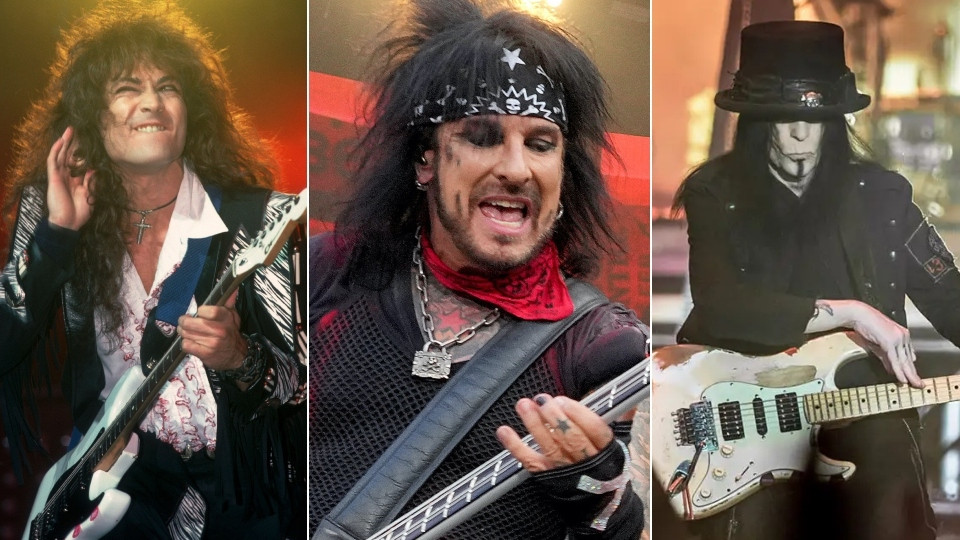
The glitz and hairspray of the 1980s Sunset Strip often masked a volatile undercurrent of professional jealousy and creative friction. Decades later, the facade continues to crumble as contemporaries of the era offer new, jarring insights into the internal dynamics of rock’s most notorious outlaws. In a recent appearance on the “Waste Some Time With Jason Green” show, Ratt frontman Stephen Pearcy added fuel to the fire, alleging that Mötley Crüe’s recent fallout with guitarist Mick Mars is merely the conclusion of a plot that began forty years ago.
According to Pearcy, the desire to replace the stoic, blues-influenced Mars was not a modern development necessitated by his health struggles with ankylosing spondylitis. Instead, Pearcy claims that bassist and mastermind Nikki Sixx was looking for a stylistic upgrade as early as the band’s infancy. Specifically, Pearcy revealed that the group had set their sights on Jake E. Lee—the virtuosic guitarist who would later achieve fame with Ozzy Osbourne and Badlands—to take Mars’s place before the band had even reached global superstardom.
A Culture of Discontent
Pearcy’s allegations didn’t stop at the guitar position. The Ratt vocalist suggested that the friction at the heart of the Crüe extended to the microphone. He claimed that Sixx was “never really happy” with frontman Vince Neil, implying a long-standing dissatisfaction with the singer’s performance or persona. This narrative paints a picture of a band held together by commercial success rather than fraternal chemistry, where the core architects were perpetually eyeing the exit or seeking “better” components.
These revelations come on the heels of a massive legal and PR war between Mars and his former bandmates. The tension reached a breaking point following the massive Stadium Tour, where the band performed alongside Def Leppard. While the tour was a financial juggernaut, it was plagued by rumors of backing tracks and “ghost” performances—a controversy sparked in part by drumming legend Carmine Appice.
The “Tape” Controversy and the Mars Lawsuit
In early 2024, Appice shared a second-hand account of Mars’s frustrations during the comeback tour. Appice claimed that Mars was deeply unhappy with the band’s reliance on pre-recorded tracks, stating that fans could easily discern that the performances were “all on tape.” This public critique prompted a scathing rebuttal from Nikki Sixx, who dismissed Appice as a “washed-up drummer,” further exposing the raw nerves within the veteran rock community.
The situation eventually escalated into a bombshell lawsuit filed by Mars, in which he accused the band of trying to gaslight him into leaving and unilaterally stripping him of his financial stakes in the group’s entities. Mars’s legal team argued that while the guitarist was indeed playing his parts live, the rest of the band was heavily supplemented by digital assists—the very issue Appice had highlighted.
Legacy at a Crossroads
As Pearcy reflects on these decades-old secrets, the legacy of Mötley Crüe stands at a crossroads. For fans, the idea that Mars was being “hunted” for replacement since the early ’80s changes the context of their classic discography. It suggests that the “cracks in the mirror” were present during the recording of Shout at the Devil and Dr. Feelgood.
With John 5 now officially occupying the guitar slot, the band has moved into a new era, but the echoes of Pearcy’s claims and Mars’s legal battle ensure that the drama of the Sunset Strip remains as loud and messy as ever.