
The Razorbacks didn’t need to see their name listed to understand what the poll really meant. The message wasn’t about who got ranked — it was about who Arkansas has to face.
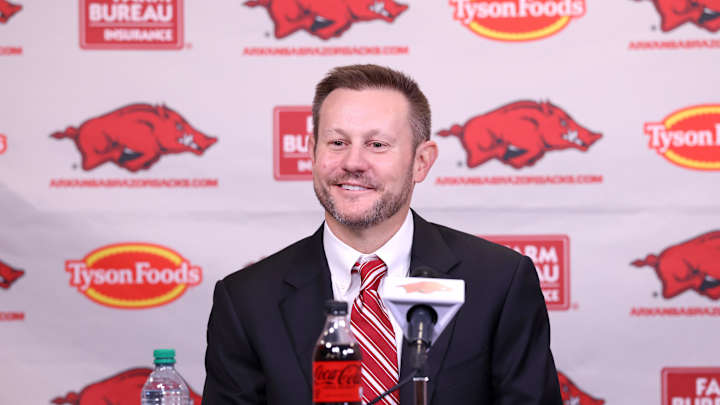
Because when the preseason conversation revolves around the same national heavyweights, those teams don’t just dominate headlines. They dominate schedules. And for first-year head coach Ryan Silverfield, that reality is going to hit early and often as he begins his tenure in one of college football’s most unforgiving environments.
The Razorbacks’ path in 2026 won’t be defined by poll momentum or offseason hype. Instead, it will be shaped by the opponents everyone else already assumes will matter, the programs that the sport treats as automatic contenders. Arkansas may not enter the season with a number beside its name, but the schedule ensures the Razorbacks will be measured against teams that do.
That’s the real weight of a “way-too-early” ranking. It doesn’t predict outcomes. It sets expectations. It creates a scoreboard before the first kickoff, and for teams outside the national spotlight, it serves as a warning that respect isn’t handed out — it’s taken.
Arkansas’ 2026 slate offers plenty of chances to do exactly that.
One matchup stands out immediately: Georgia is scheduled to travel to Fayetteville, and that alone turns the Razorbacks’ season into a national test case. The Bulldogs are once again projected to sit near the top of the sport, the kind of program that enters every fall with championship expectations and playoff ambitions. Hosting a team like that isn’t just a big home game — it’s a measuring stick.
Not because rankings decide what happens between the lines, but because they frame how the country views the contest before either team has run a single play. When a Top 5 program comes to your stadium, you aren’t being “noticed.” You’re being evaluated.
That’s the SEC experience in its purest form.
There’s no grace period. There’s no time to “build it up” quietly. Every season starts with the assumption that the league will challenge you immediately and repeatedly, and it will reveal what your program truly is long before October.
For Silverfield, that reality is especially important because he enters Arkansas from the Group of Five coaching ranks, a leap that has become increasingly common — and increasingly complicated. The margin for error shrinks dramatically when the weekly opponent has four- and five-star depth, elite speed across the field, and a fan base that views eight wins as a disappointment.
The SEC doesn’t wait for coaches to adjust. It forces them to adjust in real time.
That’s why Arkansas’ schedule isn’t just difficult — it’s revealing. It presents opportunities, yes, but they come in the form of high-pressure moments. The Razorbacks will have multiple chances to prove they belong in the same conversation as the teams dominating preseason forecasts. But those chances are rarely comfortable, and none come without consequences.
In a league where perception can shape everything from recruiting momentum to postseason placement, Arkansas won’t have to chase national relevance. It will be standing in front of it.
If the Razorbacks want to be taken seriously in 2026, they’ll have to earn it the hard way: by surviving the SEC grind and showing they can go toe-to-toe with the kind of programs that live in the Top 25.
They may not start the year ranked, but by the time the season unfolds, Arkansas will be connected to those rankings whether the country expects it or not. The schedule makes sure of that.
And for Ryan Silverfield’s first season in Fayetteville, that might be the biggest storyline of all.