
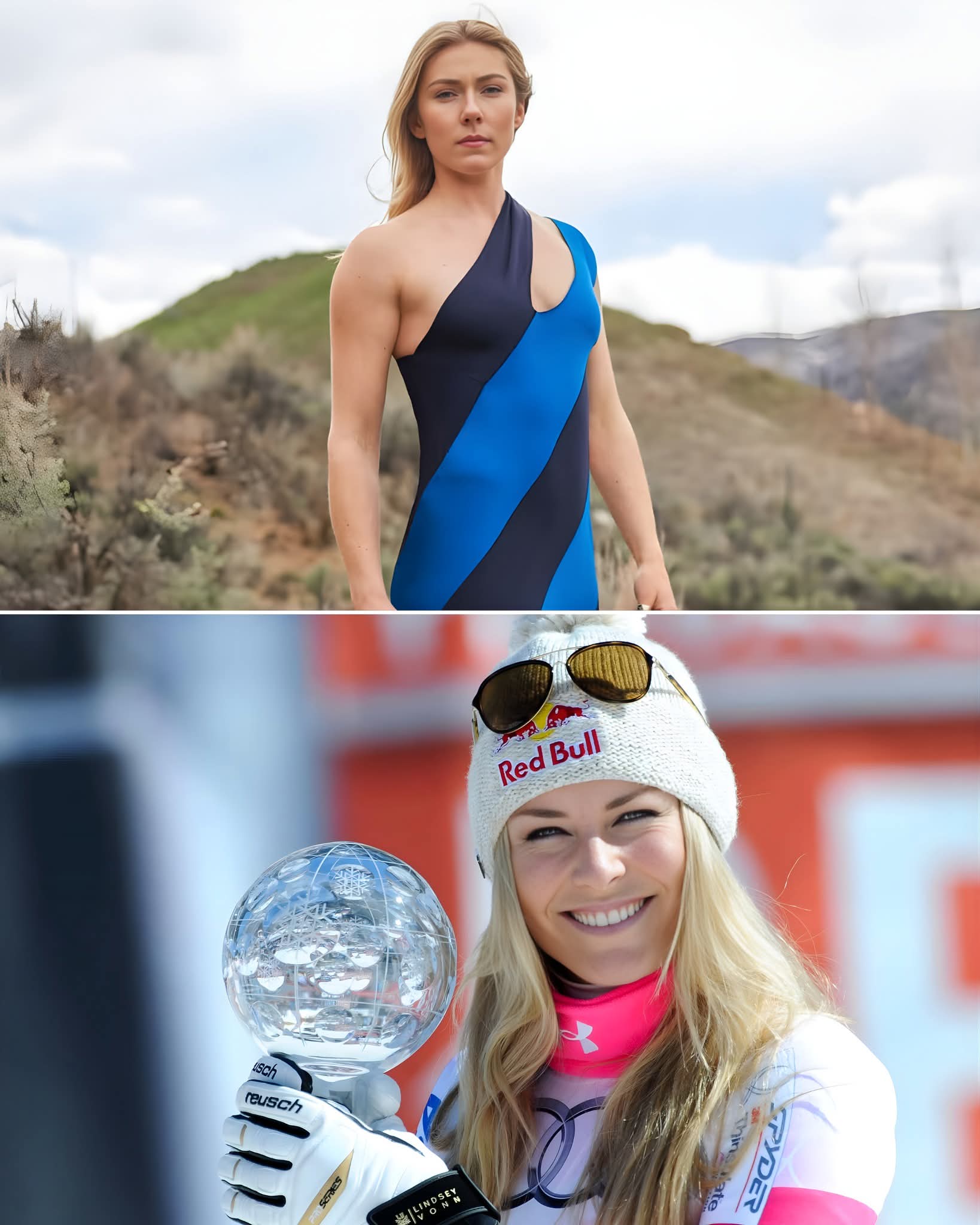
In the thinning air of Hafjell, Norway, the greatest alpine skier of the modern era reached a summit previously occupied by only one woman in the history of the sport. On a high-stakes Wednesday afternoon, American legend Mikaela Shiffrin officially clinched her sixth FIS Alpine World Cup overall title, equalling the legendary mark set by Austrian icon Annemarie Moser-Pröll. The achievement serves as the crowning jewel of a 2025-26 campaign that saw Shiffrin redefine the boundaries of technical skiing and athletic longevity.
The Tactical Masterclass in Hafjell
Entering the season-ending giant slalom, the math for Shiffrin was clear: a top-15 finish would mathematically secure the “Big Crystal Globe,” regardless of the performance of her nearest rival, Germany’s rising star Emma Aicher. After a cautious opening leg, the 31-year-old Shiffrin utilized a signature aggressive second run to carve her way into 11th place. While it wasn’t a podium finish on the day, the result provided the necessary points to fend off Aicher by a narrow 87-point margin in the final standings.
The tension at the finish line was palpable as Shiffrin awaited the final times. By securing the overall crown—her first since 2023—she effectively ended a two-year drought and proved that her strategic approach to the heavy World Cup schedule remains the gold standard. “I’m very grateful right now because I think this could go differently,” an emotional Shiffrin remarked following the flower ceremony, acknowledging the physical and mental toll of a season defined by fierce competition from a younger generation of racers.
A Resume Without Peer
Shiffrin’s sixth overall title adds another layer of prestige to a trophy cabinet that is already the most decorated in skiing history. This championship season wasn’t just about the big globe; it also included Shiffrin securing her record-extending ninth slalom Crystal Globe and crossing the unfathomable threshold of 110 career World Cup victories.
Her journey to six titles has been a marathon of consistency, spanning a decade of dominance. After winning three consecutive titles from 2017 to 2019, she added back-to-back honors in 2022 and 2023. By matching Moser-Pröll—who won five straight titles in the 1970s before adding a sixth in 1979—Shiffrin has bridged the gap between the sport’s golden age and its modern technical revolution.
The Race for the Outright Record
While the 2025-26 season will be remembered for the tie, the narrative has already shifted toward the 2026-27 campaign. Shiffrin now stands on the precipice of becoming the outright most successful woman in the history of the overall World Cup. With the tie level at six, every gate she clears next season will be a step toward a seventh title that would place her alone at the top of the mountain.
As the American team celebrates this historic milestone in Norway, the broader sporting world is left to marvel at a career that shows no signs of decelerating. Whether it is her precision in the technical disciplines or her tactical points-gathering in the speed events, Mikaela Shiffrin has ensured that her name is synonymous with alpine excellence. For now, she shares the throne with Moser-Pröll, but the “American G.O.A.T.” appears more than ready to claim it for herself in the very near future.